Ertzaintza Gala Sabre: An Icon for Military Collectors
The Ertzaintza sabre is an emblem of Basque pride and police tradition. As an essential part of the gala uniform, it has accompanied the ertzainas in parades, solemn acts, and official ceremonies since the creation of the Ertzaintza in 1982.
This autonomous body, established with the Statute of Autonomy of the Basque Country, chose the Ertzaintza sabre to symbolize its authority. Inspired by historical Spanish military sabres, it incorporates the shield of Gernika and engravings that evoke Basque cultural heritage.
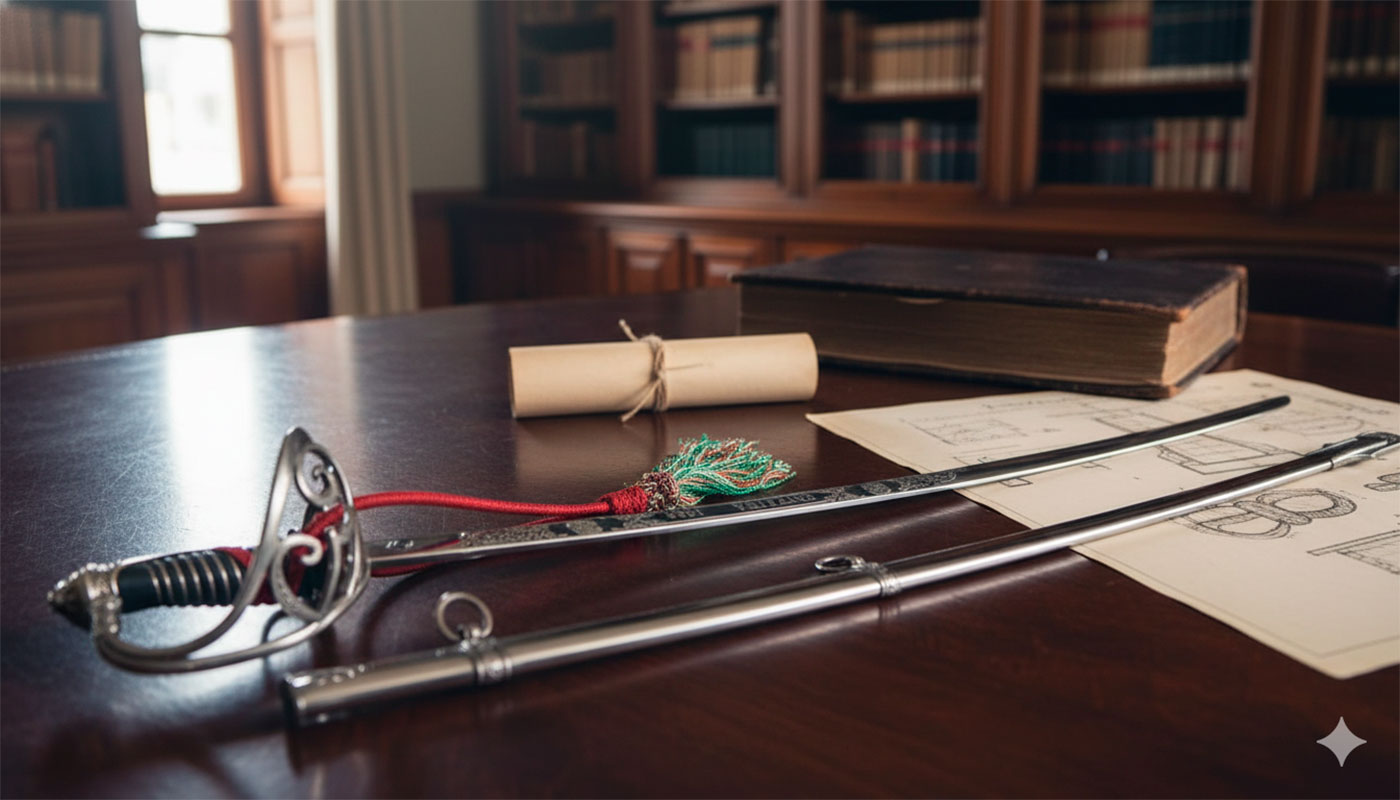
The design of the Ertzaintza sabre highlights elegance and precise craftsmanship. Its 82-centimeter blade, forged in carbon steel, features a double edge and fullers for lightness and strength. The gold brass guard adopts a protective shape, while the grip wrapped in braided wire offers a firm hold. The black leather scabbard includes rings and mounts engraved with the police emblem.
Military collectors appreciate the Ertzaintza sabre for its extreme rarity and historical value. Delivered only to officers during promotions, decorations, or retirements, its availability is limited. Authentic specimens in good condition command high prices in specialized auctions, collectors’ fairs, and online platforms.
Its connection to the democratic transition in Spain adds appeal; many preserve personalized dedications that tell stories of service.
This complete guide details the history of the Ertzaintza sabre, technical specifications, methods to authenticate originals versus quality replicas, reliable sources for acquisition, and tips for conservation and display. Perfect for collectors, historians, and enthusiasts of Basque military icons.
History of the Ertzaintza and the Origin of the Gala Sabre in 1982
The roots of the Ertzaintza sink into medieval Basque militias, such as the faithful “infanzones” and the “miqueletes” of the 17th century. These foral forces protected the autonomy of the Basque Country against external invasions, maintaining armed traditions that would last for centuries.
During the Spanish War of Independence against Napoleon, Basque guerrillas stood out for their bravery. Post-Napoleonic, Spanish military reforms introduced gala uniforms with symbolic sabres, inspiring later designs for local bodies.
 In the 19th century, the Carlist War reinforced the Basque foral spirit. Volunteer battalions used curved sabres similar to current ones, symbolizing honor and loyalty to the Lordship of Biscay and Gipuzkoa.
The Franco dictatorship suppressed local police, but the democratic transition revived autonomous aspirations. The Basque Police Law of 1982 created the Ertzaintza as a single body, assuming powers on January 1, 1983.
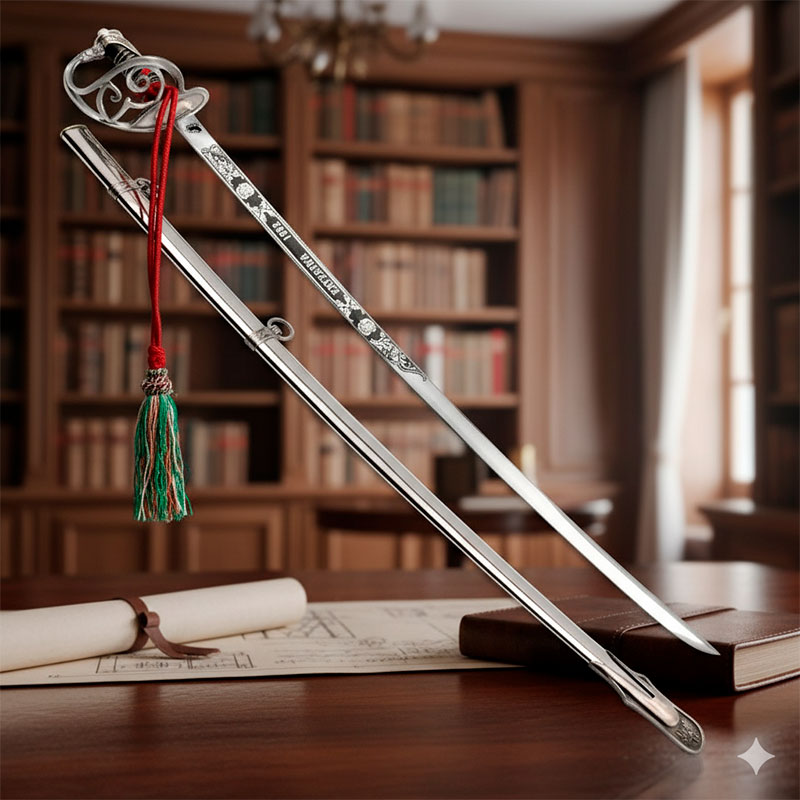
For its gala uniform, the Ertzaintza adopted the Ertzaintza sabre, 1982 model, evoking Basque and Spanish military heritage. Designed by specialized armorers, it integrates the Tree of Gernika into the hilt and engravings with police mottos.
This gala sabre is not a functional weapon, but an insignia of rank and tradition. It is delivered in oaths, promotions, and solemn acts, reinforcing corporate identity.
Its origin in 1982 marks the symbolic birth of the Basque autonomous police, uniting the foral past with the democratic present. Collectors value these first specimens for their historical proximity to the foundational Ertzaintza 1982.
Inspiration from the Chasseurs d’Orléans: Evolution of the Basque Design
The design of the Ertzaintza sabre derives directly from 19th-century French influences, specifically the uniforms of the Chasseurs d’Orléans introduced in 1840. This regiment of light infantry wore green jackets with red piping and scarlet trousers, setting an elegant standard for elite uniforms.
During the Carlist Wars, Basque General Tomás de Zumalakarregi incorporated these elements into the foral battalions. His troops adopted green dolmans with red trim, feathered shakos, and sabres with silver hilts, merging French style with local pride.
Zumalakarregi prioritized silver in metal accessories to denote rank, while green symbolized the Basque mountains and red the blood shed for the foral cause. These curved sabres, with wide blades and fullers, prioritized ceremonial over combat.
This Carlist tradition influenced the development of the Ertzaintza sabre for the 1982 gala uniform. Designers adapted the protective guard of the Chasseurs, straightening it for a modern straight carry, and retained the colors green, red, and silver.
On the Ertzaintza sabre, the hilt features braided silver wire, green engravings evoking Basque laurels, and red mounts on the leather scabbard. The Gernika shield replaces French emblems, localizing the design.
The 82 cm blade maintains Carlist proportions, with a double edge and mirror polish for parades. This evolution honors Zumalakarregi and the Chasseurs d’Orléans, creating a unique police icon.
Collectors of the Ertzaintza sabre value these historical roots, which elevate its status as a Basque cultural relic.
Technical Design of the Sabre: Blade, Guard, and Emblematic Inscriptions
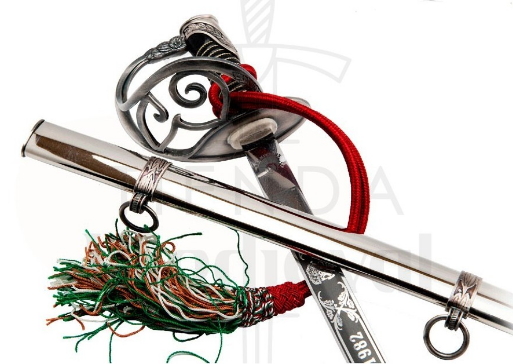 The Ertzaintza sabre measures 105 centimeters in total, with a slightly curved blade 82 centimeters long. Forged in high-quality tempered stainless steel, it features a functional double edge and central fullers that reduce weight without sacrificing strength. The width of the blade reaches 3 centimeters at the base, tapering progressively towards the tip.
The subtle curvature, of barely 2 centimeters, facilitates the straight carry in gala uniforms and evokes historical Carlist sabres. The mirror polish highlights laser engravings on the ricasso: ‘ERTZAINA 1982’ and the Tree of Gernika.
The guard, made of nickel-plated steel, adopts a half-shell protective shape adorned with intertwined laurel branches. These symbolic inscriptions represent victory and honor, extending to the curved quillons that protect the hand.
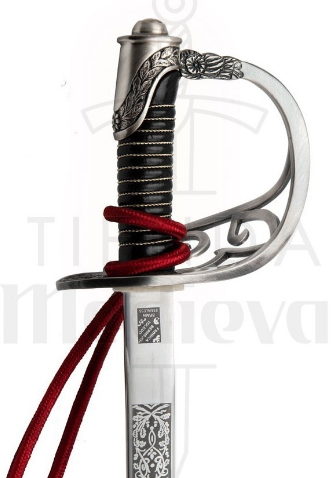
The ergonomic 12-centimeter hilt wraps black leather sewn with braided silver wire for a secure grip. The spherical pommel, engraved with the Ertzaintza shield, perfectly counterbalances the blade.
The metallic scabbard, made of lacquered gold brass, measures 85 centimeters and features three mounts with rings for a strap. Engravings include the names of the Basque provinces: ‘ARABA – BIZKAIA – GIPUZKOA’, along with mottos such as ‘ZUZENBA’.
These technical specifications of the 17Ertzaintza sabre ensure ceremonial durability and historical authenticity. Manufactured by specialized armories, every detail reinforces its role as an official insignia since 1982.
Collectors examine these elements to verify originals of the 1982 model sabre.
Symbolic Meaning and Value in Military Collections
The Ertzaintza sabre represents unyielding Basque pride, uniting millenary foral tradition with contemporary police identity. In official ceremonies, its straight carry projects elegance and authority, evoking the spirit of ancestral militias that defended autonomy.
Key symbols deepen its meaning. The Tree of Gernika in engravings symbolizes eternal freedom and Basque democratic assemblies. Laurel branches on the guard denote victory, honor, and perseverance, while inscriptions like ‘ERTZAINA 1982’ mark the post-Franco institutional rebirth.
The names of the provinces – Araba, Bizkaia, Gipuzkoa – forge territorial unity on the blade and scabbard, reinforcing cultural cohesion. The colors green, red, and silver refer to Basque mountains, foral blood, and Carlist nobility.
During parades, promotions, and decorations, the Ertzaintza sabre complements gala uniforms, elevating solemnity. Carried by officers, it distinguishes rank and a lifelong commitment to the Ertzaintza.
For military sabre collectors, this sabre is essential. Its rarity – limited to ceremonies – generates exclusivity. Authentic specimens, with personal dedications, narrate real stories of service, enriching European collections.
Economic value grows in specialized auctions, where 1982 model sabres exceed thousands of dollars due to impeccable condition and verified provenance. It complements Carlist, Napoleonic, or royal guard sabres, offering a modern-historical bridge.
Incorporating it adds a unique Basque dimension, celebrating a living tradition. Collectors appreciate its precise craftsmanship and deep symbolism, making the Ertzaintza sabre a coveted jewel in military cabinets.
Other Spanish Military Sabres to expand your collection


Buying and Maintenance Guide: Acquire your Ertzaintza Sabre
Acquiring an authentic Ertzaintza sabre or a quality replica requires verifying reliable sources and precise technical details. Originals, rare and expensive, emerge in international auctions such as Hermann Historica or private sales from retired officers. In Spain, military antique fairs in Madrid and Bilbao connect buyers with direct heirs.
 Faithful replicas are produced by Armería Bermejo of Toledo, the official provider of the 1982 model. These exactly repeat the stainless steel blade, laser engravings with ‘ERTZAINA 1982’ and Basque shields, using artisanal techniques to match originals.
To identify genuine pieces, check these elements:
- Deep and aligned engravings: Tree of Gernika, provinces ‘ARABA-BIZKAIA-GIPUZKOA’, motto ‘ZUZENBA’.
- Exact 2 cm blade curvature, symmetrical fullers, polish without scratches.
- Heavy nickel-plated guard metal, without bubbles; hilt wire without slack.
- Gold scabbard with firm mounts and functional rings.
Avoid cheap Asian replicas with typographical errors or dull finishes that devalue collections.
Recommended sites: Todocoleccion.net for auctions, Armería Bermejo official website, forums, and Facebook groups for military sabre collectors. Always request certificates and detailed macro photographs.
Approximate prices: originals 2500-6000 euros in excellent condition; premium replicas 450-850 euros.
Maintenance preserves value:
- Clean the blade with a microfiber cloth and sword oil every week, drying after use.
- Apply polishing paste for brass and silver monthly with a soft brush.
- Store in a lined case, with silica gel, controlled temperature 15-20°C.
- Inspect connections annually; consult a certified armorer for repairs.
All these cares guarantee an intelligent acquisition and lasting conservation of these pieces.