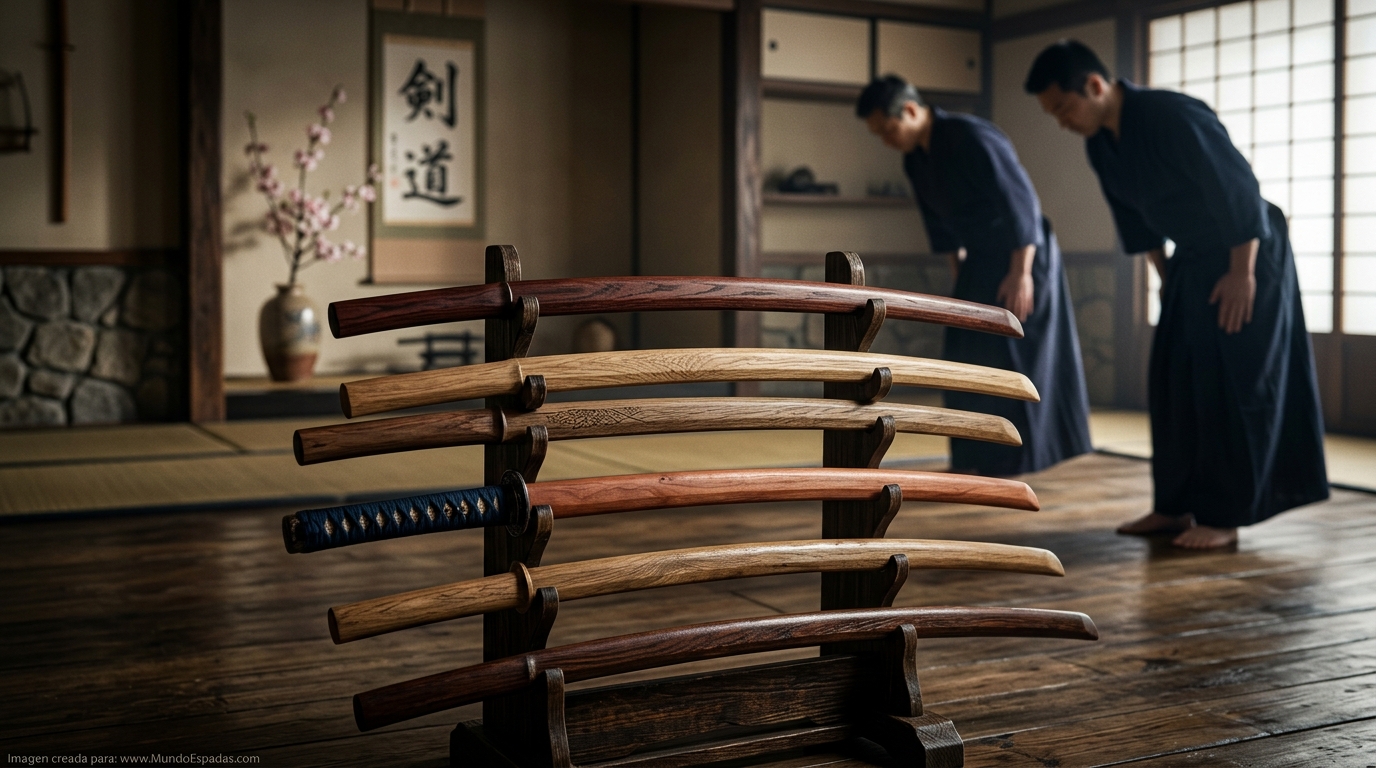
As you delve into the fascinating world of Japanese martial arts, the wooden bokken reveals itself as an indispensable tool. Not only is it fundamental for safely practising sword techniques, but it also represents a connection to centuries of samurai tradition. Choosing the right one is crucial for your development, and this guide will help you to buy a wooden bokken that best suits your needs and practice, ensuring durability and optimal performance.
What is a Bokken and Why is it Essential for Your Training?
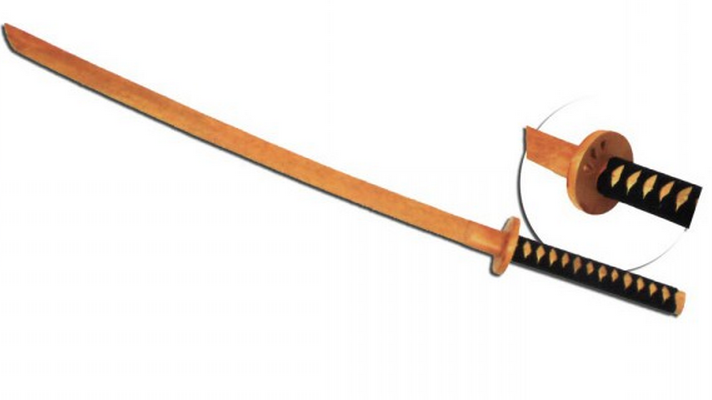
A bokken, also known as “bokuto”, is a wooden replica of a Japanese katana. Its design faithfully mimics the shape, weight, and balance of a real sword, but without the sharp edge, making it a safe and effective training tool. The word “bokken” literally translates to “wooden sword”, and its use dates back to the early days of Japanese swordsmanship schools. The importance of the bokken lies in its ability to replicate the experience of handling a katana without the inherent risk of a sharp blade. It allows martial arts practitioners such as kenjutsu, kendo, or iaido to develop specific musculature, grip technique, distance, and cutting precision. Using a bokken is essential for simulating combat, practising kata, and developing the hand-eye coordination necessary to master the art of the sword.
Types of Bokken: Choose the Shape and Style According to Your Martial Discipline
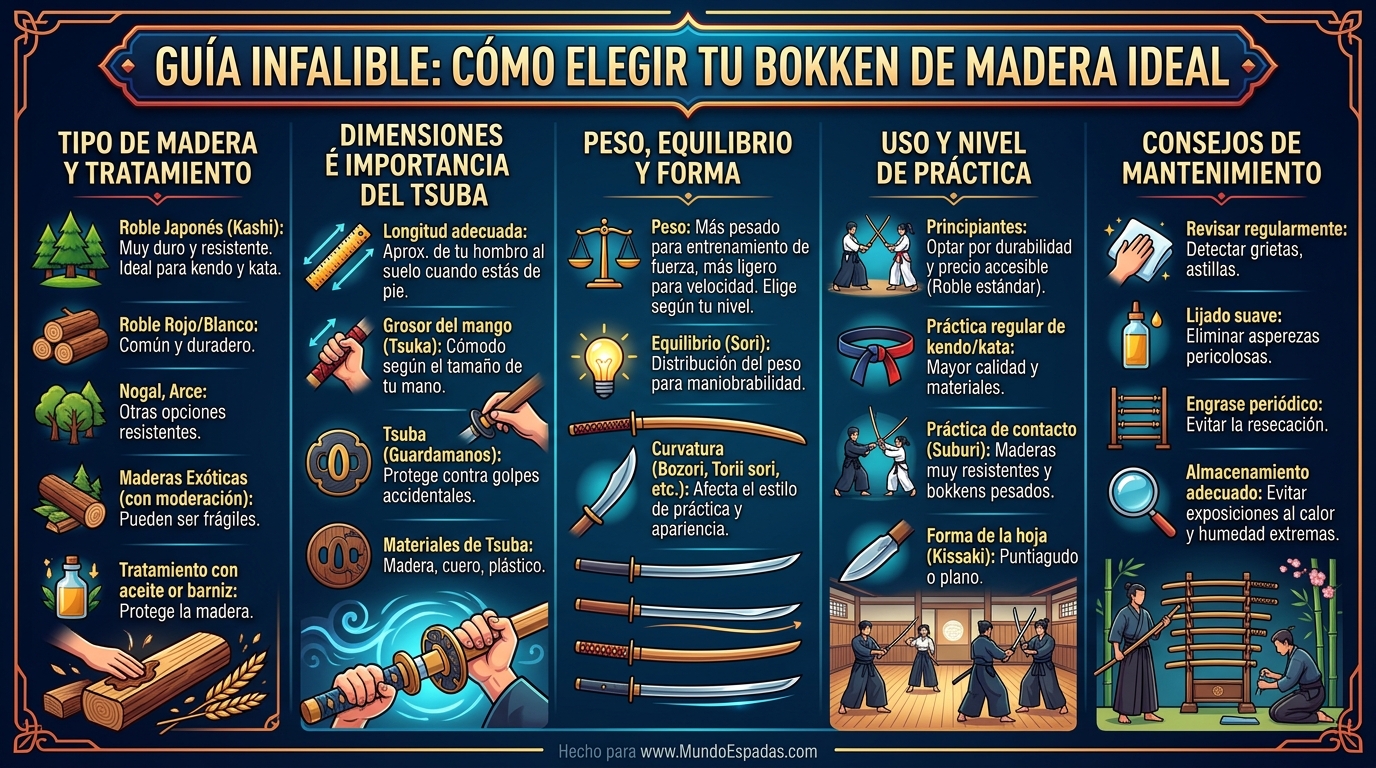
The variety of bokken corresponds to different martial arts disciplines and styles, each with specific characteristics. Before you buy a wooden bokken, it is essential to understand these differences to ensure a suitable choice. The most common types are designed to imitate katanas, wakizashis, and even tanto, adapting to different study programmes. For example, the Kendo bokken is usually thicker and heavier, ideal for practicing strong strikes and developing endurance. In contrast, bokken used in iaido or ancient kenjutsu often more faithfully replicate the curvature and balance of a real katana, allowing for more subtle training in handling and drawing. Some styles even use bokken with a tsuba (handguard) for paired practice, offering hand protection during simulated blocks and attacks. The choice of bokken style must align with the technical requirements of your particular martial art.
Standard Bokken (Kashima Shinryu / Katori Shinto Ryu)
These bokken usually replicate the dimensions and forms used in the oldest traditional schools. They are a balanced model that allows for versatile practice, suitable for both solo and paired training, and are a solid choice for beginners.
Bokken for Kendo
Designed specifically for Kendo Kata, it has a slightly different balance point and a shape that facilitates quick movements and regulated thrusts. They are often used in combination with specialised protective gear, such as bogu and armour, for safe practice.
Bokken Materials: Durability and Balance in Your Wood Choice
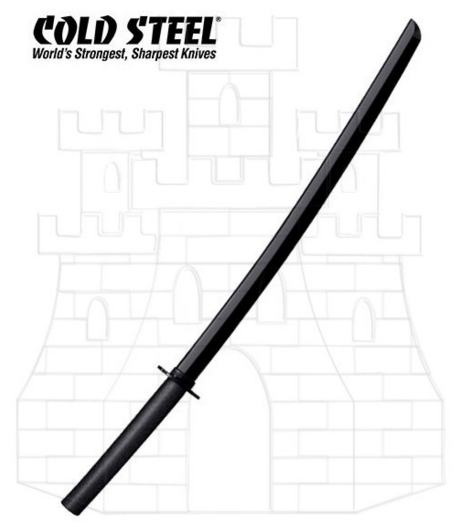
The choice of material is one of the most critical factors when deciding to buy a wooden bokken, as it directly influences its durability, weight, balance, and ultimately, the training experience. Each type of wood offers unique properties, suitable for different intensities of use and personal preferences. It is essential to understand these differences to make an informed decision.
Red Oak (Akagashi)
Japanese Red Oak (Akagashi) is one of the most popular and traditional materials for bokken. It is known for its good combination of hardness, strength, and balanced weight. This type of wood has a straight and uniform grain, which reduces the chances of it splintering or breaking under stress. It is ideal for intermediate to advanced students looking for a durable bokken for kata practice and paired training, though it requires regular maintenance to preserve its surface.
White Oak (Shirakashi)
Japanese White Oak (Shirakashi) is even denser and stronger than Red Oak. It is the preferred choice for more intensive contact training, including suburi (swing practice) and kumitachi (paired exercises involving strikes). Its greater density gives it superior weight and exceptional durability, although it can be a bit more expensive. Shirakashi bokken are less likely to dent and are highly valued for their ability to withstand the rigours of daily training, making them a long-term investment for serious practitioners.
Exotic Wood Bokken
Ebony
Ebony is an extremely dense and heavy wood, resulting in a bokken with superior weight and rigidity. Its extreme density makes it ideal for strength and endurance training, but its high cost and difficulty to work with make it less common for daily use. However, its durability is exceptional, and its lustrous finish also makes it a collector’s item.
| Type of Wood | Hardness (Janka Scale) | Relative Weight | Durability | Recommended Use |
|---|---|---|---|---|
| Red Oak (Akagashi) | 1290 lbf | Medium-High | Good | General training, Kata, Kumitachi |
| White Oak (Shirakashi) | 1360 lbf | High | Excellent | Intensive training, Suburi, Contact Kumitachi |
| Ebony | 3220 lbf | Very High | Exceptional | Strength training, Collector’s item |
Key Factors When Buying a Wooden Bokken: Length, Weight, and Grip
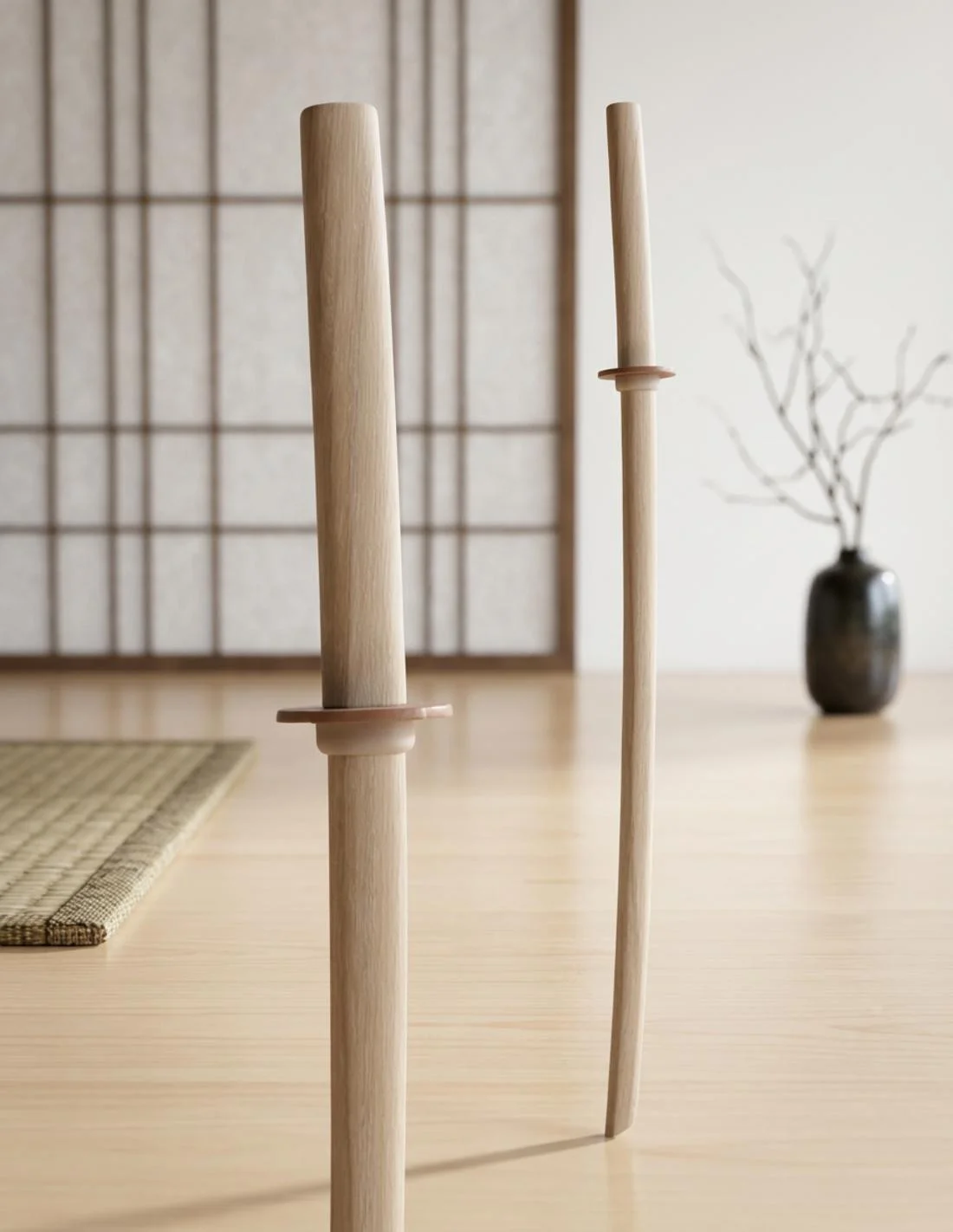
Besides the material, other factors determine the suitability of a bokken for your practice. Length is crucial and should be chosen according to your height and the specific branch of martial art you practice. A standard bokken for katana usually measures around 102 cm (40 inches), but shorter or longer variants exist. A bokken that is too long can be difficult to handle, while one that is too short may not provide adequate feedback for technique development. Weight influences the balance and the strength required for training. A heavier bokken is ideal for developing muscle endurance and can better simulate the feel of a real sword, while a lighter one allows for faster and more fluid movements. Finally, the grip or Tsuka (handle) should feel comfortable in your hands. Some bokken have a more oval shape, others are rounder, and the choice will depend on what gives you better control and a natural, secure grip.
Care and Maintenance of Your Bokken: Ensuring a Prolonged Lifespan
To ensure your wooden bokken has a prolonged lifespan and maintains its properties, proper care is essential. After each training session, it is advisable to wipe the bokken with a dry cloth to remove sweat and dirt. This prevents moisture buildup that could damage the wood. Occasionally applying linseed oil or a specific mineral oil for wood helps to nourish the material, preventing it from drying out, cracking, or splintering. Store your bokken in a dry place at room temperature, away from direct heat sources or extreme humidity, such as direct sunlight or heaters, which could cause warping or cracks in the wood. Good maintenance not only extends the life of your bokken but also preserves its structural integrity and aesthetics.
The Evolution of the Bokken: From Samurai Training to Modern Practice
The bokken is not simply a piece of wood; it is an artefact with a rich history intertwined with the origin of Japanese martial arts. Its evolution reflects changes in combat techniques and training philosophy throughout the centuries. From battlefields to modern dojos, the bokken has maintained its relevance as a fundamental tool.
| Era | Event |
|---|---|
| Muromachi Period (1336-1573) | |
| 15th Century | Initial development of Kenjutsu schools, with the bokken as the main tool for safe practice and preservation of real swords. |
| Early 16th Century | Miyamoto Musashi, a legendary swordsman, uses bokken in real combat, demonstrating its effectiveness as a weapon and training tool. |
| Edo Period (1603-1868) | |
| 17th Century | Formalisation of bokken training in dojos and Ryū (martial arts schools). Its use is standardised to avoid serious injuries. |
| Late 17th Century | Different bokken forms adapted to specific Kenjutsu styles are developed, with variations in weight and shape. |
| 18th Century | The bokken becomes a symbol of disciplined training and warrior tradition, appreciated for its simplicity and effectiveness. |
| Meiji Period (1868-1912) and Modern Era | |
| 1876 | Prohibition of carrying swords (Haitorei), which boosts the use of bokken and shinai as main practice tools to preserve sword arts. |
| 20th Century | Integration of the bokken into modern Kendo for Kata practice, keeping the traditional forms of Japanese swords alive. |
| Present Day | The bokken is used in a wide range of Japanese martial arts (Iaido, Aikido, Jodo, Kenjutsu, Kendo) and even in Western arts, globally recognised. |
Unravelling Mysteries: Answers to Your Bokken Questions
Specific questions often arise when considering the acquisition and use of a bokken. It is important to address them so that you can choose the perfect item and make the most of it in your training.
Is a bokken safe for contact combat?
A bokken, although made of wood, is still a blunt tool and can cause serious injury if used irresponsibly or without proper protective gear. For contact combat, especially with speed and impact, the use of a shinai (bamboo sword) and a bogu (Kendo armour) is strongly recommended. The bokken is ideal for kata practice, suburi, and light or controlled kumitachi, where the objective is precision and technique, not brute force.
How do I know what bokken length is right for me?
The ideal bokken length primarily depends on your height and the martial style you practice. As a general rule, a standard katana bokken (approximately 102 cm) is suitable for most adults. To check if it’s appropriate, place it on the ground with the handle resting; the tip should reach approximately your navel height or slightly above. Some martial styles have specific requirements, so it’s best to consult your instructor.
Do I need a tsuba (handguard) on my bokken?
The need for a tsuba depends on the type of training. If you practice a martial art that involves contact with another bokken or swords, especially in paired combat exercises, a tsuba is essential to protect your hands. However, for solo kata practice or disciplines such as Aikido, where strikes are more indirect, a bokken without a tsuba is commonly used. Many bokken come with detachable tsuba.
How can I differentiate quality between different wooden bokken?
The quality of a bokken is assessed by the type of wood, the finish, and the balance. Hard Japanese woods such as Shirakashi (white oak) are considered of the highest quality due to their density and durability. A good bokken will have a smooth finish, without splinters or imperfections, and its balance should feel natural and balanced in your hands. The weight should be consistent and not show strange fluctuations, and a straight wood grain indicates greater strength.
Can I customise my bokken?
Yes, many bokken can be customised. Common options include engraving characters (kanji) or your name, as well as adding a saya (wooden sheath) designed specifically for the bokken. It is also possible to customise the tsuka (handle) with different leather or cotton wrappings for better grip or a particular aesthetic. It is important that any customisation maintains the structural integrity of the bokken so as not to compromise its functionality or safety.
Discover Our Selection of Wooden Bokken: A Guide to Choosing the Ideal One


Forge Your Martial Path with the Perfect Bokken
Choosing the ideal wooden bokken is a fundamental step in your martial journey, a decision that will impact your training for years. By considering the material, type, length, and care, you ensure that you acquire a tool that will not only serve you faithfully but also honour the rich tradition of Japanese martial arts. Explore our selection to find the bokken that resonates with you and helps you perfect your techniques, forging both your skill and your spirit.
Want the best Bokken? | Other katanas that might interest you