
Francisco Pizarro’s sword played a central and symbolic role in the history and conquest of Peru. This instrument was not merely a weapon, but an extension of the conquistadors’ will, marking the beginning of a new era on the American continent. Its blade paved the way for the Spanish Empire, radically transforming the destiny of ancient civilisations. Exploring its significance means delving into the intricacies of an unprecedented cultural and military clash.
The Blade of an Era: Francisco Pizarro’s Sword as a Symbol of Conquest

Francisco Pizarro’s sword, beyond its function as a weapon, stood as a potent symbol of the Spanish conquest. It represented European technological advancement and military superiority against the Inca defences, which lacked iron weapons. Every blow and every victory consolidated its meaning as an instrument of a new order. This material object encapsulated the determination and ambition of a man and an empire. Pizarro wielded it to forge a vast Spanish dominion, forever transforming the political and cultural landscape of South America. His image, inextricably linked to the possession of this weapon, projects into our times. The steel of the sword, with its shine and resilience, contrasted with the native stone and bronze weapons. This technological difference was a decisive factor in the asymmetry of the conflict. Thus, the sword became a tangible emblem of power and the inevitability of change.
Anatomy of Conquest: Possible Types and Styles of Swords Used by Pizarro and his Men
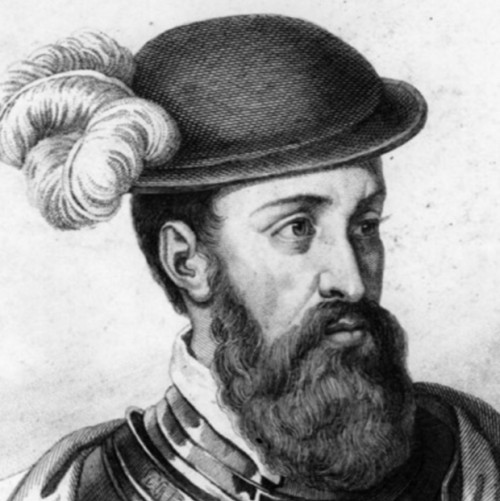
The conquistadors, including Francisco Pizarro, predominantly employed the rapier and the one-handed sword, known for their versatility in combat. These weapons were ideal for both thrusts and cuts, effective against the light armour or hides of the Incas. Their design allowed for agile handling in close-quarters combat. The one-handed sword, shorter and sturdier, was common among infantry soldiers for direct confrontations. Rapiers, or cup-hilted swords, longer and thinner, were preferred by knights and officers, allowing for superior reach and more sophisticated defence. The latter were notable for their elaborate guard, which protected the hand. Some conquistadors might also have carried two-handed swords, especially for the defence of formations or in high-impact situations. However, their use was more limited due to their size and the need to use both hands. The diversity of styles reflected the different roles and preferences on the battlefield.
Common Variants of 16th-Century Spanish Swords
Swords varied in length and hilt type, adapting to the individual needs of the combatant. The Vizcaína sword, for example, was a functional and robust variant, highly prized for its strength and effectiveness. The cup-hilted or ‘taza’ sword, with an enveloping guard, offered superior hand protection. This was crucial in the heat of battle against adversaries using blunt weapons. Its design was a direct evolution of combat needs. Another type was the sail-hilted sword, with a simpler but effective guard, common among regular troops. These weapons combined simplicity with robustness, serving as reliable tools for the ordinary soldier. The variety ensured that each man had a suitable weapon for his style.
Weapon Type Characteristics Primary Use Rapier Long, thin blade, sharp point, elaborate guard (cup or rings). Thrusts, one-on-one combat, officers. One-Handed Sword Shorter and sturdier, wide blade, simple guard (cross). Cuts, combat in formations, infantry. Bastard Sword Use with one or two hands, medium blade, adaptable. Combat flexibility. Two-Handed Sword Very long, two-handed, wide blade. Formation defence, powerful blows.
Materials and Craftsmanship: What Were Swords Made Of During Francisco Pizarro’s Time?
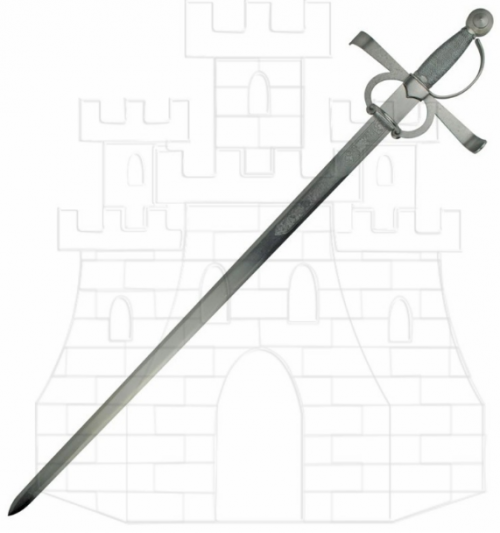
The swords that arrived in Peru with Francisco Pizarro and his men were primarily forged from high-quality steel, a superior and technologically advanced material for the time. This steel was obtained through complex casting and forging processes, often in specialised workshops in Toledo, Milan, or Solingen, renowned centres of armory. These swords were characterised by their hardness and flexibility. The process included tempering and annealing, which gave the blade exceptional resistance to breakage and wear. Tempered steel offered a crucial advantage in the durability and effectiveness of the weapon during long battles and campaigns. The craftsmanship involved skill and experience passed down through generations. The hilts were made of wood or metal, covered with leather or wire for a better grip. Pommels and guards, often made of steel or iron, not only balanced the sword but also offered vital protection to the combatant’s hand. The sum of these elements created a formidable and balanced weapon.
The Forging Process and its Implications
The forging of the blades involved heating the steel to high temperatures and repeatedly striking it. This process removed impurities and compacted the metal, improving its molecular structure. The result was a denser and stronger blade. Tempering consisted of rapidly cooling the red-hot steel, usually in oil or water, to increase its hardness. However, excessively hard steel is brittle, so it required subsequent annealing. This step restored the metal’s flexibility, reducing its fragility. The quality of the steel and the forging methods were a well-guarded secret of master armourers. They were considered key to success in creating combat swords. A well-made sword could mean the difference between life and death on the battlefield.
The Sword in Combat: Strategies and Tactics of Sword Use by the Conquistadors in Peru
The sword was the primary weapon of the Spanish conquistadors, and its use was integrated into a meticulous strategy. Initial tactics involved forming squares or lines that allowed swordsmen to maximise their reach and defence. This was especially effective against mass attacks by Inca troops. The conquistadors, trained in European fencing, leveraged their superiority in offensive and defensive manoeuvres. Thrusts with the sword point were much more lethal against unarmoured bodies than cutting blows. This allowed opponents to be quickly disabled. The combination of the sword with bucklers (small shields) or with polearms such as spears and pikes created an impenetrable barrier. This combination of weapons and tactics allowed them to keep a superior number of enemies at bay. Discipline and coordination were essential for the effectiveness of these formations.
Specific Tactics Against the Incas
The conquistadors noted that Inca weapons, such as stone maces and bronze axes, were primarily blunt. This made the rapid thrusts of the swords devastating. The ability to penetrate and injure vital organs offered a decisive advantage. Cavalry and swordsmen worked in conjunction, with the cavalry breaking enemy formations and the swordsmen finishing off and consolidating the attack. The mobility of the horses and the reach of the swords created a lethal synergistic effect. This quickly demoralised the Inca defenders. The use of psychological terror, through the impact of their weapons and attire, was also a tactic. The sight of shiny steel and the effectiveness of swords in combat significantly contributed to the perception of invincibility. This perception reinforced their dominance over the territory.
Beyond the Battle: Francisco Pizarro’s Sword as an Object of Power and Legacy
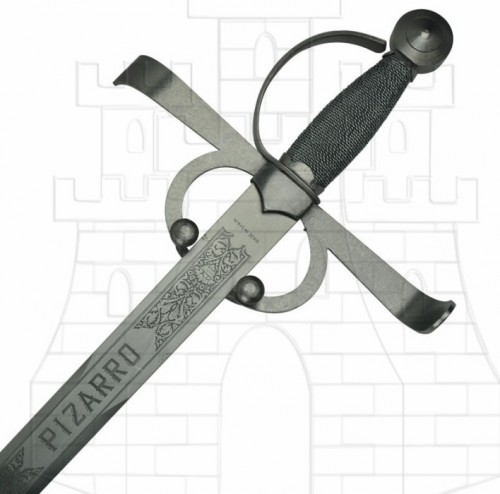
Francisco Pizarro’s sword, after the battles, transcended its military function to become an object of power and a symbol of his legacy. It was the instrument with which the possession of new lands was proclaimed in the name of the Spanish Crown. Each time it was drawn in ceremonies, it reaffirmed the conqueror’s authority. It represented the sovereignty and audacity of those who dared to cross an ocean and challenge an empire. It was used not only for warfare but also to draw boundaries and establish encomiendas. Its presence implied martial law and the establishment of a new social order. Even after Pizarro’s life, his sword remained a tangible reminder of the founding of the Viceroyalty of Peru. It became a historical relic, associated with the iconic figure of the conquistador. Its symbolic value far exceeded its material worth.
The Sword as an Instrument of Governance
Pizarro not only used the sword for war but also as part of his insignia as governor and captain-general. In official acts, carrying it served to legitimise his authority in the newly conquered land. The sword was an emblem of justice and civil power. When Pizarro founded cities, the sword was symbolically used to draw the first furrow or to mark the centre of the square. This ritual act consolidated the Spanish presence and the appropriation of the territory. It was a physical manifestation of legal authority. The sword was not just personal property; it was an emblem of royalty and imperial will projected in America. Its presence in any scene evoked the immense force of the empire it represented. It reflected the power of the Crown and its capacity for expansion.
Recreating History: How Modern Swords Inspired by Pizarro Capture the Essence of the Era
Modern swords inspired by Francisco Pizarro are not mere replicas, but carefully designed pieces that capture the historical essence of the era. For collectors and enthusiasts, these swords represent a tangible link to a fascinating period of history. Current manufacturing techniques allow for astonishing fidelity to the originals. These recreations not only replicate the form and size but also the feel and balance of historical weapons. Modern forging methods and high-quality materials, such as carbon steels, are used, often exceeding the properties of the originals. This ensures functional as well as aesthetic authenticity. The interest in these swords lies in their ability to transport collectors to the age of conquest, allowing them to possess a part of that mystery and power. They are conversation pieces, works of art, and objects of historical study. Every detail, from the guard to the pommel, is replicated with precision.
Materials and Finishes of Conquistador Sword Replicas
Replicas are often made from 1045 or 1060 carbon steel, which offers an ideal balance between hardness and strength. The polishing and sharpening of the blade are carried out with great attention to detail, seeking the shine and sharpness of the original swords. The blades are treated to resist corrosion. The hilts are usually made of wood, wrapped in authentic leather or wire, replicating historical grip patterns. The pommels and guards, often cast in steel or brass, are based on designs found on 16th-century swords. Some of these elements may feature intricate engravings or decorations. Finishes can vary from mirror polishes to aged surfaces, imitating the wear of time. This allows buyers to choose between a pristine replica or one that evokes the passage of centuries. The dedication to craftsmanship is evident in every piece. The demand for these replicas comes from both historical fencing enthusiasts and historians and museums. They are educational tools and decorative elements that honour the master armoury of the time. Acquiring one of these swords is to possess a piece of art and history.
Chronology of the Influence of Francisco Pizarro’s Sword in the History and Conquest of Peru
Francisco Pizarro’s sword and those of his men were key catalysts in the conquest of Peru. From the first contacts to the establishment of the Viceroyalty, their role was undeniable. This chronology details crucial moments where European steel transformed the destiny of the Inca Empire.
PeriodEvent First Contacts and Expeditions 1524-1528Pizarro’s first expeditions to the South American coast, exploring and gathering information. European swords are seen for the first time. 1528Capitulation of Toledo: Pizarro obtains permission from the Spanish Crown to conquer and govern the territories he discovered, reinforcing the authority of his sword. The Landing and the Beginning of the Conquest 1532, JanuaryPizarro lands in Tumbes, Peru, with a small force. The display of swords and horses impresses the natives. 1532, NovemberEncounter at Cajamarca: Pizarro captures Atahualpa. The effectiveness of swords and other European weapons is decisive in the Inca panic. Consolidation and Expansion of Spanish Dominion 1533Execution of Atahualpa. The conquistadors, armed with their swords, secure control of Cusco, the Inca capital. 1535Founding of Lima. Pizarro’s sword symbolises the imposition of Spanish authority and the creation of new cities. Uprisings and Establishment of the Viceroyalty 1536-1537Manco Inca’s uprising. The conquistadors use their swords to defend themselves and crush the resistance. 1541Death of Francisco Pizarro. Internal struggles between conquistador factions, with swords as primary weapons, mark the end of his personal era. 1542Establishment of the Viceroyalty of Peru. Although no longer Pizarro’s sword, steel continues to be the central symbol of Spanish military power.
Discover our selection of Francisco Pizarro’s Swords in the History and Conquest of Peru


The Echo of Steel: The Long Shadow of Pizarro’s Sword in Collective Memory
Francisco Pizarro’s sword still resonates in collective memory, embodying a critical chapter of colonisation. Its image evokes debates about the clash of cultures, military power, and the transformation of identities. It is a palpable reminder of how an object can influence the course of history. In our shop, we pay homage to this type of weaponry, offering replicas that allow one to appreciate the mastery of historical forging. We invite you to explore our collection of medieval and conquistador swords. Discover how these pieces of art and power can become part of your own history.