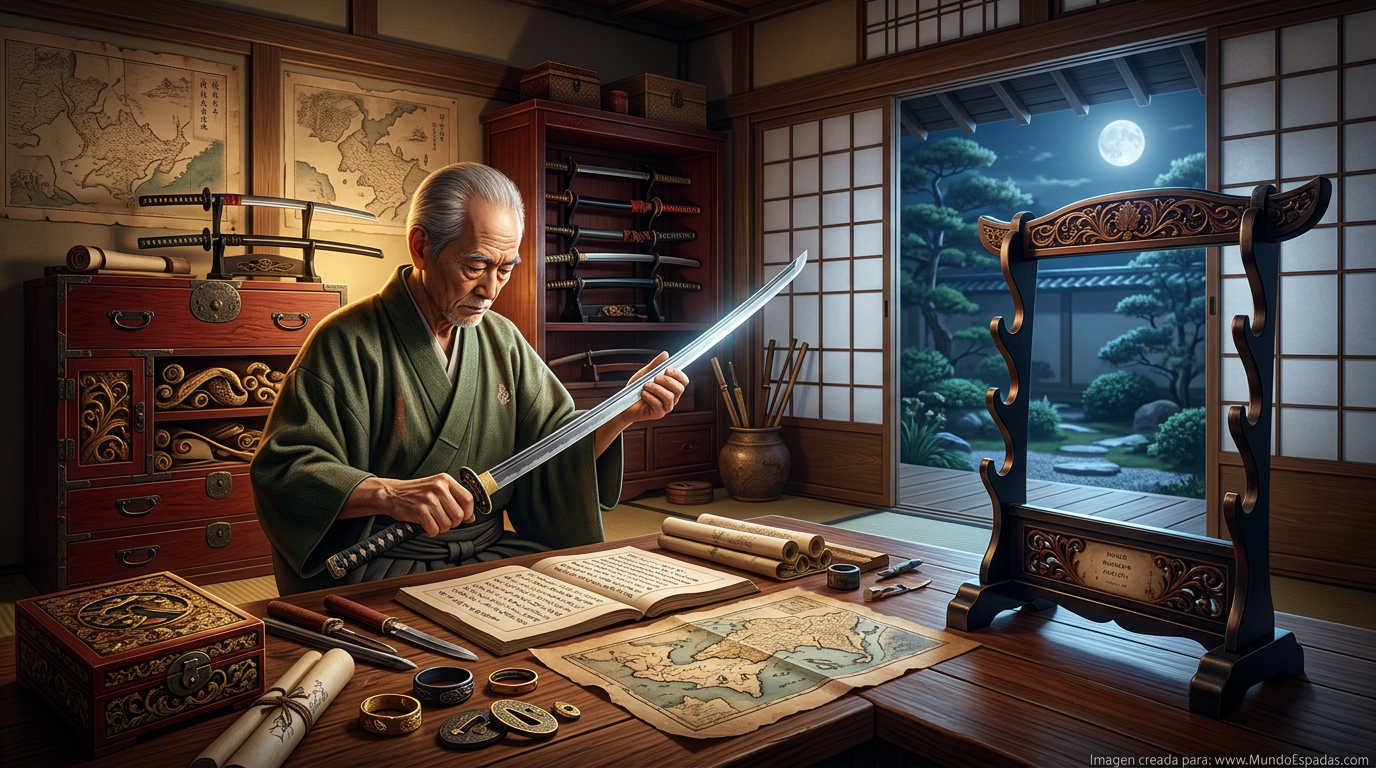
The Honjo Masamune, a name that conjures mystery and reverence in the world of Japanese swords, represents the pinnacle of Samurai blade craftsmanship. This legendary katana, forged by none other than Goro Masamune, one of Japan’s most celebrated smiths in the 13th century, has become synonymous with perfection and remains a fascinating enigma.
Its disappearance after the Second World War has fuelled a deep longing among historians, collectors, and enthusiasts, making it a central piece of feudal Japanese mythology. To unravel the story of the Honjo Masamune is to embark on a journey through centuries of battles, legends, and the unparalleled mastery of a sword that, though lost, continues to captivate the imagination.
The Unrivalled Lineage: Goro Masamune and the Birth of Honjo Masamune
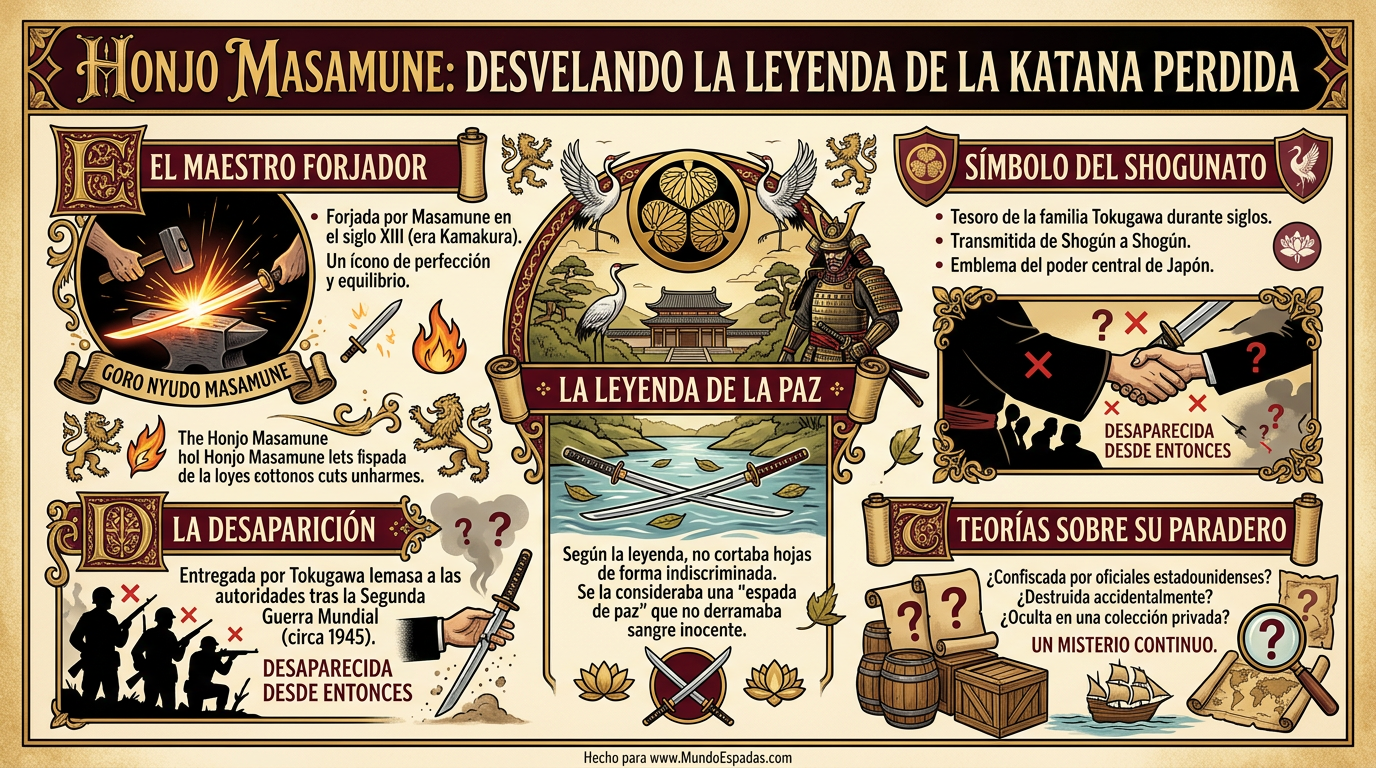
The story of the Honjo Masamune begins with its creator, Goro Masamune, a master swordsmith of the Kamakura period (13th century). Recognised as one of the “Sanami”, the three great smiths of Japan, Masamune’s reputation was cemented by the unprecedented quality of his blades, which stood out for their astonishing strength and exquisite beauty.
His katanas, including the specimen that would later be known as Honjo Masamune, are revered for their ability to cut with devastating precision without fracturing—a technical feat for the era. This perfect balance between hardness and flexibility was achieved through a meticulous process he perfected, marking a turning point in sword manufacturing.
Goro Masamune’s influence transcended his own workshop, setting forging standards that would resonate through the centuries. His disciples, and their disciples, formed schools that continued his legacy, but no blade achieved the fame and aura of mystery quite like the Honjo Masamune. Although the first detailed records of its existence were consolidated centuries after its creation, its origin in Masamune’s forge is undeniable and fundamental to its status.
Unravelling the Hamon: The Master Shita-Kitae Forging of the Honjo Masamune
The excellence of the Honjo Masamune lies in its forging process, a complex alchemy of steel and fire. This katana is said to have been the result of over 30,000 layers of steel, forged using the shita-kitae method, an ancient Japanese technique of repeated folding.
This procedure not only removed impurities and homogenised the steel but also created a laminated structure that gave the blade an unparalleled combination of flexibility in the core and relentless hardness at the edge. The most distinctive feature of Masamune’s katanas is, undoubtedly, their hamon, the temper line running along the blade’s edge.
The hamon of the Honjo Masamune, known for its undulating and subtle patterns called notare-midare, is proof of its creator’s mastery. This pattern is not merely aesthetic; it is the visible result of a precise differential heat treatment, where clay is applied to the blade before rapid quenching.
This application creates distinct zones of hardness, producing an extremely hard edge for cutting and a more elastic spine to withstand impacts. The skill to control this process was what distinguished Masamune from other smiths, and the visual complexity of the Honjo Masamune’s hamon testifies to this ancient wisdom.
The Honjo Masamune Through the Centuries: Owners, Battles, and Disappearance
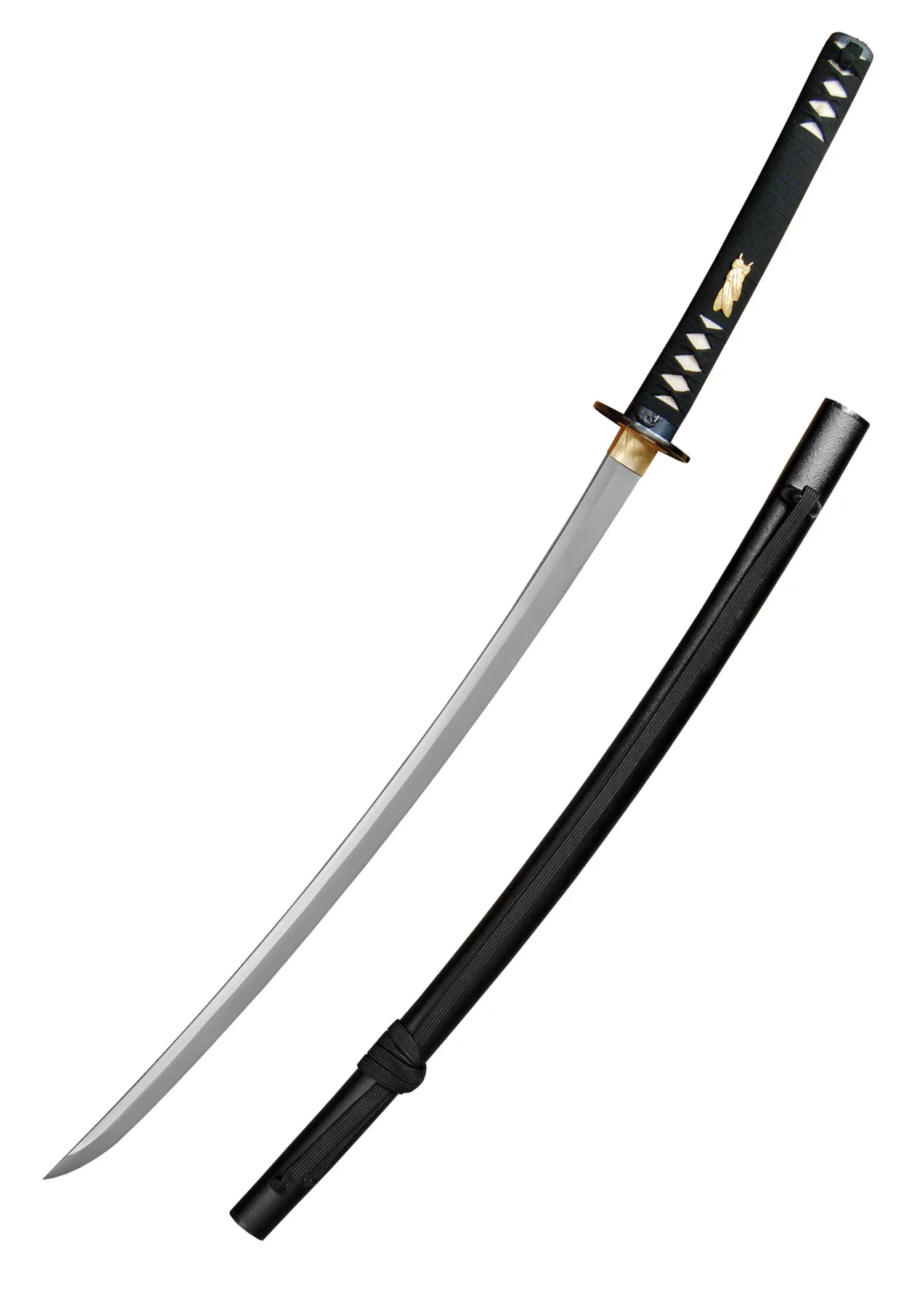
Throughout its known history, the Honjo Masamune became a symbol of power and prestige, passing through the hands of some of Japan’s most influential samurai and feudal lords. Its first significant mention associates it with General Honjo Shigenaga, who won it at the Battle of Kawanakajima in 1561. It is said that Shigenaga killed his enemy with it, though the blade suffered a blow that left a nick, which was repaired by Masamune himself or a disciple.
This katana was subsequently acquired by the Toyotomi family and then by the Tokugawa clan, who regarded it as a family treasure and a symbol of their hegemony. During the Tokugawa period, the Honjo Masamune was designated a Kōtoku Tenka Goken, one of the five most valuable swords in the realm, underscoring its insurmountable importance.
Its lineage of owners made it a coveted object, passed down through generations within Japan’s military and political elites until the end of the Second World War. The story of its owners is not just a chronicle of the sword, but a reflection of the dynastic changes and power struggles that shaped feudal Japan.
Its disappearance in 1945, after being handed over to the Allied occupation forces, plunged it into mystery, culminating centuries of documented and eventful existence.
Where is the Honjo Masamune?: Theories and Expeditions in Search of the Lost Katana
The disappearance of the Honjo Masamune after Japan’s capitulation in 1945 is one of the greatest enigmas in historical arms collecting. In December 1945, the last registered owner, Tokugawa Iemasa, handed the sword along with 14 other weapons to the Mejiro Police, who in turn handed them over to an American sergeant.
This sergeant, identified as Sergeant Coldy Birmore (the real name is debated and possibly a transcription error), is the last known person to have been in possession of the katana. Since then, the sword has vanished, fuelling countless speculations.
Theories on its whereabouts
There are several theories about what might have happened to the Honjo Masamune:
- Destruction: It is possible that it was destroyed along with many other Japanese weapons by the occupation forces, following the policy of demilitarisation.
- Private collection: It could have been sold or kept by an American soldier as a souvenir, passing into a private collection and remaining hidden.
- Resale on the black market: A possible fate is the black market for art and antiques, where an object of such value could fetch exorbitant sums.The search for the Honjo Masamune has become a kind of Holy Grail for historians and enthusiasts. Expeditions and searches have been carried out in the United States, hoping to locate the sergeant or his descendants. Despite considerable efforts by the Japanese Art Sword Preservation Foundation (NBTHK) and private collectors, the legendary katana has yet to surface.
From time to time, rumours of its possible discovery emerge, but to date, none have been verified. The hope for its recovery remains alive, driven by the desire to restore this national treasure to its rightful place in Japanese history.
The Cultural Influence of Honjo Masamune: Legend, Symbolism, and Lasting Legacy
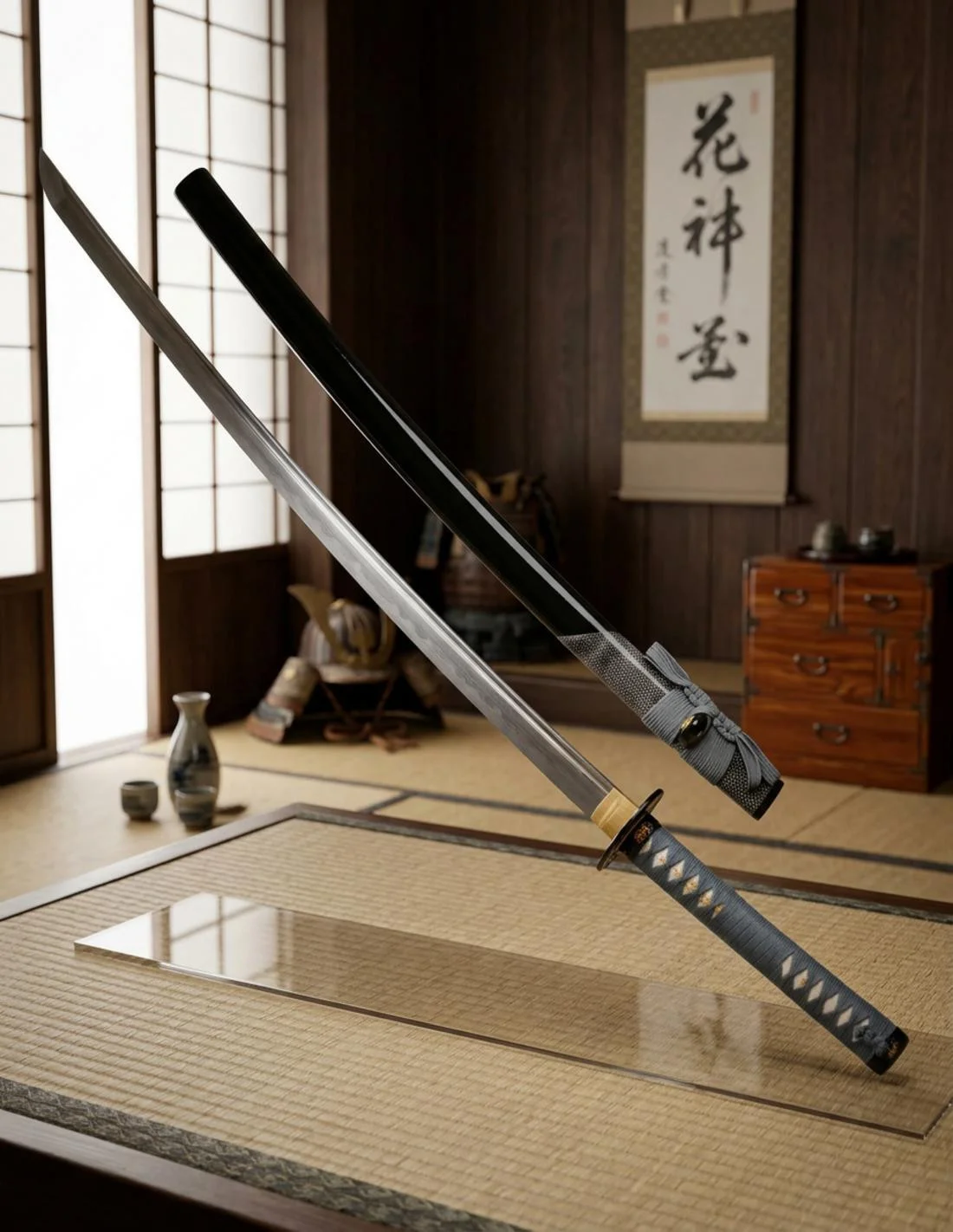
The Honjo Masamune transcends its status as a weapon to become an unbreakable cultural icon, a symbol of Japanese forging and the samurai ethic. Its name evokes not only the technical mastery of Goro Masamune but also aesthetic perfection and the indomitable spirit of the warrior.
In Japanese culture, a katana is not merely a tool but an extension of the samurai’s soul, imbued with philosophical and spiritual meanings. The Honjo Masamune, in particular, perfectly embodies these values, being considered one of the highest works of art produced by human hands.
The legend surrounding the sword has been fuelled by centuries of tales and its mysterious disappearance, making it a recurring motif in literature, cinema, and video games. Its search has been idealised, representing the eternal quest for lost perfection and value.
The symbolism of the Honjo Masamune extends to the very idea of the “perfect katana,” a blade capable of cutting the wind, invincible in battle, and possessing a mystical beauty. It is not merely a collector’s item; it is a living piece of history, a testament to human ingenuity and the profound reverence held in Japan for exceptional craftsmanship.
Master Replicas and Authenticity: How to Revive the Honjo Masamune Experience
Given the impossibility of owning the original, the desire to experience the magnificence of the Honjo Masamune is satisfied through master replicas. These pieces are not mere imitations; they are works of art in their own right, created by modern artisans who study and apply ancient forging techniques.
Authenticity in a replica is not only measured by its aesthetic resemblance but by its fidelity to construction methods and materials. A high-quality replica of the Honjo Masamune will faithfully replicate the shita-kitae, generating thousands of layers of steel to mimic the strength and grain pattern.
Key features of authentic replicas:
- Folded steel (tamahagane or modern high-carbon steels): Reproducing the folding of 30,000 layers is a challenge addressed with superior quality steels, seeking the essence of the technique.
- Natural hamon: The differential temper pattern, or hamon, must be authentic, created by applying clay and differential quenching, not engraved or artificially added.
- Sharp and functional edge: Although collectible replicas are not used in combat, the edge must be capable of demonstrating cutting ability if desired, reflecting the sword’s original purpose.
There are various types of replicas, from display pieces, meticulously detailed in their finish, to functional ones, forged with the intention of being used in cutting practices (tameshigiri). The choice depends on the collector, but the common goal is to honour Masamune’s legacy.
By acquiring a replica of the Honjo Masamune, one invests in a piece that captures the spirit of the legend, allowing its influence to live on in the present and for the appreciation of Japanese forging to endure and be passed on to new generations of enthusiasts and collectors.
Beyond Honjo Masamune: Other Legendary Katanas and Their Place in History
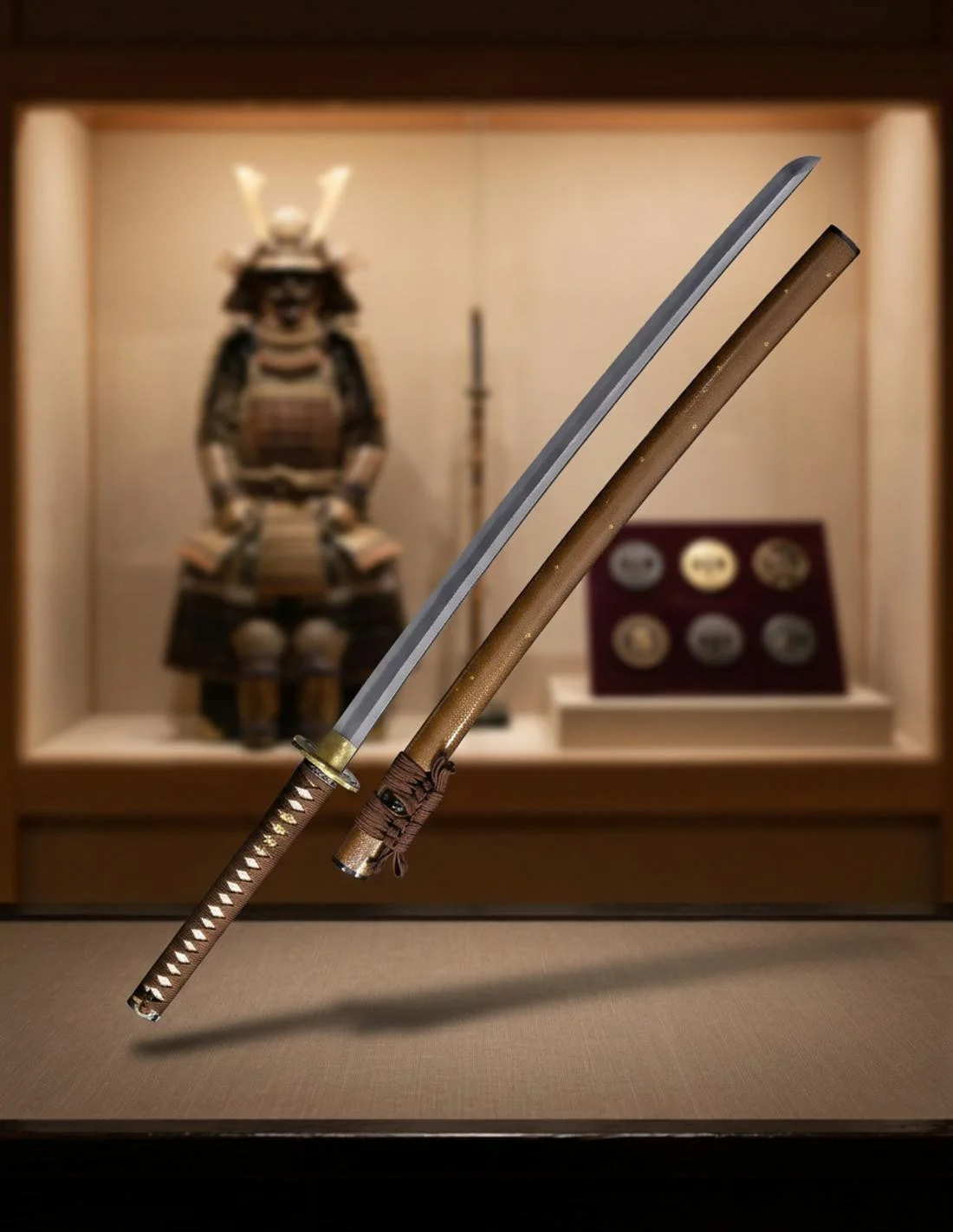
While the Honjo Masamune holds a pre-eminent place in the mythology of Japanese swords, the pantheon of legendary katanas is vast and fascinating. Each of these weapons tells its own story, forged in the crucible of war and artisanal mastery, and all contribute to the rich tradition of Japanese forging.
Let’s consider some of these other notable katanas:
Katanas with Fascinating Histories
- Muramasa: Often contrasted with Masamune, Muramasa swords are known for their astonishing sharpness, but also for a sinister reputation. They are said to crave blood and drive their wielders mad, leading them to be banned by Shogun Tokugawa Ieyasu. Although this prohibition was based on superstitions, the quality of their forging is undeniable.
- Dojigiri Yasutsuna: Considered one of the “Five Great Katanas Under Heaven” (Tenka-Goken), this is a masterpiece from the Heian period. Its name, “Oni Cutter,” derives from the legend that it was used by Minamoto no Yorimitsu to defeat Shuten Doji, a giant oni (demon).
- Mikazuki Munechika: Another of the Tenka-Goken, forged by the famous swordsmith Munechika of Kyoto in the 10th or 11th century. It is famous for its hamon pattern resembling a crescent moon (“mikazuki”), hence its name. It is a national treasure of Japan.
Each of these katanas, along with the Honjo Masamune, reveals different facets of Japanese history, from the technological challenges of forging to the complex ties binding war, politics, and religion. They are true gems that attest to the art and history of the Land of the Rising Sun.
The existence of these legendary swords demonstrates that Japanese culture had a deep appreciation for exceptional craftsmanship and rich narrative. These were not merely weapons but extensions of the warriors’ souls and immortal symbols of samurai honour, enduring to this day.
Honjo Masamune Chronology: A Journey Through the History of the Lost Katana
The Honjo Masamune katana has traversed a turbulent path through history, reflecting the triumphs and tribulations of samurai clans and shifts in power in Japan. This chronology details key moments in the life of this legendary blade, from its creation to its enigmatic disappearance.
| Era | Event |
|---|---|
| Kamakura Period (13th Century) | |
| Approx. 1280-1320 | Forging of the Honjo Masamune by Goro Masamune, the great master swordsmith. |
| Unknown | The sword remains in the possession of minor samurai, its existence beginning to gain a reputation for its quality. |
| Sengoku Period (Japanese Civil Wars: 16th Century) | |
| 1561 | Battle of Kawanakajima. Honjo Shigenaga acquires it after defeating his opponent, becoming its owner and giving it its name. |
| Late 16th Century | The katana passes into the hands of the Uesugi clan, as part of a payment or strategic acquisition. |
| Edo Period (Tokugawa Shogunate: 17th-19th Century) | |
| Early 17th Century | The Tokugawa clan acquires the Honjo Masamune, possibly through an exchange or purchase of valuables. |
| During the 17th Century | The sword is designated a Kokuho (National Treasure), in recognition of its inestimable value and craftsmanship. |
| 1644 | The Honjo Masamune is formally recorded in the annals of the Tokugawa Shogunate, solidifying its status. |
| Until 1868 | It remains a jewel of the Tokugawa family, a symbol of their power and lineage. |
| Meiji Period (Restoration: 19th-20th Century) | |
| 1868 | With the dissolution of the Tokugawa Shogunate, the katana remains in the family’s possession. |
| Early 20th Century | The katana is occasionally exhibited, but primarily safeguarded as a family treasure. |
| Second World War and Post-War (20th Century) | |
| 1945 (December) | Tokugawa Iemasa, the last recorded owner, hands the sword along with 14 other katanas to the Mejiro police station, who in turn hand them over to the American occupier. |
| January 1946 | An American sergeant, supposedly named “Coldy Birmore,” receives it. |
| Since 1946 | The Honjo Masamune disappears without a trace, its whereabouts remain subject to intense search and speculation. |
Discover our selection of Honjo Masamune: unravelling the legend of the lost katana


The Eternal Echo of the Honjo Masamune: Keeping the Legend Alive in Every Collection
The Honjo Masamune, though physically lost, remains the beacon illuminating the history of the Japanese katana. Its legend endures, not only for its unparalleled beauty and artisanal mastery but also for the mystery surrounding its disappearance.
In our shop, we celebrate this legacy through replicas that honour the complexity and art of Japanese forging. Each piece is a tribute to Masamune’s excellence and the rich history it represents.
We invite collectors and enthusiasts to explore our selection, where they will find katanas that capture the essence of the legend. Keeping the story of the Honjo Masamune alive is to preserve an invaluable piece of Japanese cultural heritage.
Discover the samurai spirit in each of our swords and be part of the tradition that the Honjo Masamune embodies.
Superior practice katanas collection | Intermediate practice katanas