
Tameshigiri, or “test cutting”, is the traditional Japanese art of testing a katana’s quality and sharpness by cutting materials like bamboo or tatami. If you’re passionate about medieval weapons and want to begin this ancient practice, this guide will explain step by step how to practice Tameshigiri for beginners safely and effectively. We’ll cover everything from choosing the right equipment to basic techniques, safety tips, and the best materials for home practice.
What is Tameshigiri and Why Practice It?
Tameshigiri originated in Japan’s Edo period (1603-1868) as a method to test newly forged katanas. Today, it has become a discipline combining martial art, moving meditation, and connection with samurai tradition.
Benefits of practicing Tameshigiri:
- Improves katana handling technique
- Develops concentration and discipline
- Allows evaluation of your sword’s quality
- Connects with samurai culture
- Provides satisfaction from mastering precise cuts

Essential Equipment to Start Tameshigiri
For safe Tameshigiri practice you’ll need:
- Proper katana: Look for a real cutting sword (Iaito won’t work) with full tang (solid handle) and proper balance
- Cutting materials: Tatami omote rolls (most authentic) or green bamboo
- Protective gear: Gloves, goggles, and proper clothing
- Cutting stand: Stable base to hold materials
- Maintenance: Blade cleaning kit
Equipment Recommendations Approximate Budget Cutting katana 1060 steel blade or higher, full tang £200-£500 Tatami rolls Traditional tatami omote, 30-45cm long £10-£20 per roll Cutting stand Adjustable metal base £80-£150
Basic Tameshigiri Techniques for Beginners

Before attempting cuts, master these fundamentals:
- Stance (Kamae): Feet shoulder-width apart, knees slightly bent
- Grip (Te no Uchi): Right hand near tsuba, left at end of tsuka
- Hip movement: Power comes from hip rotation, not arms
- Breathing: Exhale during the cut for maximum control
Basic cuts to master:
- Kesa Giri: Diagonal cut from shoulder to opposite hip
- Shomen Giri: Vertical downward cut
- Do Giri: Horizontal cut at waist level
Practice Materials: What to Cut and Where to Get It
As a beginner, start with easier materials before moving to green bamboo:
- Tatami rolls: Most common material. Dampened to simulate human density
- Green bamboo: More challenging, requires better technique
- Water bottles: For precision practice (only with blunt katana)
- Rolled newspapers: Budget option for angle practice
Where to buy materials:
- Specialist martial arts shops
- Iaido/kenjutsu equipment suppliers
- Traditional tatami manufacturers
- Professional swordsmith communities
Essential Safety Tips
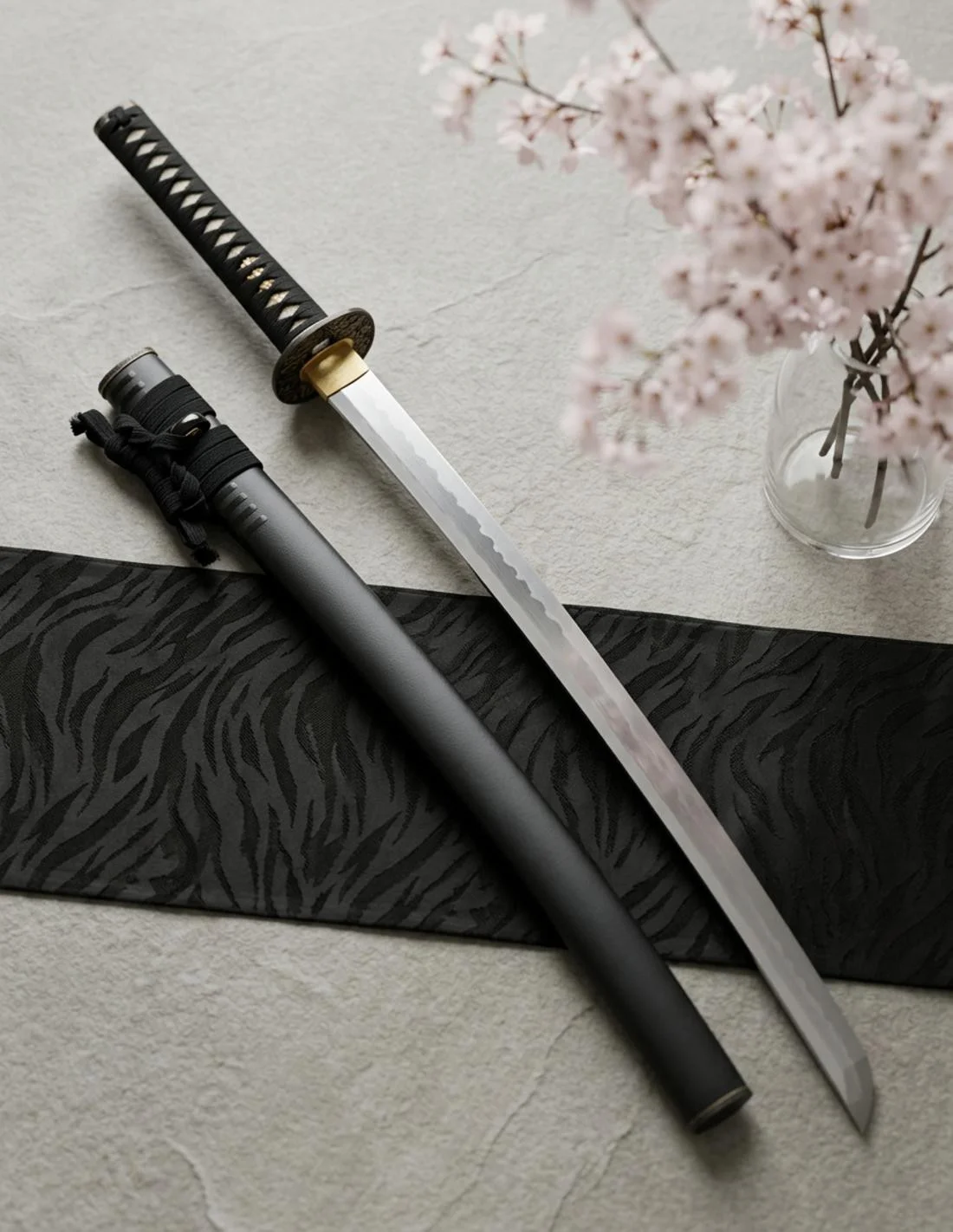
Tameshigiri involves significant risks. Follow these rules:
- Never practice alone – always have an observer
- Clear 3m space in all directions
- Inspect katana before each use
- Always use protective gear
- Don’t attempt advanced cuts without supervision
- Store katana properly when not in use
Danger signs in your katana:
- Abnormal vibrations or sounds when cutting
- Loose handle (tsuka)
- Visible nicks or burrs on the edge
Frequently Asked Questions About Tameshigiri
Can I practice Tameshigiri with any katana?
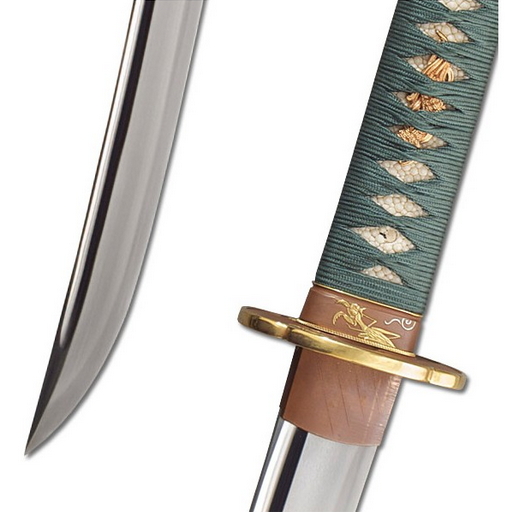
No. It must be a katana designed for cutting, with full tang construction and proper steel (1060 or higher). Decorative katanas can break dangerously.
Is prior martial arts experience necessary?
We recommend at least 6 months of iaido or kenjutsu practice before attempting Tameshigiri to develop basic sword control.
What tatami thickness is ideal for beginners?
Start with 30cm diameter rolls. Thicker ones (45cm) are for advanced practitioners.
How often should I sharpen my katana?
Depends on use, but as a rule: every 50-100 tatami cuts or immediately if you notice performance decline.
Tameshigiri is a deeply rewarding practice connecting with centuries of samurai tradition. By starting with proper equipment, correct techniques, and maximum attention to safety, you can develop impressive katana skills. Remember to progress gradually, always respect the weapon, and seek professional instruction when possible. Ready to make your first cut? In our shop you’ll find all the equipment needed to begin your Tameshigiri journey.