Why do we confuse Chokutō and Katana?
The fascinating world of Japanese metallurgy often presents enigmas that challenge the perception of the modern enthusiast. It is common that, when visualizing the weaponry of a warrior from ancient Japan, our minds immediately project the elegant curved silhouette of a katana. However, the trajectory of Japanese steel did not begin with that iconic curvature, but with a straight blade that changed the course of war: the chokutō. Understanding the differences between chokutō and katana is not simply an exercise in aesthetic observation, but a deep journey through the technological evolution that defined the identity of a warrior nation.
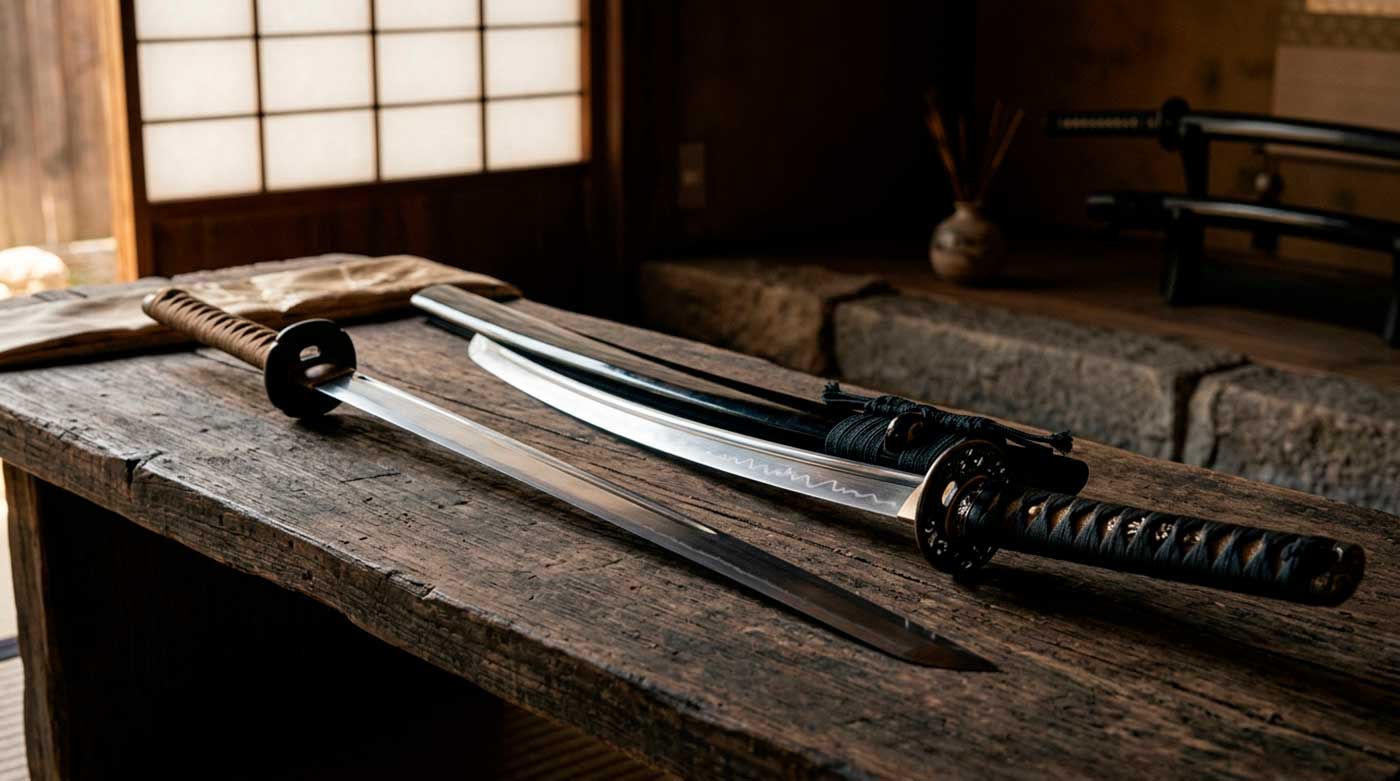
The confusion between both models often stems from a simplified view of Japanese chronology. Many see the Japanese sword as a static object, ignoring that chokutō vs katana represent totally different military and social eras. While the ancient Japanese sword —the chokutō— responded to combat styles imported from the Asian continent, the katana emerged as an organic response to the tactical needs of the samurai on the local battlefield. This transition was not accidental, but a necessary adaptation driven by changes in cavalry and armor of the time.
In this article, we will unravel the main chokuto katana differences, exploring everything from their technical forging to their practical functionality. We will analyze how the evolution of the Japanese sword allowed for the transition from a straight thrusting tool to a curved slashing weapon optimized for speed. By understanding the katana chokutō evolution, we promise a clear comparison that will allow you to appreciate the chokutō history as the forgotten foundation upon which the legend of the katana versus straight sword was built. Prepare to immerse yourself in a detailed analysis that will transform your vision of these masterpieces of samurai culture and their eternal legacy.
Origins of the Chokutō: The ancestral straight sword
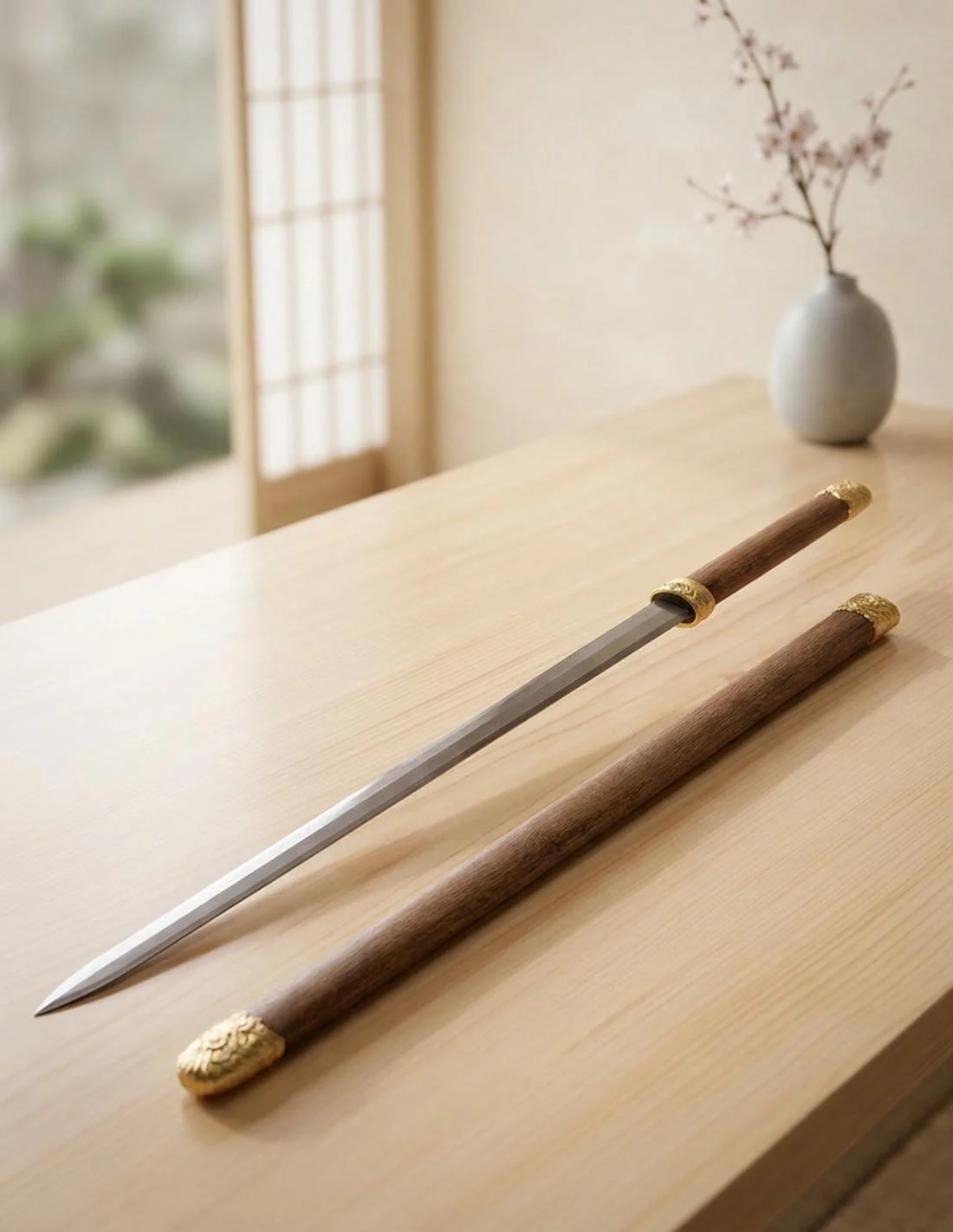 To understand the differences between chokutō and katana, we must go back to the dawn of Japanese civilization, specifically to the Kofun (approx. 300-538 AD) and Nara periods. At this time, the ancient Japanese sword did not possess the characteristic curvature that we associate with samurai today. The chokutō was a straight, single-edged blade, whose design was deeply influenced by the Chinese and Korean sword models that arrived through the trade and diplomatic routes of the Asian continent.
The chokutō history reveals that these weapons were the first to establish the \”single-edge\” paradigm in the archipelago. Unlike the double-edged swords of the Bronze Age, the chokutō allowed for a more robust structure for hand-to-hand combat. However, when analyzing katana vs straight sword, we observe that the chokutō was primarily used for thrusting movements or heavy downward strikes. During early conflicts, the fighting style was more static and often based on infantry or simple defensive tactics, where the versatility of a curved blade was not yet considered essential.
The evolution of the Japanese sword began to take shape when local metallurgists tried to replicate and improve these imported pieces. Although it lacked the complex differential tempering process that would give rise to the katana centuries later, the chokutō represented the first technological peak of Japanese steel. This transition period is fundamental in the katana chokutō evolution, as it laid the foundations of the forge that would later be perfected. In the chokutō vs katana debate, the former stands out as the noble and rigid ancestor that allowed Japan to take its first steps in the mastery of bladed weapons before the great transformation of the Heian period.
Evolution towards the Katana: From straight to curved
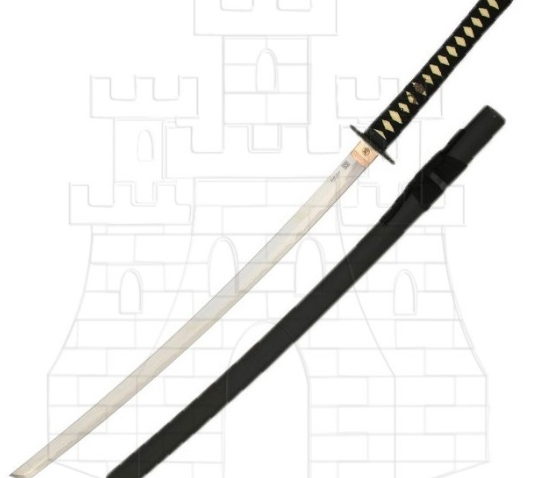
The transition from the ancient Japanese sword to the curved forms we venerate today was a process driven by the pragmatism of the battlefield. At the end of the Heian period, the physiognomy of war in Japan underwent a radical metamorphosis with the rise of the samurai cavalry. It is in this context that the differences between chokutō and katana begin to crystallize through a fundamental intermediate link: the tachi.
The chokutō, with its rigid design, presented significant difficulties for riders. When trying to draw and strike from the back of a horse, a straight blade tended to get stuck in the opponent’s armor or body, absorbing all the impact of the crash. The evolution of the Japanese sword introduced curvature (sori) to allow for a fluid slashing movement, where the blade slid through the target instead of colliding with it. This technical refinement reached its maturity during the Kamakura period, when the Mongol invasions put the resistance of Japanese steel to the test, forcing blacksmiths to perfect differential tempering.
Finally, during the Muromachi period, the fight shifted from large cavalry charges toward foot combat in urban and enclosed environments. This is where the katana chokutō evolution completes its cycle: the long and heavy tachi gave way to the katana, which was shorter and designed to be worn with the edge facing up. This innovation allowed for drawing and cutting in a single continuous movement. When comparing chokutō vs katana, we see that the need for speed and versatility eliminated the straight sword in favor of ergonomics. The chokutō history, therefore, does not end in its disuse, but is transformed into the extreme sophistication of the katana, the ultimate weapon of the Japanese warrior.
Key differences in design, combat, and legacy
To synthesize the differences between chokutō and katana, we must observe how their physiognomy dictates their function. The most evident distinction lies in the curvature: while the chokutō is a straight single-edged sword, the katana features the sori, a calculated curve born from the differential cooling process. In terms of construction, the katana employs tamahagane steel through complex folding that generates a flexible core and an extremely hard edge, a technique that in chokutō history was still incipient and less refined.
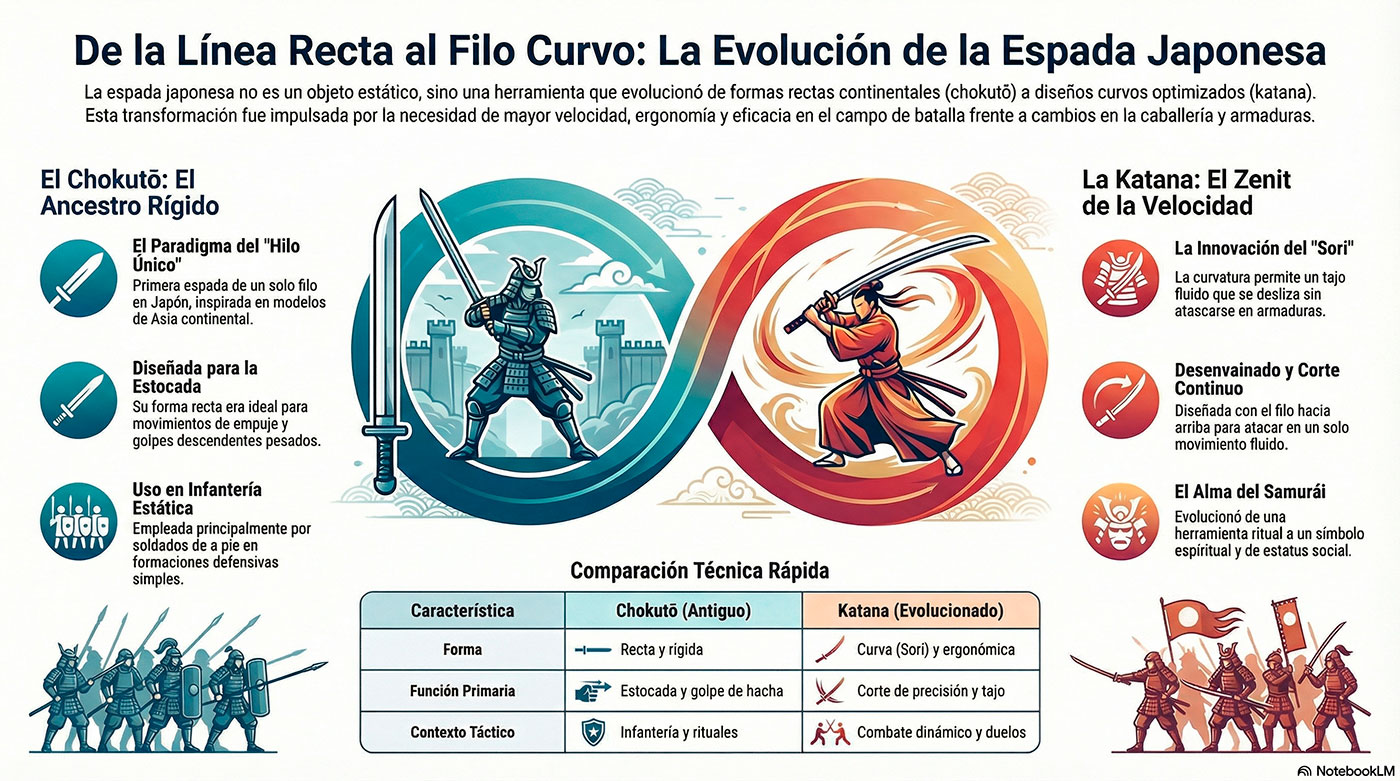
In the field of combat, the chokuto katana differences are vast. The chokutō was designed primarily for the thrust (stab) and downward axe-like strikes, typical of infantry facing dense formations. In contrast, the katana evolved for precise curved cutting. The design of the katana allows the blade to be drawn and strike in a fraction of a second, a tactical advantage that the straight sword design simply could not offer. This mechanical efficiency made the katana an extension of the samurai’s body, ideal for quick duels and dynamic skirmishes.
Culturally, while the ancient Japanese sword —the chokutō— is often associated with ritual temple offerings and the nobility of the Kofun period, the katana became \”the soul of the samurai,\” charged with spiritual symbolism and social status. Today, in the chokutō vs katana debate, both models hold incalculable value for historians and collectors. The chokutō tells us about Japan’s technological foundations, while the katana represents the zenith of martial art. Understanding the katana chokutō evolution is, ultimately, recognizing how constant innovation can transform a tool of war into a masterpiece of eternal beauty.
Katana replicas you shouldn’t miss
More than a blade, it is the soul of an era. Our replicas capture the essence of feudal Japan, merging the perfect balance of steel with the elegance of traditional engravings. Every curve and every detail has been designed to honor the legacy of the ancient master blacksmiths.


Master the art of display. If you seek the visual strength of samurai steel without compromising your budget, our replicas are the bridge between myth and your showcase. Beauty, balance, and mystique in a single piece. Wield the legend today.