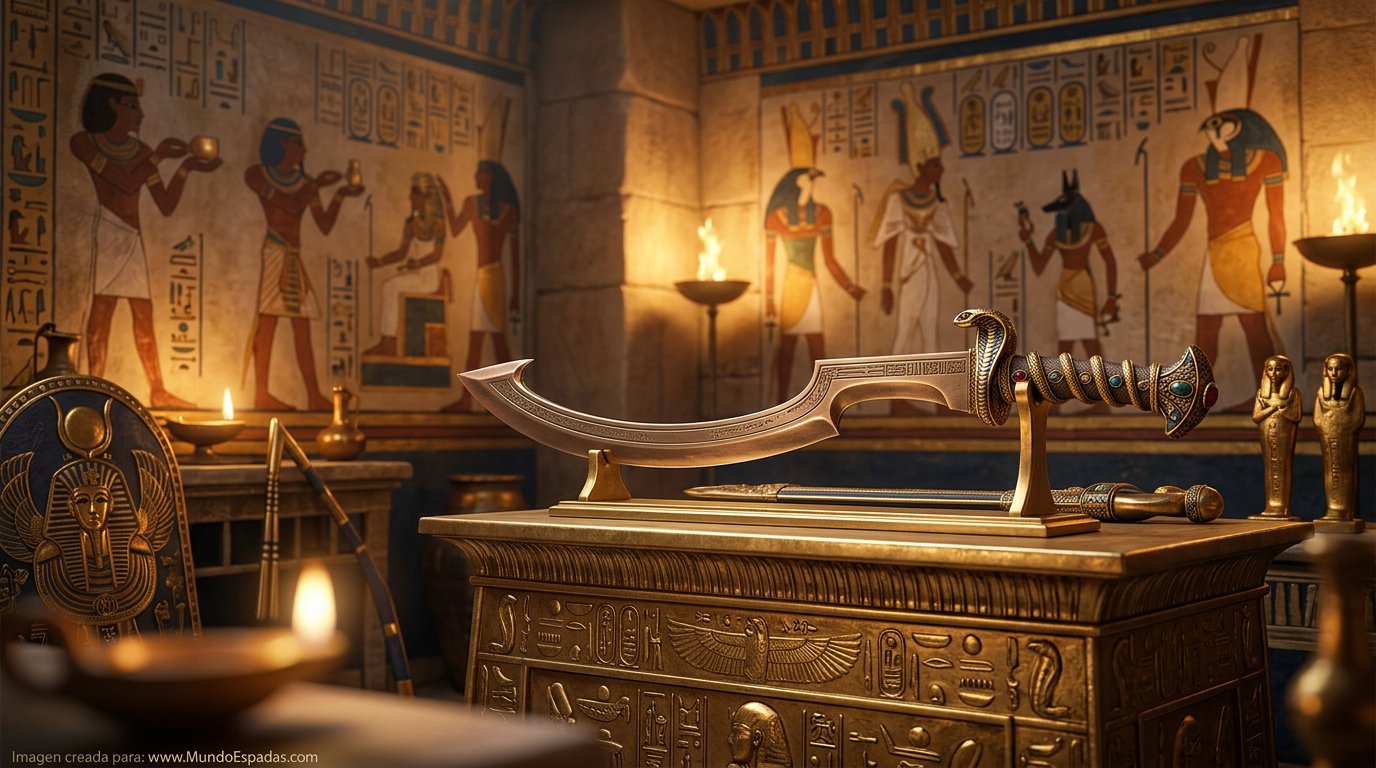
Discover the enigmatic history behind the Khopesh, the formidable curved sword that accompanied the child pharaoh Tutankhamun on his journey to the afterlife. This distinctive ancient Egyptian weapon, with its unmistakable sickle-like design, not only represents a key piece of weaponry from the era but also embodies profound symbolism of pharaonic power and authority. In our shop, specialising in historical sword replicas, we explore the authenticity and legacy of these pieces, offering enthusiasts and collectors the opportunity to own a piece of Nile history, where combat functionality intertwined with ritual majesty.
The Khopesh: Origins and Impact of the Curved Sword in Ancient Egypt
The Khopesh, an Egyptian word meaning “ox leg,” is one of the most recognisable and aesthetically striking weapons of the ancient world. Its distinctive design, which evokes the shape of an inverted sickle, radically differentiated it from other swords and weapons. Originating in the Near East, this curved sword is believed to have arrived in Egypt during the Second Intermediate Period, consolidating itself as an elite military weapon and a symbol of power during the New Kingdom.
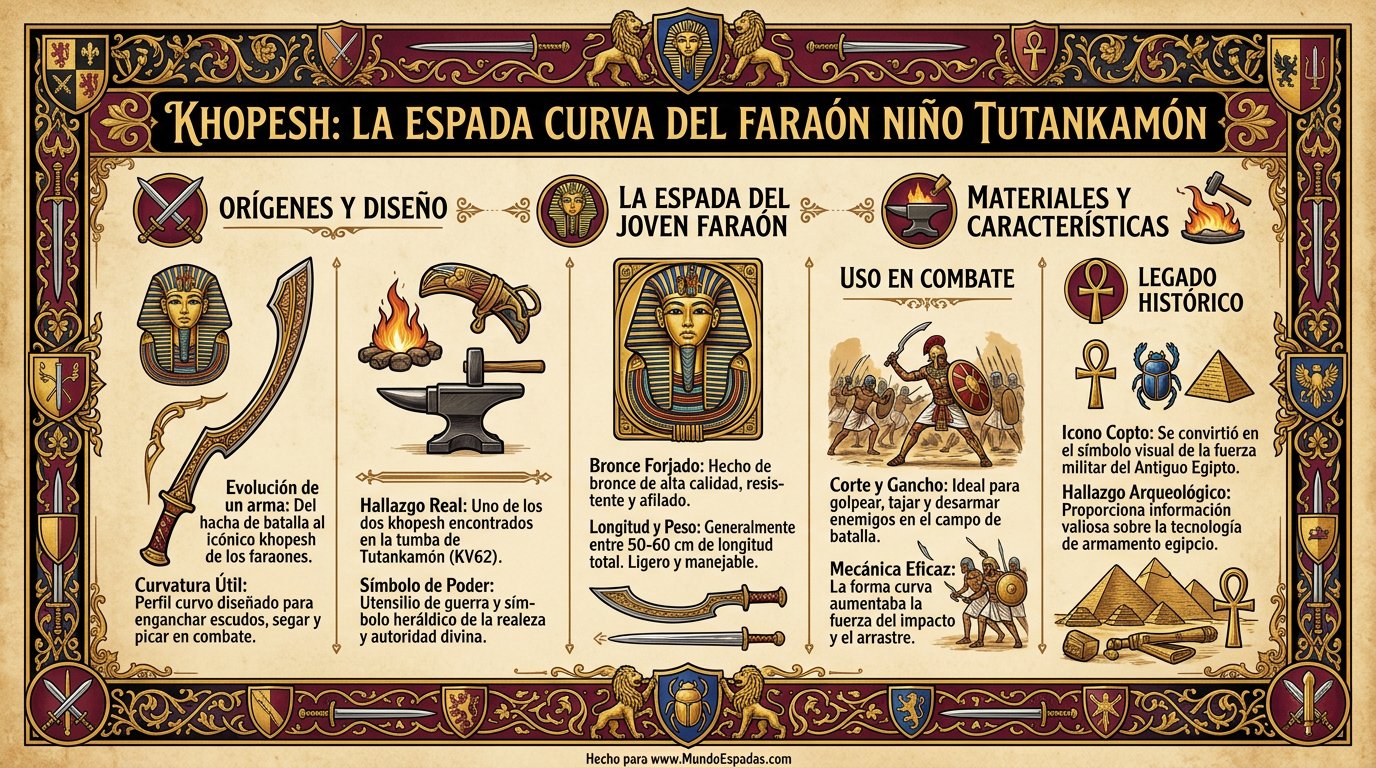
Its impact on the Egyptian military was transformative, providing a formidable tool for both cutting and hooking opponents. It was not just a technological evolution, but a piece that symbolised the military dominance and sophistication of Egyptian civilisation. The Khopesh quickly became a pharaonic emblem, often depicted in murals and reliefs alongside rulers, reaffirming their status.
Design and Functionality: The Uniqueness of the Khopesh Compared to Other Weapons of the Era

The Khopesh is distinguished by its inwardly curved blade, unlike most swords with an outward edge. This characteristic gave it a double functionality: it could strike with devastating force on its outer edge, or hook shields and adversaries with the inner curve.
Its unique design maximised the momentum of the blow, allowing the warrior to inflict deep and traumatic wounds. Unlike straight Mesopotamian swords or war axes, the Khopesh combined the cutting ability of a long sword with the hooking ability of a sickle or battle axe. The bronze blade, and later iron, maintained a balanced weight to offer manoeuvrability without sacrificing impact.
Egyptian warriors used the curve to disarm, knock down, or even decapitate their enemies, making it a versatile tool on the battlefield.
Tutankhamun’s Khopesh: A Pharaonic Treasure and its Symbolism with the ‘Child Pharaoh’
Tutankhamun’s tomb, discovered by Howard Carter in 1922, revealed an invaluable treasure that included several Khopeshes, exceptional specimens due to their preservation and ornamentation. The presence of these weapons in the “child pharaoh’s” funerary equipment highlights their importance beyond their warlike function. For Tutankhamun, who died prematurely, the Khopesh was a crucial symbol of his royalty and his duty as protector of Egypt in life and the afterlife.
These Khopeshes, often with hieroglyphic inscriptions and gold details, were not only practical weapons but powerful amulets and status objects. Their presence emphasises the connection between the young ruler and ancient military and religious traditions. Although his reign was short, the possession of these swords ensured his eternal authority in the Underworld, demonstrating his divine right to rule even in the afterlife.
Materials and Manufacturing Methods: The Craftsmanship Behind Egyptian Curved Swords
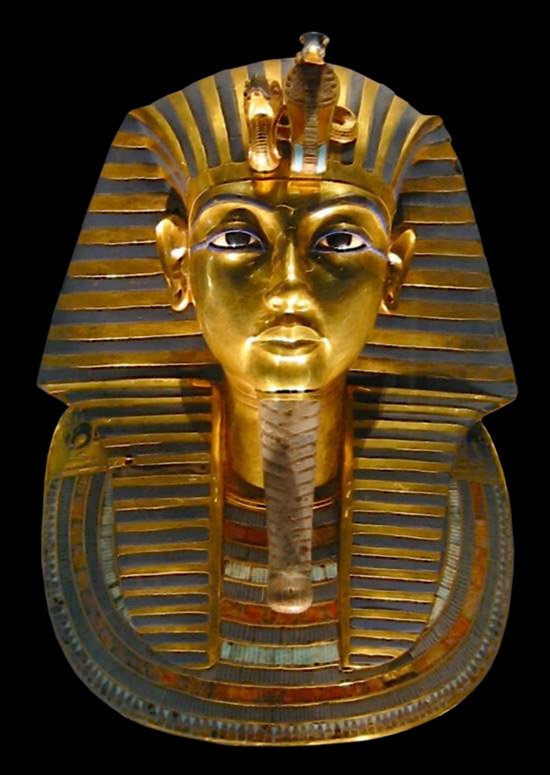
en:User:MykReeve, CC BY-SA 3.0, via Wikimedia Commons
The crafting of a Khopesh was a process that required considerable metallurgical skill. Initially, these swords were forged from bronze, an alloy of copper and tin that was obtained with great effort in Ancient Egypt. Craftsmen repeatedly heated and hammered the metal to give it its distinctive curved shape, a process that also tempered the material, increasing its hardness and resilience. Over time, with the arrival of the Iron Age, some Khopeshes, though not as common as bronze ones, were made from this more robust metal. The mastery of iron forging represented a significant technological advance, albeit complex and expensive.
Blacksmiths used clay or stone moulds to roughly shape the blade before proceeding to hammering and polishing, achieving sharp blades with optimal balance.
Strategic and Ceremonial Use: The Khopesh and its Role in Tutankhamun’s Egypt
The Khopesh played a double role in Ancient Egypt: it was both an effective weapon of war and a ceremonial object of great importance. On the battlefield, its design allowed Egyptian warriors to dislodge enemy shields, unbalance opponents, and deliver cutting blows with great effect. It was the choice of elite infantry and chariots, demonstrating its combat efficacy. In a ceremonial context, the Khopesh was a powerful symbol of pharaonic authority, victory, and divine protection.
Depictions of the pharaoh, including Tutankhamun, wielding a Khopesh in reliefs or sarcophagi, not only illustrated his role as a military leader but also as guarantor of cosmic order (Ma’at). It was a constant reminder of his power to defend the kingdom from its enemies, both earthly and spiritual.
Beyond the Sickle: The Extraterrestrial Iron Dagger and Other Archaeological Secrets of Tutankhamun

In addition to the emblematic Khopeshes, Tutankhamun’s tomb has revealed other astounding artefacts, such as the dagger with a meteoric iron blade. This fascinating discovery underscores advanced Egyptian technology and curiosity for exotic materials. Analysis of the blade’s composition revealed high levels of nickel, characteristic of extraterrestrial iron, demonstrating that the ancient Egyptians were already handling such materials over 3,300 years ago.
The existence of this celestial iron dagger, alongside the bronze Khopeshes and decorated shields, paints a vivid picture of the complexity of weaponry and status in ancient Egypt. It is not just about combat functionality, but also about the symbolic value and provenance of the materials. The extraterrestrial dagger adds a mystical and cosmic touch to the “child pharaoh’s” possessions, reinforcing his connection to the divine.
Chronology and Evolution of the Khopesh: From Weapon of War to Pharaonic Emblem
The Khopesh, with its unmistakable silhouette, traces a fascinating evolution from its origins to becoming an icon of Egyptian royalty. It originated as a cutting tool before being adapted for warfare, and its design was perfected over centuries, reflecting both technological advancements and changes in military tactics.
| Era | Event |
|---|---|
| Old Kingdom of Egypt (c. 2686-2181 BCE) | |
| Early Development | Precursors to the Khopesh begin to appear, primarily as ceremonial axes and tools. |
| Limited Use | Sporadic uses are recorded in specific contexts, without being a primary weapon. |
| Second Intermediate Period (c. 1650-1550 BCE) | |
| Introduction to Egypt | The Khopesh is introduced to Egypt, possibly by the Hyksos or through contacts with the Levant. |
| Popularisation | Its adoption by Egyptian military elites begins, recognising its effectiveness. |
| New Kingdom of Egypt (c. 1550-1070 BCE) | |
| Heyday of the Khopesh | Becomes the main combat weapon for infantry and chariots. |
| Tutankhamun’s Era | In Tutankhamun’s reign (c. 1332-1323 BCE), the Khopesh reached its maximum sophistication, with ornate and functional specimens. |
| Symbol of Power | Adopted as a potent symbol of pharaonic authority, frequently appearing in art and hieroglyphs. |
| Third Intermediate Period and Late Period (c. 1070-332 BCE) | |
| Decline | Although still in use, other forms of swords and weaponry gain ground, reducing the predominance of the Khopesh. |
| Ceremonial Function | Maintains its relevance in a more ceremonial and symbolic role, especially in religious and funerary contexts. |
| Legacy | Despite its decline on the battlefield, its image endures as an Egyptian cultural legacy. |
Discover our selection of Khopesh: Tutankhamun’s Child Pharaoh’s Curved Sword

Reviving the Legend: The Immortal Connection Between the Khopesh and the Child Pharaoh
The Khopesh and the child pharaoh Tutankhamun are intrinsically linked in the rich tapestry of Egyptian history. The fascination surrounding this young monarch and the extraordinary pieces from his tomb, including the magnificent Khopeshes, allow us to connect with a distant past. In our shop, we are dedicated to honouring this heritage, offering replicas that capture the majesty and historical details of these legendary weapons.
Each piece in our collection is an invitation to explore the cultural and artisanal depth that the Khopesh represents. We invite you to discover our selection of Khopeshes, replicated with attention to detail to evoke the era of the pharaohs and the splendour of the New Kingdom. Acquiring one of these replicas is not just owning a beautiful object, but also a tangible piece of Egyptian history, inspired by the weapons that once belonged to Tutankhamun himself.