What did a man wear in the Middle Ages and why does it matter today?
Imagine the mist at dawn, the gleam of a buckle, and a cloak fluttering as a traveler heads to the market: medieval clothing not only protected, but spoke for the wearer. In this article, you’ll learn to identify key medieval male garments, their evolution through the centuries, the materials and colors that defined status, how to combine authenticity and comfort, and what to look for if you’re seeking faithful replicas for reenactment or historical events.

What you’ll find here: a clear chronology of eras, detailed descriptions of each garment (from the undershirt to the cloak), comparisons of materials and uses, adjustment and maintenance tips, and visual galleries distributed throughout the text to help you recognize styles and cuts.
Evolution of Medieval Men’s Clothing
Knowing how men’s fashion changed throughout the millennium allows you to choose pieces that are consistent with each other and with the era you want to represent. Below is a summarized and detailed chronology that serves as a map to locate each garment.
| Era | Evolution / Event |
|---|---|
| Early Middle Ages (c. 500–1000 AD) | |
| Tunic (base garment) | Fundamental garment worn by all social classes, made of wool or linen. Varying lengths (knee to ankle): short and coarse versions for peasants; long, embroidered or trimmed for nobility. Merovingian/Carolingian models: gonela, narrow tunics with cylindrical collars in the Carolingian period. |
| Trousers and hose | Derived from Germanic tradition. Wide trousers held with a belt; hose (separate socks) for riders and warriors. In the Carolingian era: short/long braies, zarrias to hold them, tibiales, and ornamental hose. |
| Capes and cloaks | Rectangular cloaks fastened with fibulae; hooded and semi-circular capes for travelers or cold climates. Distinguished by quality and decoration (common wool vs. silk, furs, and noble embroidery). |
| Materials and colors | Predominant wool; linen for underwear/summer; silk as an imported luxury. Vegetable dyes: common people used natural tones; intense colors (red, blue, purple) signaled status. |
| Footwear and headwear | Closed leather shoes, brodequín, heuse (predecessor of the boot); in the Merovingian period few headpieces (bands), short hair in the Carolingian period. |
| High Middle Ages (c. 1000–1250 AD) | |
| Underwear and base layers | Long linen shirt (chaise) as an undergarment; long men’s breeches under the bliaud; fabric hose, sometimes striped, covering up to the thigh. |
| Pourpoint and sayas | The fitted, padded, and buttoned pourpoint emerges for greater mobility; in Hispanic kingdoms (1170–1230) use of saya/gonela/cotta, cinched with a belt, with variants such as amaetadas, farpadas, and luxurious briales. |
| Surcoats and outerwear | Pellote (sleeveless) worn over the saya; pelisson or fur-lined garments for ceremonies; aljuba of Muslim origin, initially military and then aristocratic. |
| Overcoats and capes | Garnache (with or without sleeves, fur-lined), tabard (travel garment with long sleeves and potential hood), semi-circular or circular capes, roundel, and cloaks fastened with brooches. |
| Footwear | Emergence of pigache (pointed), borceguíes, estivaux boots, and a variety of laced and fenestrated shoes among the Hispanic nobility; hose with soles were common. |
| Headwear | Cerquillos until the 13th century, coif for gathering hair, and the capiello (beret and variants) worn by clerics, doctors, and military orders. |
| Late Middle Ages (c. 1250–1500 AD) | |
| Transformation of the silhouette | Replacement of the long suit with a short, fitted, and buttoned suit that creates a vertical and stylized silhouette; social differentiation and sumptuary regulations. |
| Jubón, pourpoint, and gipon | Short jubón (gipon) from c.1340, fitted to the torso, sometimes padded; the pourpoint accentuates the torso, high collar (carcaille), and reduced length to the hips. |
| Hose and fastenings | Tight-fitting hose, in one or more colors, fastened to the jubón with laces (estaches/agujetas). In 1371, hose with a front triangle to cover the braye appeared. |
| Houpellande and other outer garments | Houpellande (c.1360): a very wide outer tunic decorated with voluminous sleeves. Jaqueta, gabán, and huca emerge as outer garments derived from military or oriental models. |
| Fashion and ornaments | Mi-parti fashion (garments divided into two colors) popular among young nobility; increasingly sumptuous headwear and the use of feathers and brooches. |
| Footwear and insignia | Poulaines (extremely pointed shoes, an indicator of status, height c.1460–1470), riding boots, and sturdy footwear for artisans. |
| Social classes and attire | Nobility displayed luxury (silks, velvets, gold/silver embroidery, ermine); the bourgeoisie followed trends with legal limitations; clergy and scholars maintained long and sober tunics. |
Pillars of the Medieval Male Wardrobe
The undershirt: the first layer, usually linen. It protected the skin from chafing and the outer garment from sweat. For nobles, it could be embroidered with fine threads; for commoners, it was simple and practical.
The tunic and the saya: the tunic is the basic outer garment in the Early Middle Ages; the saya or cotta replaces and adapts the silhouette over time, varying in length and decoration according to class.
The jubón, pourpoint, or gipon: a piece that transforms the silhouette from the High Middle Ages. It originated as internal padding for armor and evolved into a close-fitting outer garment that emphasized the torso and allowed hose to be tied to it.
Hose and trousers: evolved from independent hose to trousers; their fastening depended on laces and belts. They were essential for riders and men-at-arms.
Surcoats, pellotes, and tabards: overgarments that served as protection and heraldic display. Knights would display embroidered shields on their surcoats at ceremonial events.
Capes and cloaks: the cape is the quintessential outer garment, fastened with brooches or fibulae. It could be fur-lined and served as a symbol of status.
Models and Garments Available Today
When choosing replicas, consider the era you want to represent: a 10th-century tunic does not have the same drape or ornamentation as a 14th-century jubón. Below, we present how to quickly and visually identify each type of garment and for what scenarios they are most appropriate.
Coats


Shirts


Vests


Tunics


Doublets


Trousers


Gallery of Cuts and Examples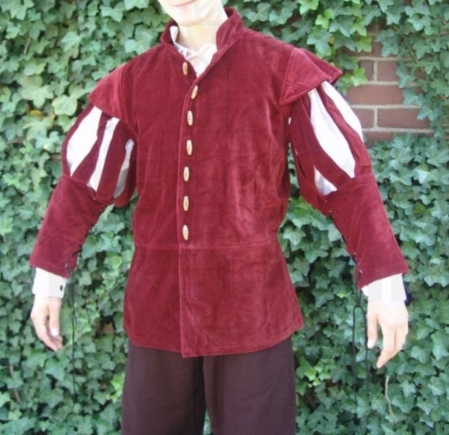
The Renaissance-influenced jacket and short doublets show how the silhouette became more refined and pieces were decorated with embroidery and geometric cuts. Although the Renaissance jacket belongs to a period after the classical medieval canon, its use in reenactment allows for enriching the civil costume of the late Middle Ages.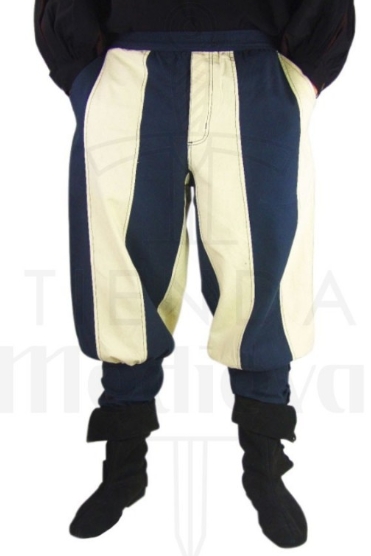
Viking trousers and wide hose answered a practical need: mobility and warmth. They are ideal for early period reenactments and for activities requiring freedom of movement, such as combat with recreational weapons.
Short cotton vests represent the adaptation of inner and outer layers for temperate climates; they serve as a practical complement and a textural contrast to a wool tunic.
The peasant shirt with ties illustrates functionality: easy to put on and adjust, made of durable linen and with a wide cut for daily tasks. It is the basis of any plausible medieval outfit.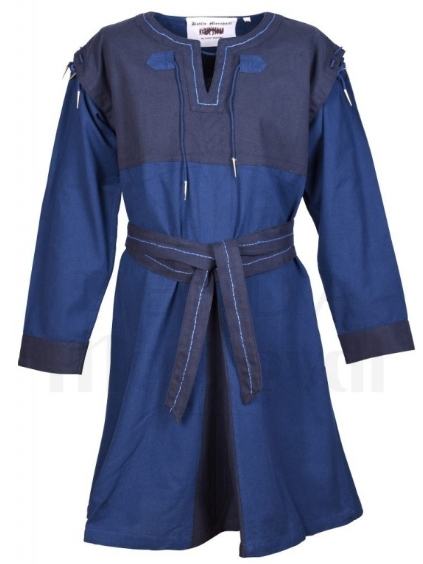
The blue tunic with detachable sleeves shows how a garment can adapt to different climates and uses: long sleeves for ceremonies and rolled-up sleeves for work or travel.
Surcoats, Capes, and Heraldic Symbols
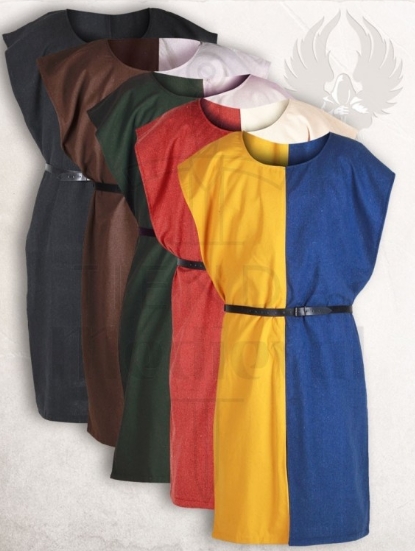
Sleeveless surcoats and pellotes were heraldic canvases where family coats of arms were embroidered; in ceremonial contexts, the surcoat identified the knight to the crowd. They are ideal for courtly representations and jousts.
Capes and Coats
Capes were both utilitarian and ceremonial. The fur lining and fabric quality marked the difference between a traveler’s cape and a noble’s.
Habits and Religious Attire
The monastic habit is a garment imbued with meaning: its simplicity, color, and cut identify the order. Those who acquire replica habits must be aware of the symbolic weight they carry and treat them with respect.


Materials, Colors, and Symbolism: How to Read a Garment
The choice of fabric and color speaks of resources, commercial connections, and religious or political symbolism. Below is a quick comparison to help you identify pieces by material and meaning.
| Material | Common Uses | Symbolism / Notes |
|---|---|---|
| Wool | Outerwear, cloaks, everyday tunics | Warm, resistant, varied in quality depending on spinning and weaving; the most common. |
| Linen | Undershirts, summer clothing, workwear | Breathable and easy to wash; natural color common among lower classes. |
| Silk / Brocade | Noble clothing, sayas, ceremonial surcoats | Imported luxury; intense colors and embroidery; reserved for the elite. |
| Furs | Cloak linings, pellissons, ceremonial pellotes | Indicated wealth according to quality (ermine, marten, otter). |
| Leather | Footwear, belts, reinforcements | Functional and decorative; buckles and rivets showed status. |
- Wool
-
- Uses: Capes, tunics, coats.
- Notes: Majority of wardrobe; quality variation.
- Linen
-
- Uses: Shirts and underwear.
- Notes: Ideal for skin and cleaning.
- Silk / Brocade
-
- Uses: Noble clothing.
- Notes: Reserved due to cost and symbolism.
How to Choose Sizes and Adjust Garments: A Practical Guide
A plausible replica not only reproduces forms, but also fits correctly. Here’s a practical guide to measuring and deciding on sizes when ordering or buying medieval clothing.
- Chest: measure with a relaxed torso, across the widest part of the chest.
- Waist: where the belt normally cinches, which may be above the navel in medieval models depending on the era.
- Hip: for tunics and long surcoats.
- Sleeve length: from the shoulder point to the wrist or to where the historical sleeve should reach.
- Back length: from the base of the neck to the hip or to the knee depending on the garment.
Adjustment tip: if in doubt between two sizes, for outer garments like cloaks or surcoats, choose the larger size; for fitted doublets or vests, the smaller size with the possibility of opening and internal reinforcement is usually more historical.
Authenticity vs. Comfort: Finding the Balance
Historical accuracy demands proper cuts, seams, and materials. However, comfort is key if you will be wearing the garment for hours at fairs or reenacted battles. Some acceptable adaptations to maintain appearance without sacrificing ergonomics:
- Modern linings in cloaks and coats for greater thermal comfort, always hidden so as not to affect aesthetics.
- Removable internal padding in doublets for combat days, concealed under historical fabrics.
- Discreet modern closures (internal buttons, hidden zipper) used sparingly and in civil recreation pieces.
Care and Maintenance of Garments
To preserve a replica: air out clothes after each use, avoid frequently washing wool items to prevent accelerated wear, and treat stains with spot cleaning. Linen tolerates more frequent washing, and silk requires professional cleaning or specific care.
Store pieces in a dry, dark place, in breathable cotton bags; use natural moth-repellents (lavender, cedar) and check buckles and seams before each event.
Maintenance Comparison
| Material | Recommended Cleaning | Frequency |
|---|---|---|
| Wool | Air out and spot clean; gentle cold wash if necessary | Low |
| Linen | Hand wash or gentle machine wash | Medium |
| Silk | Professional cleaning or very delicate wash | Low |
Practical Medieval: Combining Garments for Different Events
Assembling a convincing outfit depends on the occasion. Here are historical and functional combinations:
- Market / Civil Life: linen shirt, short tunic, functional belt, wool hose, and closed shoes.
- Travel / Pilgrimage: shirt, durable hose or trousers, hooded and lined cloak, boots or borceguíes.
- Ceremony / Court: fine shirt, brocade doublet or pourpoint, heraldic surcoat, lined cloak, and accessories (decorated belt, ring, brooch).
- Reenacted Combat: durable undershirt, padded gambeson, reinforced doublet and hose; avoid slippery materials and prioritize mobility.
Practical SEO Strategy for “Medieval Men’s Clothing” Content
If you manage a store or a blog, ranking for “medieval men’s clothing” requires in-depth content and authority signals: historical guides, material comparisons, size charts, distributed images enriched with alt attributes. This article incorporates these elements: chronologies, tables, images, and natural use of keywords such as “tunic,” “doublet,” “hose,” “surcoat,” and “gambeson.”
Quick SEO tips: use descriptive H2 titles, list fragments for direct answers, and evergreen content that explains when and how to use each garment. Internally link to relevant categories and create product pages with historical descriptions and technical specifications.
Final Tips and Recommendations
When choosing or ordering a replica, clearly define the era and function of the garment. Request material and measurement specifications, review in-context photographs, and prioritize the quality of seams and finishes. For long events, add discrete linings and removable reinforcements that do not detract from the aesthetics.
Medieval clothing is more than a reproduction: it is an invitation to understand the society that created it. Each thread tells a story of travel, trade, and hierarchy; wearing it with knowledge allows you to tell that story with authority.
VIEW MEN’S COATS | VIEW MEDIEVAL MEN’S CLOTHING | SHIRTS | VESTS | GAMBESONS | DOUBLETS | SURCOATS | TUNICS