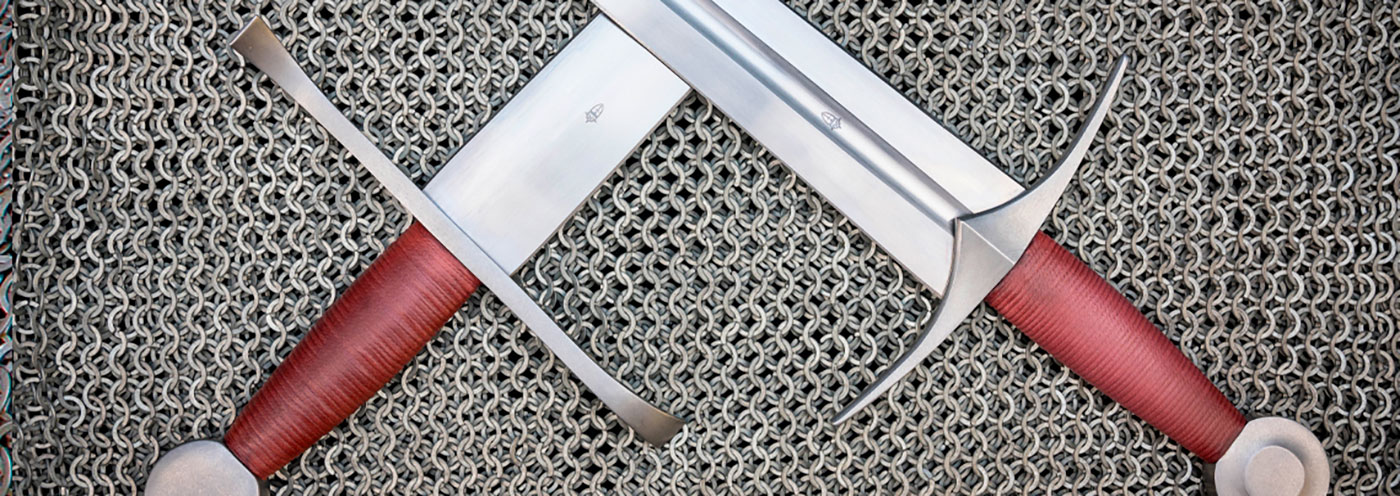
For any martial artist, choosing the right weapon is a critical step that defines their technical progress and safety. In the vast Hanwei catalogue, a frustrating dilemma often arises: is it better to invest in Hanwei practice vs. combat swords? Many practitioners find themselves torn between the need for safe training and the desire to experience the true performance of a sharp blade. This uncertainty can lead to expensive purchases that do not fit the specific discipline, whether it be HEMA, Kendo, or historical fencing.
The dilemma of choosing practice vs. combat swords in Hanwei
Understanding the differences between the Hanwei Practical line and Hanwei battle-ready swords is fundamental to optimizing your investment. While Hanwei training swords are designed with blunt edges and rounded tips for intense sparring, the actual combat versions offer optimized balance and edge for cutting. In this guide, we will explore the Hanwei sword catalogue in depth, analyzing how each construction responds to the demands of the dojo or the testing field.
We will address the differences between practice and combat swords so you can leave confusion behind. If you are looking for concrete results in your sparring sessions or absolute precision in mat cutting, here you will find the keys to deciding. Choosing Hanwei for martial artists guarantees quality, but only technical knowledge will allow you to select the Hanwei practice swords or Hanwei combat swords that will elevate your mastery to the next professional level, ensuring durability and an authentically superior handling experience in every movement executed.
What are Hanwei practice swords: The Practical Line
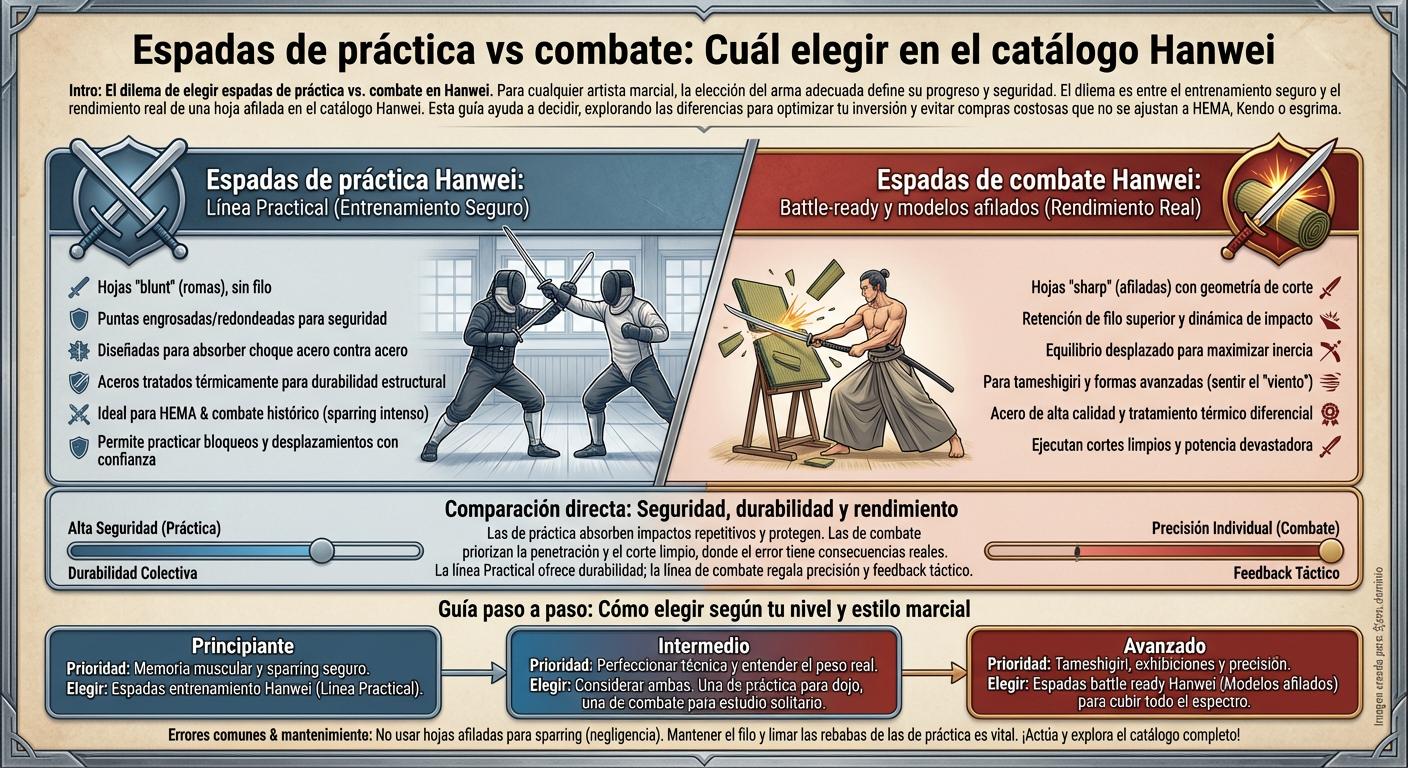
Within the Hanwei sword catalogue, the Practical line has established itself as the gold standard for those who prioritize technical training and safe physical contact. When analyzing the comparison of Hanwei practice vs. combat swords, the pieces in the Practical series stand out for being \”blunt\” blades. These are specifically manufactured to absorb the punishment of steel-on-steel clashing without dangerously chipping, making them the preferred Hanwei training swords for practitioners of HEMA and other historical combat disciplines.
The distinctive feature of the Hanwei Practical line is its balance between flexibility and resistance. Unlike a display weapon, these tools possess thickened or rounded tips to minimize the risk of accidental thrusts. Iconic models like the Practical Knightly Sword or the Practical Bastard Sword offer beginners the opportunity to learn the handling of a longsword or one-handed sword with a realistic weight but with high safety margins.
For intensive use in the dojo, Hanwei practice swords use heat-treated carbon steels to prevent fatigue fractures. In the differences between practice and combat swords, the technical series sacrifices the edge for the structural durability necessary in sparring. Thus, Hanwei for martial artists offers a robust solution that allows practicing blocks and movements with total confidence, ensuring that the equipment withstands months of rigorous training before considering the jump to sharp duel or cutting pieces.
Hanwei combat swords: Battle-ready and sharp models
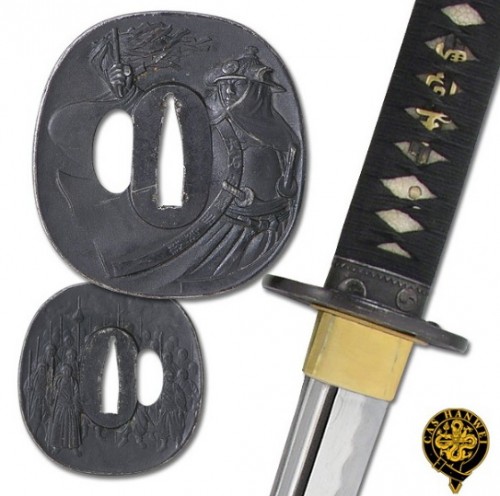
When taking the step towards advanced mastery, the \”sharp\” pieces in the catalogue become indispensable. In the comparison of Hanwei practice vs. combat swords, the combat versions are designed to offer an authentic cutting experience. While training ones prioritize group safety, Hanwei combat swords focus on blade geometry, edge retention, and impact dynamics. They are precision instruments designed for tameshigiri and advanced forms where it is necessary to feel the \”wind\” and the real resistance of the blade.
An unavoidable benchmark in the Hanwei sword catalogue for combat is the Practical Plus line, especially in katanas, which offers a perfect balance for cutting tatamis. Likewise, the collaboration with Michael Tinker Pearce has resulted in Hanwei battle-ready swords of the European type that are famous for their lightness and functional lethality. These weapons are not toys; their balance is shifted to maximize cutting inertia, clearly differentiating them from Hanwei training swords that seek more defensive control.
The differences between practice and combat swords are more evident here: high-quality steel and differential heat treatment allow these blades to maintain a surgical edge after multiple impacts. For the serious practitioner, choosing Hanwei for martial artists in its combat variant means possessing a piece capable of executing clean cuts with devastating power, taking dojo technique to its purest and most realistic physical application.
Direct comparison: Safety, durability, and performance in the catalogue
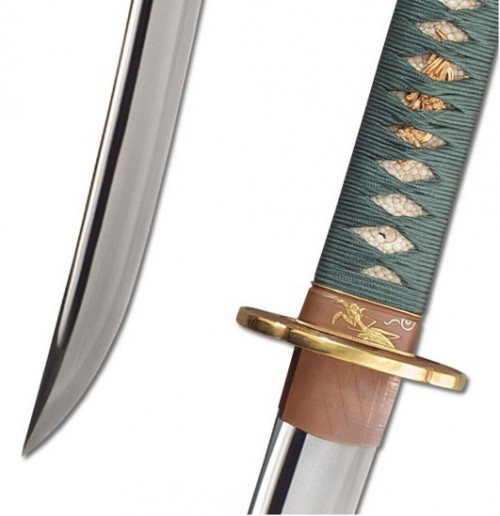 When conducting a comparison of Hanwei practice vs. combat swords, it is vital to analyze three fundamental axes: safety, durability, and technical performance. Based on data shared in HEMA forums and expert reviews, the greatest of the differences between practice and combat swords lies in their ultimate goal. Training ones (Hanwei Practical series) are designed to absorb repetitive impacts, protecting both the fencer and their partner thanks to their blunt edges and safe tips. Conversely, sharp Hanwei combat swords prioritize penetration and clean cutting, being high-performance tools where error has real consequences.
In terms of longevity, the Hanwei sword catalogue stands out against other manufacturers due to its superior tempering. While many cheap copies suffer deep nicks or excessive vibrations, Hanwei training swords maintain their structural integrity through years of moderate sparring. For tameshigiri specialists, Hanwei battle-ready swords offer a fluid dynamic that is hard to match in their price range, behaving like natural extensions of the arm.
The choice of Hanwei for martial artists depends on the planned use: if your goal is free and dynamic combat, Hanwei practice swords are irreplaceable for their safety factor. If you seek to perfect edge alignment and mechanical power, combat ones are the goal. In summary, the Practical line offers collective durability, while the combat line provides individual precision and unmatched tactical feedback.
Step-by-step guide: How to choose according to your level and martial style
Selecting the right tool requires honesty about your technical goals. To facilitate your decision between Hanwei practice vs. combat swords, we have designed this logical route based on the warrior’s path. If you are a beginner who has just entered the world of historical martial arts, your first mandatory stop is Hanwei training swords. At this level, the priority is muscle memory and safe sparring; Hanwei Practical line models will allow you to make mistakes without serious risks to yourself or your classmates.
For the intermediate practitioner who already masters the forms and seeks to perfect their contact technique, the Hanwei sword catalogue offers hybrid options or balanced sets. It is the ideal time to consider having both: a practice unit for the dojo and one of the Hanwei combat swords for solitary study of cutting geometry. This duality will allow you to understand the differences between practice and combat swords empirically, improving your perception of weight and the real inertia of steel against targets.
Finally, if you are an advanced martial artist focused on tameshigiri or precision exhibitions, Hanwei battle-ready swords are your ultimate choice. Hanwei for martial artists guarantees that, by choosing Hanwei practice swords to sweat in training and sharp models for the final test, you will be covering the entire spectrum of learning. Evaluate your budget and martial workflow to ensure that each acquisition enhances your specific prowess in the dojo.



Common mistakes, FAQ, and next steps in your Hanwei purchase
When navigating the comparison of Hanwei practice vs. combat swords, the most serious mistake is underestimating maintenance. Even the most robust Hanwei training swords can suffer \”snapping edges\” or burrs if they are not filed after intense sessions. Additionally, using a sharp blade from the Hanwei combat sword line for sparring is negligence that compromises the lives of your partners; the differences between practice and combat swords exist to be scrupulously respected in the dojo.
Are Hanwei battle-ready swords suitable for real combat? Yes, they are built to withstand impact, but they require a refined cutting technique so as not to damage the edge against inappropriate targets. What is the most versatile model in the Hanwei sword catalogue? Many experts point to the Practical Longsword series for its balance between cost and historical fidelity. To choose correctly, always verify that the model fits your martial arts federation’s regulations.
Now that you know the keys to differentiating Hanwei practice swords from cutting pieces, the next step is to take action. Explore our selection of Hanwei for martial artists and find the piece that fits your skill range and discipline. Do not let indecision slow down your technical evolution; whether it is for safe sparring or mastering tameshigiri, Hanwei has the perfect tool waiting for you. Click here to view the full catalogue and elevate your practice today!