
In the heat of medieval battle, every detail counted for a combatant’s survival and effectiveness. Beyond sharp swords and gleaming armour, there were key complements for the warrior that often went unnoticed but were fundamental to their performance: socks and winingas.
These seemingly simple items offered protection against the elements, prevented chafing and sores, and ensured the soldier could march and fight comfortably during grueling days. Their design and materials, though rudimentary, were the product of ancestral wisdom adapted to the needs of the battlefield and daily life. Without these textile supports, the warrior’s feet would suffer immensely, compromising their ability to defend themselves or attack with the required prowess in the most hostile terrains and during prolonged conflicts.
The functionality of these accessories was as vital as the steel of the sword itself, ensuring the warrior maintained their mobility and morale.
From Prehistory to the Middle Ages: The Essential History of Warrior Socks and Winingas

The history of foot protection is as old as human bipedalism. From the rough animal skins of prehistory, humans sought methods to protect their lower limbs. The first ‘socks’ were likely wraps of skins or rudimentary fabrics that protected against cold and abrasion. With time and the development of textile techniques, these were refined. They were not a luxury, but an absolute necessity for those who depended on marching and combat, especially in the life of a warrior.
In classical antiquity, Romans and Greeks already used primitive forms that prefigured socks, such as socci or fasciae. However, it is in the Middle Ages that socks and winingas acquired a more distinctive and functional form, particularly among troops. Medieval warriors faced various surfaces—mud, snow, stone—and long marches that made good foot comfort imperative.
The evolution of these items reflects the constant search for military efficiency and human endurance against extreme physical challenges. Durability and protection were the cornerstones of their design, beyond any aesthetic consideration.
Materials and Craftsmanship: How Socks and Winingas Provided Comfort and Protection
The materials used for making **socks and winingas** were those locally available and offering suitable properties for protection and comfort. Wool was, without a doubt, the most common and versatile material. Its ability to insulate from the cold even when wet, its wear resistance, and its relative ease of acquisition made it ideal for military apparel. Other materials such as linen, and to a lesser extent hemp, were also used, especially in warmer climates or as base layers.
The crafting of these garments was mostly artisanal. Sewing and weaving techniques varied, but the priority was always durability. Socks were often knitted with needles, frequently using a method similar to modern knitting, creating an elastic structure that conformed to the foot. Winingas, on the other hand, were long strips of fabric, generally coarse but strong wool, cut to size.
Rustic Manufacturing Techniques
- Nålebinding (Needle-binding): Especially for older socks, this technique created a strong, thermal garment, ideal for the cold climates of Northern Europe.
- Simple Cut and Sew: Winingas were simply rectangular bands that could be wrapped. More elaborate socks involved a basic pattern for the foot and leg, sewing the pieces to form the garment.
- Felting and Fulling: Some wools underwent felting or fulling processes to make them denser and more robust, increasing their water resistance, essential on the battlefield.
These methods ensured that each piece, from the yarn to the final garment, was designed to withstand the rigours of combat and the vagaries of the weather, thus providing maximum protection and surprising comfort for the era.
Medieval Socks: Types and Styles for Every Kind of Historical Warrior
Medieval socks were not a uniform garment; their design and quality varied considerably depending on the region, social status, and type of warrior. From humble peasants turned militias to knights of noble lineage, everyone required foot protection, albeit with notable differences.
Peasants and rank-and-file soldiers typically wore simpler socks, often made of thick, undyed wool, tailored for maximum durability. Their primary objective was to prevent cold and chafing caused by rudimentary footwear, usually soft leather without a rigid sole.
Variants of Medieval Socks
For infantrymen and archers, socks often extended to the knee, providing muscle support and additional protection against low blows or thorny bushes. These were fastened with simple garters or straps below the knee and served as a base layer under breeches or hose.
Knights and high-ranking warriors could afford better quality wool socks, perhaps dyed with vegetable pigments and with a finer weave. Occasionally, these socks, or “chausses” as they were known in French, were an integral part of their attire, fitting snugly to the leg and foot with laces or directly sewn to the doublet or hose. There even existed padded versions, like “gambesons” for the legs, which offered additional padding beneath metal armour, mitigating the impact of blows to the shins and calves.
The diversity in types of medieval socks reflected not only the availability of resources but also the social stratification and different roles within the medieval army, each optimized for the specific needs of its wearer on the battlefield.
Winingas or Leg Wraps: Their Main Function in a Combatant’s Armour

Winingas, also known as leg wraps or wound puttees, were an indispensable component of combat attire in many cultures and periods, especially among the Germanic, Viking, and Anglo-Saxon peoples of the Early Middle Ages.
Unlike socks, which were worn as an undergarment, winingas were wrapped around the calf and ankle, usually over trousers or hose. Their primary function was threefold: protection, fastening, and support. They provided protection against cold, dampness, and scratches from vegetation, essential during long marches across unknown and rugged terrain.
Additionally, winingas served to fasten and contain trousers, which were often looser, preventing them from snagging or hindering the warrior’s movement. This functionality was crucial for maintaining agility in combat and comfort during transit. They acted as a kind of primitive compression, offering support to the calf muscles and reducing fatigue, which was vital for warriors who spent hours on their feet or marching.
Their design, which often included ends with hooks or straps to ensure their fastening, demonstrated a pragmatism focused on military functionality. The choice of wool for their manufacture ensured that, even when wet, winingas retained much of their thermal properties, an invaluable asset in any adverse climate.
Practical Use: Combining and Adjusting Socks and Winingas on the Battlefield
The correct implementation of socks and winingas was no trivial matter for the medieval warrior; it was an integral part of their preparation for combat and marching. Socks were the first layer of foot protection, offering basic padding and absorbing moisture. Over them, shoes or leather boots were worn. The combination and adjustment were crucial to prevent blisters, chafing, and the unpleasant effect of having wet and cold feet, factors that could severely weaken an army. It was common practice among soldiers to carry several pairs of socks to change them and keep their feet dry whenever possible.
Winingas were meticulously wrapped around the calf, starting from the ankle and ascending to just below the knee. This process not only kept them in place but also allowed for a personalized compression fit, beneficial for circulation and reducing muscle fatigue in the legs.
This careful adjustment was vital to prevent them from rolling down or loosening during intense movement, which could have resulted in a dangerous trap in the heat of battle. Cords or clasps at the upper ends of the winingas ensured they remained in position.
| Item | Main Function | Common Material | Fitting Tip |
|---|---|---|---|
| Medieval Socks | Padding, moisture absorption, thermal insulation | Wool, Linen | Should fit snugly without wrinkles, preferably several thin layers. |
| Winingas (Leg Wraps) | Trouser fastening, calf protection, muscle support | Wool (often coarser) | Wrap firmly from ankle to knee, secure ends well. |
This combined use of socks and winingas provided a comprehensive solution for the protection of a warrior’s lower limbs, optimizing their performance in the harsh conditions of medieval warfare, where every step and movement could mean the difference between life and death.
Maintenance and Durability: Extending the Lifespan of Your Re-enactment Socks and Winingas

In historical re-enactment, the authenticity and durability of equipment are as important as in the life of the original warrior. To extend the lifespan of your re-enactment socks and winingas, it is crucial to adopt appropriate maintenance practices, inspired by historical methods and adapted to modern materials. Regular cleaning is paramount.
Wool, being a primary material, must be washed with care. Hand washing with cold or lukewarm water and a mild soap specific for wool that doesn’t strip its natural oils (lanolin) is recommended. Avoid hot water, as it can shrink and damage the fibers. In the case of winingas, given their rustic nature, they might tolerate a more vigorous wash, but caution is key.
Drying is equally important. Never use automatic tumble dryers, as intense heat can shrink and deform wool garments. Instead, it is preferable to air dry them, laying them flat on a surface to prevent stretching or losing their shape. Direct and prolonged sun exposure should be avoided, as it can weaken fibres and fade natural dyes.
Regular inspection of garments for rips or tears is another practice that will prolong their lifespan. Small tears can be repaired with simple stitching, while larger holes may require discreet patches to maintain the garment’s integrity. Use wool or cotton thread of the closest possible colour for repairs, thus demonstrating the same spirit of ingenuity and resourcefulness our ancestors possessed.
Good maintenance not only ensures the longevity of your medieval accessories but also contributes to the authenticity of your re-enactment attire.
The Temporal Evolution of Socks and Winingas: A Historical Journey Through Their Design and Function
Socks and winingas, though they may seem minor accessories, have a rich history that reflects the evolution of clothing and the needs of a combatant throughout various eras. From simple wraps to more complex design elements, their transformation testifies to human ingenuity.
| Era | Event |
|---|---|
| Early Antiquity | |
| Millennia BC | First signs of foot protection with rudimentary animal hides and plant fibres. |
| 1st Century BC | Romans develop socci (lightweight fabric socks) and fasciae (cloth bandages). |
| Early Middle Ages (c. 500-1000 AD) | |
| 5th-7th Centuries | Generalisation of winingas among Germanic, Anglo-Saxon, and Viking peoples for trouser fastening and protection. |
| 8th-10th Centuries | Widespread use of wool socks knitted using techniques like Nålebinding, essential for the Nordic cold. |
| 9th-11th Centuries | The crafting of socks and winingas becomes standardised as part of common military and civilian attire. |
| High and Late Middle Ages (c. 1000-1500 AD) | |
| 12th-13th Centuries | Appearance of “chausses” or fitted hose, covering foot and leg, sometimes sewn directly to trousers or doublets. |
| 14th-15th Centuries | Hose become more elaborate, often bipartite and with soles, reducing the need for traditional socks. |
| 14th-16th Centuries | Winingas lose prominence with the improvement of hose and more structured footwear. |
| Early Modern Period (c. 1500-1700 AD) | |
| 16th Century | Development of machine-knitted stockings, displacing manual techniques for faster and more uniform production. |
| 17th Century | Military attire becomes standardised; tall boots and wool or silk stockings become common, relegating winingas to specific uses or local traditions. |
Discover Our Selection of Socks and Winingas: Key Complements for the Warrior


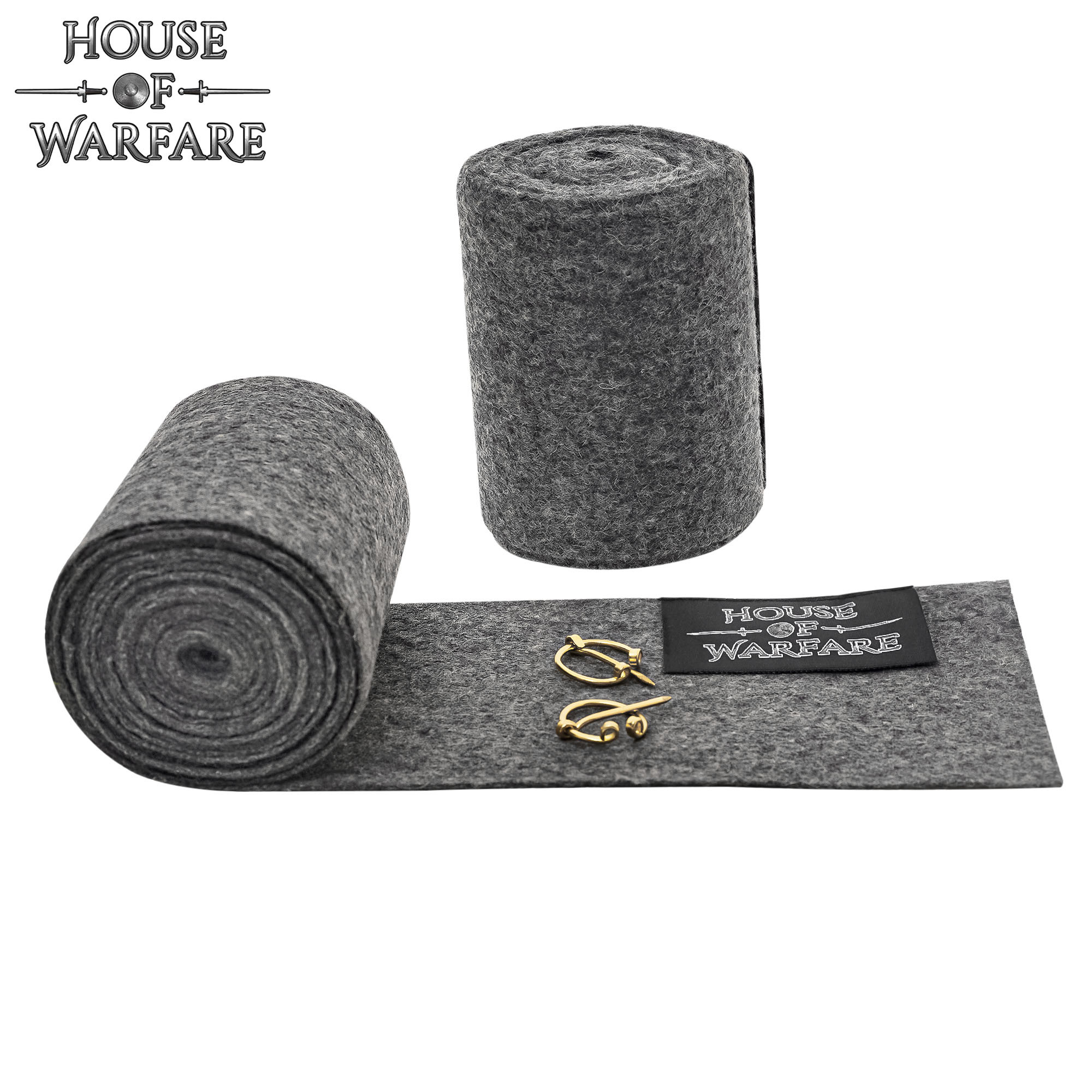


The True Spirit of the Warrior Begins with Their Feet: A Journey Through Comfort and Tradition
In summary, socks and winingas were not mere accessories, but vital components that ensured the operational effectiveness and well-being of the medieval warrior. From rudimentary prehistoric fabric bands to the elaborate hose of the Late Middle Ages, their evolution and refinement are intrinsically linked to military and social history.
They provided indispensable protection against cold, dampness, and abrasions, allowing the combatant to maintain their mobility and concentration in the most adverse situations. Their correct use and maintenance not only guaranteed the garment’s durability but also the wearer’s effectiveness and survival. In your search for authenticity in historical re-enactment or simple appreciation of combat attire, do not underestimate the importance of these humble yet powerful items.
We invite you to explore our collection of faithful reproductions of medieval socks and winingas, carefully crafted with materials and techniques that respect tradition. Discover how these complements can transform your experience, offering the comfort and protection a true warrior would value. Invest in the foundation of your attire, because the true spirit of the warrior, their resilience and success, often begins with well-cared for and protected feet. Explore our selection today and equip your warrior soul from the ground up.
The perfect Winingas for your re-enactments | Want to complement with gaiters?