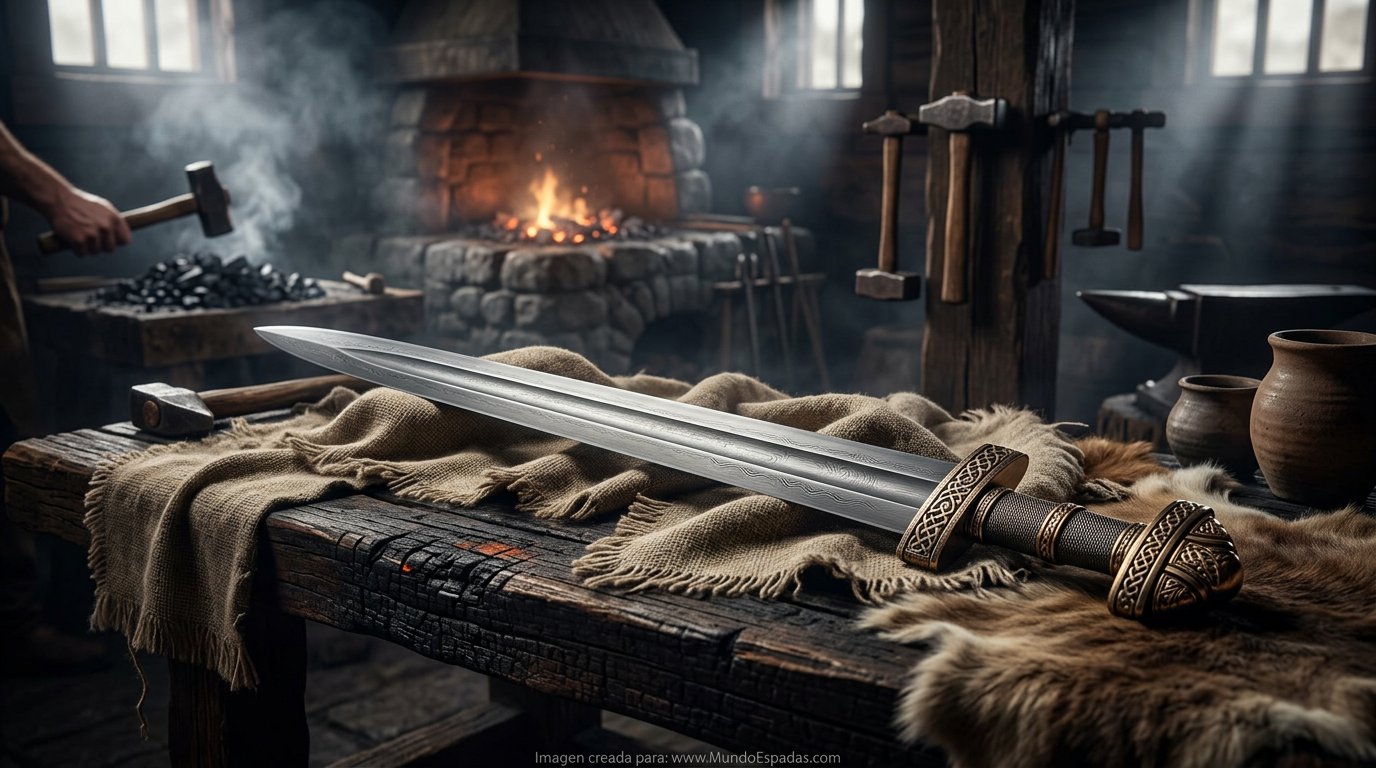
Delving into the fascinating world of the Hurum Viking sword is to discover a legacy of bravery, craftsmanship, and a deep connection to rich Norse history. This emblematic weapon represents not only an instrument of war but a symbol of status and skill forged in the heart of the Viking Age. We will explore its origin, its meticulous construction, and what makes it such a coveted piece for collectors and enthusiasts. From its archaeological discoveries to its impact on modern replicas, we will uncover the secrets of the Hurum.
The Enigma of the Hurum Sword: A Journey to the Norwegian Viking Age
The Hurum Viking sword, named after its discovery site on the Hurum peninsula, Norway, is one of the few examples that have survived the relentless passage of time. Unearthed in a Viking burial mound, this exceptional piece offers a direct window into the military technology and metalworking artistry of the 9th and 10th centuries. Its good state of preservation allowed archaeologists and metallurgists to study its manufacturing techniques.
The context of its discovery suggests it belonged to a high-ranking warrior or leader, given the richness of the grave goods accompanying it. This fact underscores not only its functionality as a weapon but also its importance as a symbol of power and social status within the Viking hierarchy. The presence of decorative elements and the quality of the steel indicate an object of considerable value. The significance of the Hurum transcends its intrinsic value, as its study has shed light on trade routes and cultural influences in Scandinavia during the Middle Ages. It is presumed that the steel used may have come from distant regions, such as the Middle East.
This demonstrates a very active exchange network in the Viking world. The Hurum sword, therefore, in addition to being a weapon, is a testament to a globalised era.
Mastery in Steel and Fire: Deciphering the Forging of the Original Hurum Sword
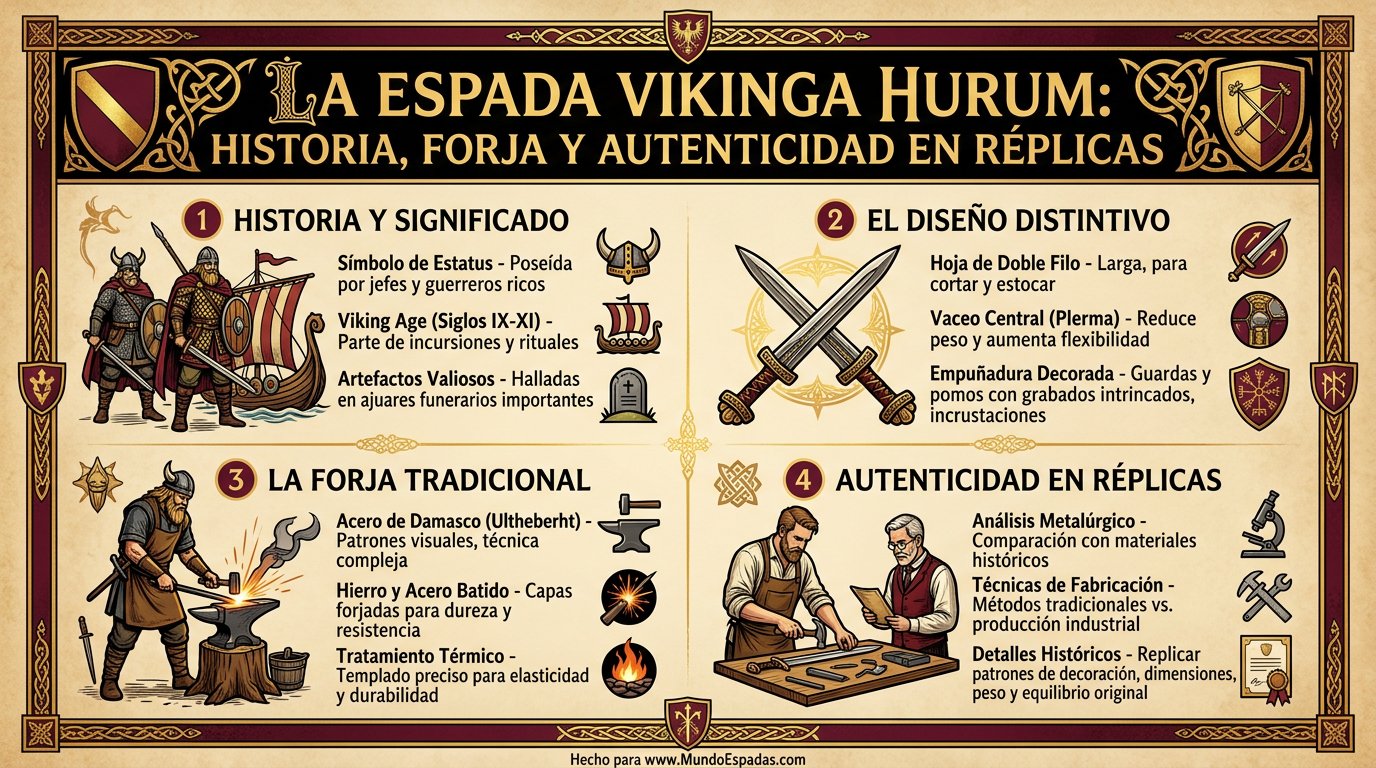
The forging of the Hurum Viking sword was an extraordinarily complex process involving advanced metallurgical knowledge and exceptional artisanal mastery. It is believed that the blade of the Hurum was crafted using the “pattern welding” technique, a laborious method that involved joining and twisting multiple layers of steel with different carbon contents. This process not only created a distinctive and beautiful pattern on the blade but also conferred an optimal combination of flexibility, hardness, and resistance to breakage. The high-carbon steel layers provided the necessary hardness to maintain a sharp edge, while the low-carbon layers offered the flexibility to absorb impacts without fracturing.
The Viking smith, a true master of their craft, manipulated the metal in fire, repeatedly folding and forging to remove impurities and homogenise the structure. This meticulous work, requiring precise temperature control and great physical strength, could take weeks. Subsequently, the blade was subjected to quenching and tempering, critical processes for its final performance. Quenching involved heating the blade to a specific temperature and then rapidly cooling it in water or oil, hardening it.
Tempering, a subsequent heating to a lower temperature, reduced its brittleness, achieving the ideal combination of toughness and cutting ability. Finally, the hilt and pommel were attached, often with noble materials such as wood, bone, or silver.
Beyond Combat: Symbolism and Status of the Hurum Sword in Viking Society
The Hurum Viking sword transcended its purely martial function to become a powerful symbol of status, honour, and heritage within Norse society. Possessing an exceptional quality sword like the Hurum not only demonstrated an individual’s economic capacity but also reflected their position in the social hierarchy. It was an attribute reserved for elite warriors, jarls, and chieftains, who could afford the costly work of a skilled smith.
In many Viking cultures, the sword was considered to have a soul of its own and was often given inspiring names that reflected its qualities or the glory of its bearer. It was passed down through generations, accumulating historical and emotional value with each owner, becoming a tangible link to family lineage and the reputation of ancestors. This object was a silent witness to countless battles and adventures.
In addition to its functionality and symbolism, the sword played a crucial role in Viking funeral rites. Buried with its owner, as was the case with the Hurum, it ensured the warrior was armed and ready to fight in the afterlife, in glorious Valhalla. This act not only honoured the deceased but also reaffirmed the belief in an afterlife and the continuity of social status even on the final journey.
Authenticity in Detail: What to Look for in a Faithful Replica of the Hurum Viking Sword
For enthusiasts and collectors, an authentic replica of the Hurum Viking sword is much more than a simple copy; it is a tangible window to the past. When seeking a replica, historical fidelity and artisanal quality are paramount. The details must meticulously reflect archaeological findings.
Blade Materials and Construction
A high-quality replica should mimic the original construction. This means good quality carbon steel, preferably with patterns that simulate “pattern welding” (Damascus steel). This is not only for aesthetics but also to replicate the blade’s structure. One should inquire about the type of steel, such as 1060 or 1095, and its heat treatment. An authentic Hurum replica should demonstrate a balance of flexibility and hardness in the blade.
Hilt Design and Proportions
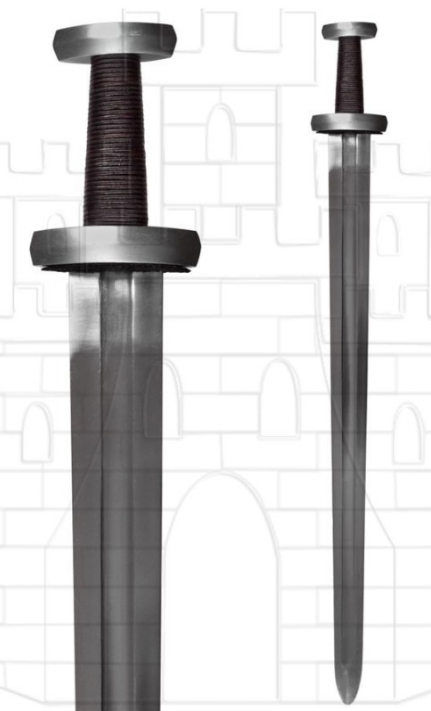
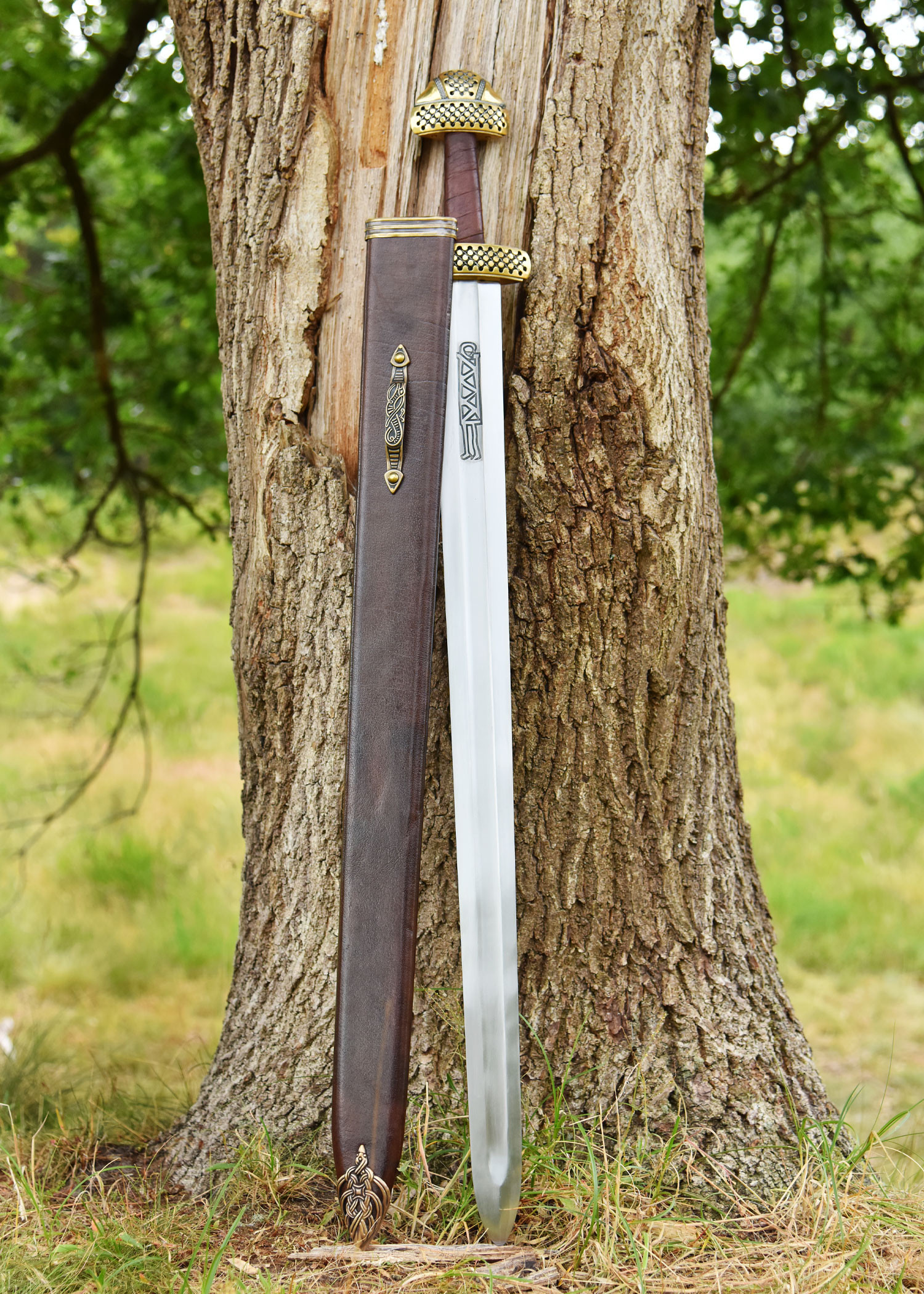
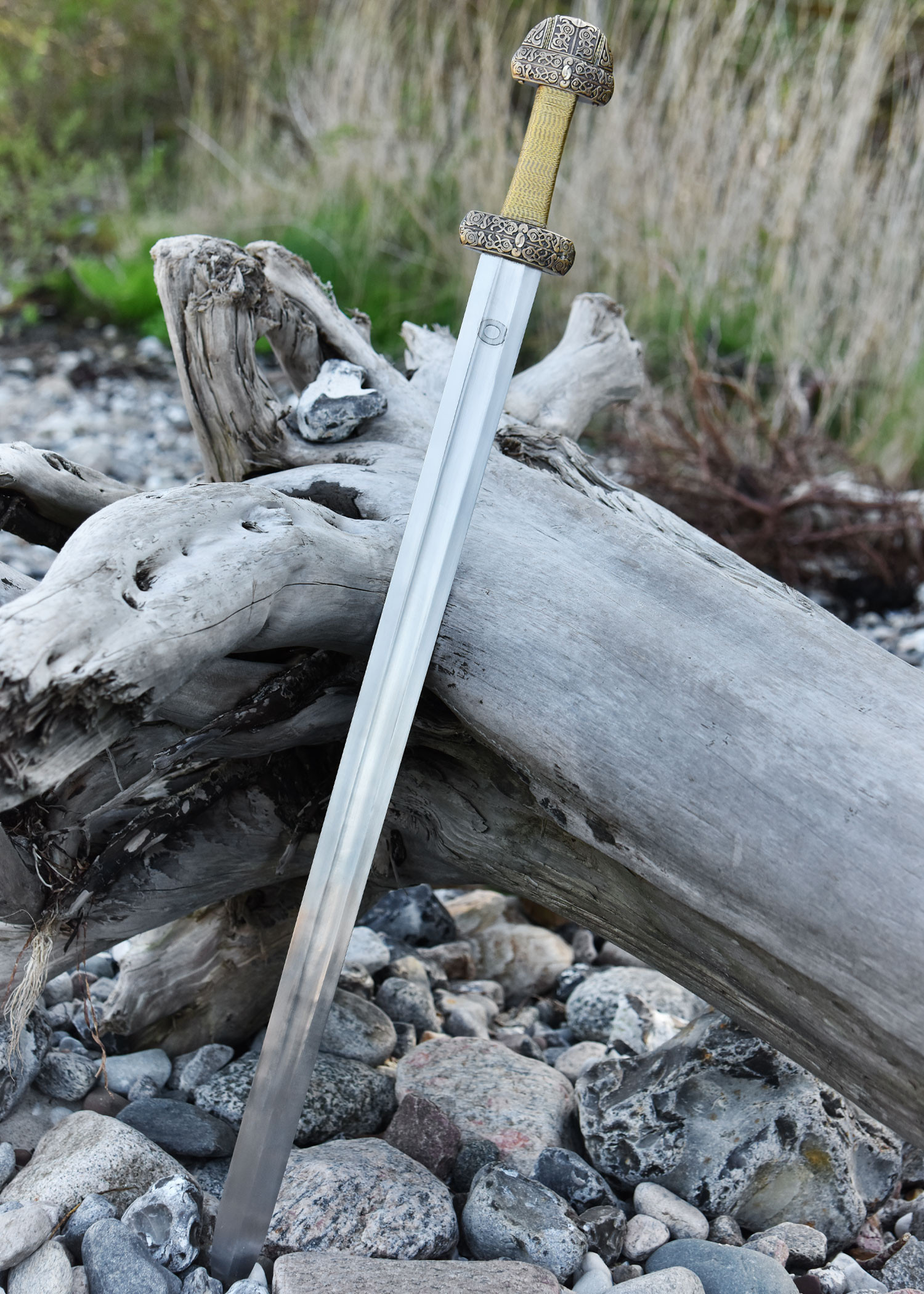
The hilt is another crucial component. It should faithfully replicate the design of the original Hurum’s pommel and guard, typically with lobed shapes or a distinctive termination. Materials such as wood, bone, or decorative metals must be consistent with Viking aesthetics, including any known engraving or inlay details from the original find. The proportions must be correct, as they affect the sword’s balance.
Dimensions and Weight
The dimensions and weight of the replica should approximate those of archaeological finds. A total length between 80-95 cm and a weight between 1.2-1.5 kg are common for Viking swords. A crucial factor is the point of balance (PoB), which should ideally be between 10-15 cm from the guard. A replica with an inaccurate PoB will feel clumsy and inauthentic in hand, affecting its handling and historical fidelity.
The Hurum Sword Today: Impact on Historical Re-enactment and Collecting
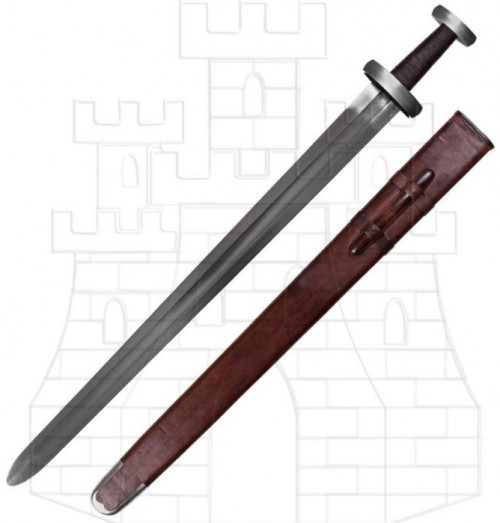
The Hurum Viking sword has left an indelible mark on the world of historical re-enactment and ancient weapon collecting. Its distinctive design and well-documented history make it an object of constant study and admiration. Historical re-enactors seek Hurum replicas to lend authenticity to their portrayals of Norse warriors. They strive for every detail of their equipment.
In the realm of collecting, the Hurum represents an archetype of the Viking sword. High-quality replicas are not only impressive display pieces but also testimonies to the metalworking artistry of a bygone era. The demand for these replicas has driven modern artisans and smiths to research and refine their techniques to emulate the mastery of their Viking predecessors. Furthermore, the Hurum has been a source of inspiration for literature, cinema, and video games. Its form and legend evoke the image of the fearless “Berserker” or “Jarl” (Viking noble).
Its presence in popular culture helps keep alive the fascination with the Viking Age and the importance of its iconic weapons.
Chronology of the Hurum Viking Sword: From its Discovery to its Legacy in Replicas
The story of the Hurum sword is a fascinating journey spanning over a millennium, from its creation in the Viking Age to its rediscovery and subsequent resurgence as a coveted replica. Its chronology allows us to contextualise its origin and appreciate its enduring legacy.
| Period | Event |
|---|---|
| Viking Age (c. 793-1066 AD) | |
| c. 9th – 10th Century AD | Creation of the original Hurum sword, likely in the Scandinavian region. |
| c. 9th – 10th Century AD | Use and possession by a high-status warrior or leader in Norway. |
| c. 10th Century AD | Burial of the sword alongside its owner in a burial mound on the Hurum peninsula, Norway. |
| Post-Viking Period and Historical Obscurity | |
| c. 11th – 19th Century | The sword remains buried and intact, preserved from superficial deterioration. |
| Modern Era: Discovery and Study | |
| Late 19th Century | Archaeological discovery of the Hurum sword on the Hurum peninsula, Norway. |
| Early 20th Century | Initial metallurgical studies and pattern analysis on the blade, confirming the “pattern welding” technique. |
| Mid-20th Century | The Hurum sword is exhibited and catalogued in museums, increasing its academic recognition. |
| Legacy Today: Replicas and Collecting | |
| Late 20th Century | First detailed replicas of the Hurum sword appear on the collecting and historical re-enactment market. |
| 21st Century | Modern forging and analysis technologies allow for the creation of more precise and authentic replicas, both functional and decorative, for enthusiasts worldwide. |
Discover our selection of The Hurum Viking sword: history, forging, and authenticity in replicas






The Enduring Echo of Valhalla: The Hurum Sword Legend Lives in Your Hands
The Hurum Viking sword is more than a historical artefact; it is a tangible link to the indomitable spirit of the Viking Age. Every curve of its blade, every detail of its hilt, resonates with the stories of brave warriors and master smiths. Owning a faithful replica of the Hurum is to keep that flame alive, honour its legacy, and feel the strength of Valhalla in your own hands. Explore our selection and find the Hurum sword replica that will ignite your Viking spirit.