
Exploring the types of kilt and the profound meaning of Scottish tartan in traditional attire immerses us in Scotland’s rich history. This iconic garment is far more than just clothing; it represents a symbol of identity, resilience, and belonging, an unbreakable connection with the warrior spirit of the clans. For enthusiasts of medieval history and battle dress, understanding the kilt and tartan is essential.
The Scottish Kilt: Beyond Traditional Attire and its Historical Connection to Battle
The Scottish kilt is an emblematic garment, deeply rooted in the history of the Scottish Highlands. Originally, it wasn’t merely a piece of clothing, but an indispensable multifunctional tool for daily life and survival in a demanding environment. Its design allowed great freedom of movement, crucial for both herding and military engagements.
During the 16th and 17th centuries, the great kilt, or “feileadh mór,” was the quintessential attire of the Scottish warrior. Its loose folds offered protection against cold and damp, while the robust fabric withstood the rigours of combat. It could be removed and used as a blanket for sleeping outdoors, demonstrating its incredible versatility on campaign.
The clans’ ability to quickly identify each other in the heat of battle lay in the specific patterns of their tartans. These acted as “war colours,” allowing them to distinguish allies from enemies. The choice of kilt for battle was not casual, but strategic, combining functionality, comfort, and powerful symbolism.
Thus, the kilt stood as a textile standard of Scottish identity and ferocity. Its evolution is intrinsically linked to the country’s military and social history.

Breaking Down Kilt Types: From the Great Kilt to the Modern Kilt
The evolution of the kilt has led to several types, each with distinctive characteristics and uses. The oldest and most authentic is the Great Kilt (Feileadh Mòr), which consisted of a single piece of fabric several metres long, manually pleated and secured with a belt, covering both the lower body and the torso and shoulder. This garment offered maximum protection and versatility.
Subsequently, the Small Kilt (Feileadh Beag) emerged, commonly known as the kilt we know today. This developed more for practical reasons, reducing the size to the lower part of the garment that covered the body from the waist to the knees. It is presumed that its design facilitated work in forges and other commercial tasks.
With the ban on Highland dress after the Battle of Culloden (1746), the kilt experienced a decline, resurfacing in the 19th century as a romantic symbol of Scottish identity. Today, the Modern Kilt is the most widespread version, with permanently sewn pleats and adapted for formal events such as weddings or parades. This kilt can be made of wool or synthetic materials.
There is also the Utility Kilt, which incorporates pockets and more robust materials, designed for daily functionality rather than tradition. Another emerging type is the Hybrid Kilt, which combines traditional elements with contemporary touches, often using different fabrics or colours. Each type of kilt, from the original great kilt to its modern adaptations, carries the imprint of its era and purpose.
The Language of Tartan: Symbolism and Diversity in Scottish Attire

Tartan is much more than a simple checked pattern; it is a fabric laden with Scottish symbolism and history. Each design, with its particular combination of colours and stripe widths, is traditionally associated with a specific clan, district, or institution, reflecting a deep connection with the wearer’s identity. Originally, the colours for tartans were obtained from natural dyes, which limited the palette and made the designs unique to each region.
Tartans are classified into several categories according to their purpose. Clan tartans are the most well-known and represent loyalty to a lineage or surname. Each clan has one or several tartans registered with the Scottish Register of Tartans, which is the official authority. In addition to clans, there are district tartans, associated with a locality or geographical region, uniting people who reside there, regardless of their clan of origin.
We also find military tartans, designed for specific regiments or units, such as the famous Black Watch tartan, used by the 3rd Battalion of the Royal Regiment of Scotland. These tartans served as uniform and identification on the battlefield. Special occasion tartans, such as wedding or mourning tartans, also hold a particular meaning, using colour combinations suitable for the solemnity of the event. Finally, there are fashion or free-design tartans, created by contemporary designers without direct historical affiliation, demonstrating the versatility and continuous evolution of the pattern.
The diversity in tartan design is astonishing, with thousands of registered patterns, each telling a part of the history of Scotland and its people. This visual “language” of tartan allows the wearer to express their lineage, their place of origin, or simply their connection to Scottish culture.
Accessories and Compliments: The Kilt as Complete Attire for the Scottish Warrior

The kilt, by itself, is an impressive garment, but it’s with its accessories that it transforms into the complete and distinctive attire of the Scottish warrior. These complements are not mere ornaments; many fulfil practical functions that were vital in traditional Highland life and on the battlefield. The sporran is one of the most recognisable elements, a pouch that hangs from the waist over the kilt, serving to store personal items. As the kilt has no pockets, the sporran becomes an indispensable accessory, often ornamented with fur, metal, or tassels, which can indicate the social status of the wearer.
Another crucial component are the hose or socks, which are thick wool stockings, often with a tartan pattern, extending to the knee. They are held up with garters called garters flashes, which incorporate a piece of fabric in the kilt’s tartan colours, adding a touch of elegance. The sgians-dubh, small traditional daggers carried concealed in the top of the right hose, represent trust between guests and hosts and symbolise preparedness for any eventuality, an important legacy of the warrior spirit.
Traditional footwear, the ghillie brogues, are lace-up shoes without a tongue, designed to allow water to drain quickly, a useful feature in Scotland’s wet terrain. To complete the ceremonial or battle ensemble, a Jacobite jacket or a doublet can be added, along with a kilt pin that secures the outer layer of the kilt, and a waistband or belt buckle, often with the clan crest. All these elements work together to create an imposing and deeply historical image, reflecting the complexity and ingenuity of Scottish attire.
Care and Maintenance of Your Kilt: Preserving Scottish Textile Tradition
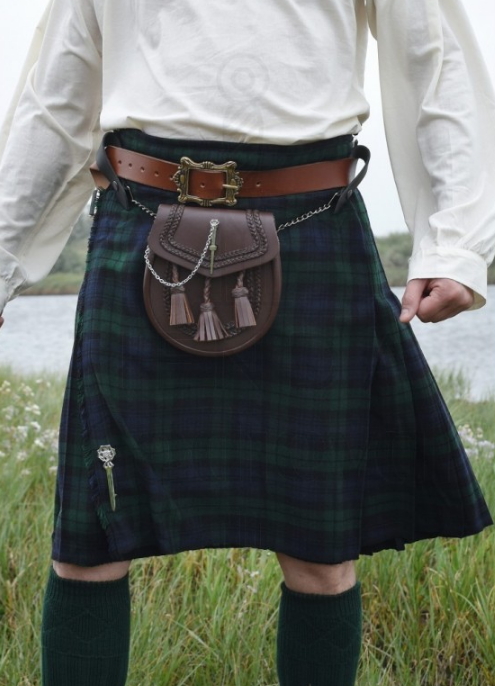
The kilt, especially if it’s a traditional wool one, is an investment in history and craftsmanship, so proper care and maintenance are essential to preserve its beauty and durability. Wool is a natural and robust material, but it requires specific treatment to avoid damage. The first and most important thing is proper storage; a kilt should be hung or carefully rolled to maintain the shape of its pleats. Hanging it on a special kilt hanger, which supports the weight evenly, is the best option. If stored rolled, the pleats must be perfectly aligned to avoid permanent deformations.
Regarding cleaning, most wool kilts require professional dry cleaning. Attempting to wash them at home can shrink the wool, alter the tartan’s colours, or damage the pleat structure. It is crucial to find dry cleaners experienced with delicate wool garments. For minor stains or superficial dirt, a soft clothes brush can be used to remove dust and debris. Never rub vigorously, as this can damage the wool fibres.
To freshen the kilt between cleanings, it is recommended to air it in a cool, dry place, away from direct sunlight. Steam can help relax fibres and remove wrinkles, but always with caution and at a safe distance from the fabric to avoid scorching or damage from excessive moisture. If your kilt needs its pleats re-pressed, it is advisable to take it to a tailor or kilt specialist who knows how to iron and reshape the garment without altering its original structure. A well-cared for kilt can last generations, honouring Scottish textile tradition.
The Kilt in the Current Context: From Battle to Celtic Celebration and its Relevance
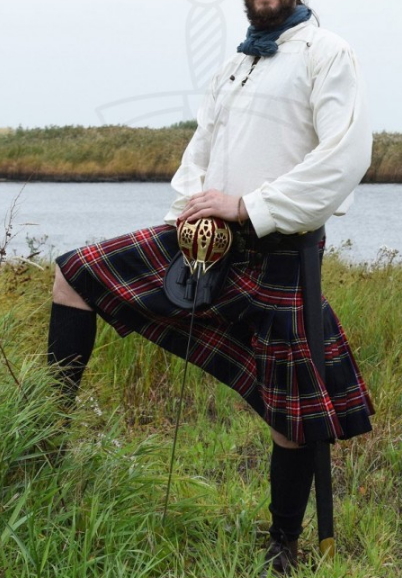
The kilt, a garment rooted in the practical necessity and warrior identity of Scottish clans, has transcended its military origins to become a powerful cultural symbol in the 21st century. Far from the battlefields, its presence is notable in a wide range of events and celebrations, both within and outside Scotland. It is a central piece at Scottish weddings, where grooms and their guests proudly wear their clan tartans, uniting family tradition with the modernity of the event. The image of a man in a kilt at a wedding is a powerful statement of heritage and pride.
Beyond marriage ceremonies, the kilt is essential at Celtic celebrations and Highland Games around the world. At these gatherings, participants and spectators proudly parade, showcasing a vibrant display of tartan diversity. Sports like the caber toss or hammer throw are performed with the kilt as part of the attire, demonstrating the freedom of movement the garment offers. These events are opportunities for the Scottish diaspora to connect with their roots, and the kilt is the tangible link.
In the artistic realm, the kilt has found its place in traditional Scottish music, worn by pipers and dancers in cultural acts. Its iconic silhouette has also been adopted by contemporary fashion, inspiring designers who incorporate it into haute couture collections, challenging conventions and reinterpreting its legacy. This reinterpretation demonstrates its versatility and cultural adaptability, while maintaining respect for its origins.
Furthermore, the kilt remains an integral part of the Scottish armed forces and ceremonial units, such as military pipe bands. Its use in parades and official representations underscores its continuing historical relevance and its ability to evoke a sense of honour and tradition. The garment acts as a cultural ambassador, projecting an image of strength and legacy, while the tradition of the Scottish kilt grows in its meaning and global reach in an era of celebrating identity and cultural diversity.
Timeline of Kilt Evolution and Tartan’s Role in Scottish Identity
The history of the kilt and tartan is a reflection of Scotland’s social, political, and cultural evolution. From its humble beginnings as a functional garment to becoming a national symbol, its journey is fascinating and complex. Understanding this timeline helps us appreciate the profound meaning behind each pleat and pattern.
| Era | Event |
|---|---|
| Origins and Early Development | |
| 15th-16th Centuries | The “Feileadh Mòr” or Great Kilt emerges as the primary attire of the Scottish Highlanders, a unique multi-functional piece of cloth. |
| Mid 17th Century | The “Feileadh Beag” (Small Kilt), or belted plaid, develops from the great kilt, distinguishing itself as the lower, permanently sewn part of the garment. |
| Prohibition and Revival | |
| 1746 | Following the Battle of Culloden and the failed Jacobite Rising, the “Dress Act 1746” prohibits the wearing of the kilt and other Highland dress in Scotland. |
| 1782 | The Dress Act is repealed, allowing the wearing of the kilt and tartan once again. The kilt becomes a symbol of patriotism and cultural identity. |
| Early 19th Century | The Modern Kilt, with permanently sewn pleats, becomes standardised. Tartan increasingly becomes associated with specific clans. |
| Recognition and Modern Adaptation | |
| 1822 | King George IV’s visit to Scotland boosts the popularity of the kilt, especially in a romantic context, solidifying its ceremonial status. |
| Late 19th-20th Centuries | The kilt becomes established as part of the military uniform of Scottish regiments and its use expands to sporting and cultural events. |
| Present Day | The kilt and tartan continue to be symbols of Scottish identity, adapting to contemporary fashion, formal events, and practical uses. |
| 2008 | Establishment of the Scottish Register of Tartans, which officialises and catalogues thousands of patterns to preserve their authenticity. |
Wearing the Heritage: The Ancestral Roar of the Kilt and Tartan in Your Soul
The kilt and tartan transcend fabric and design; they are the heartbeat of Scottish history, an echo of its warrior clans and its indomitable spirit. Each pleat of the kilt and every thread of the tartan tells a story of resilience, honour, and belonging. By wearing these garments, you don’t just wear an outfit, but you invoke an ancestral heritage, a roar of pride that resonates through the centuries.
In our shop, we invite you to explore our select collection of medieval weapons, armour, and historical accessories, where you can find pieces that complement the majesty of Scottish attire. Discover how to integrate this warrior spirit into your own collection, connecting with the bravery of yesteryear. Let yourself be enveloped by the magic of the kilt and the meaning of tartan, and carry a piece of Scotland with you!
View more Scottish Kilts | Complement your kilt with a Scottish sword