
On the battlefields of the First World War, where military technology advanced by leaps and bounds, the bayonet, a seemingly primitive weapon, remained a vital tool. Understanding **why bayonets were used in the First World War** means delving into the complex interplay between military tradition, tactical evolution, and the harsh reality of close-quarters combat. Far from being a mere relic of the past, this sharp appendage to the rifle played an indispensable role. Its presence in every assault and its psychological impact reveal much about the brutal nature of that conflict.
The Blade’s Legacy: A Brief History of the Bayonet Before 1914?
The history of the bayonet is as fascinating as its utility in combat, beginning in the 17th century as a simple plug dagger inserted into the barrel of a musket. This initial design, though effective in critical moments, rendered the firearm useless, limiting its versatility in the heat of battle. Evolution was rapid, seeking solutions that allowed firing and loading while keeping the blade in place, especially as the use of firearms increased.
The crucial step was taken with the socket bayonet, which appeared in the late 17th century. This design featured a metal ring that attached externally to the barrel, allowing the soldier to fire the musket even with the bayonet fixed. This innovation transformed the infantryman from a mere firearm carrier into a soldier capable of defending against cavalry charges or assaults, integrating firepower with close-quarters combat capability. By the 18th century, the bayonet was standard European infantry equipment, used effectively in conflicts such as the Napoleonic Wars.
Its utility lay in its ability to transform a line of musketeers into a formidable row of pikes, deterring charges and facilitating bayonet assaults.
Although gunpowder and tactics advanced, the proven effectiveness of the rifle-bayonet combination ensured its presence in the next great conflict: the Great War.
Beyond the Bullet: The Tactical Need for the Bayonet in Trench Warfare?
In the First World War, trench warfare imposed a brutal and unique reality, where long-range combat was interspersed with claustrophobic and extremely violent encounters. Machine guns and artillery made advancing across open ground suicidal, but once inside enemy trenches, the situation changed dramatically. Space became confined, visibility was reduced, and every inch was fiercely contested. This is where ammunition ran out quickly or rifles jammed due to mud and dirt, making the bayonet an indispensable weapon once more.
In the chaos of assaults, with shouts and smoke, the soldier needed a primary means to defend or attack. The bayonet offered a simple and reliable solution: an extension of the soldier’s arm, capable of penetrating uniforms and, often, the enemy’s morale, even if not lethal with every thrust. Furthermore, the deafening noise of combat, coupled with panic and adrenaline, made communication and coordination difficult.
In this deafening environment, the act of fixing bayonets was a visual cry of determination, a signal to the enemy and to one’s own soldiers that the fight would be no quarter given. It was a tool for clearing trenches, storming bunkers, and forcing surrender, transforming the rifle into a short, terribly effective spear.

Models and Materials: The Bayonet Variants Used by the Great Powers?
Bayonets of the First World War varied considerably among the combatant nations, reflecting both military philosophies and industrial capabilities of each country. Germany, for example, favoured “Butcher Blade” (Spitzer) type bayonets, such as the famous Seitengewehr 98/05, known for its robust knife-like blade. These were designed not only for stabbing but also for cutting, useful in various combat situations or for field tasks.
The British, for their part, primarily used the SMLE Bayonet Pattern 1907, a narrow and long-bladed bayonet reminiscent of earlier era bayonets. Its main advantage was its reach, allowing the soldier to maintain some distance in close-quarters combat. The French, with their Lebel Mle 1886 Épée-Baïonnette model, opted for a long, cruciform-section bayonet, optimised for penetration and more difficult to extract once thrust.
| Nation | Main Model | Blade Type | Approximate Length (cm) |
|---|---|---|---|
| Germany | Seitengewehr 98/05 | “Butcher Blade” (thick blade) | 50 |
| United Kingdom | Pattern 1907 (SMLE) | Straight, sword-type | 43 |
| France | Lebel Mle 1886 | Cruciform (épée) | 52 |
| United States | M1905 (Springfield) | Straight, double-edged | 41 |
| Russian Empire | Mosin-Nagant M1891 | Cruciform (unsharpened) | 50 |
Manufacturing materials were predominantly high-strength carbon steel for the blades, and metal or wood for the grips. The quality of the steel and heat treatments varied, influencing durability and sharpness. These bayonets were typically designed with a lug to attach to the rifle’s barrel and a locking system to prevent them from coming off during combat. Standardisation, though pursued, was not total, and many soldiers adapted their own variants or improvised with trench knives.
The Art of Deadly Fencing: Training and Use of the Bayonet in Close-Quarters Combat?
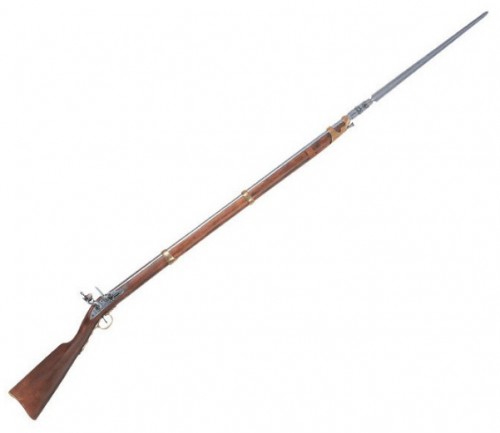
Bayonet training was a fundamental and brutal part of military preparation in the First World War. Far from the sophistication of foil fencing, this training focused on aggression, effectiveness, and survival in extreme situations. Soldiers learned to charge and perform basic thrusts, designed to inflict maximum damage and demoralise the enemy with every blow. The discipline of bayonet combat was ruthless.
Various thrusts were taught, from the direct frontal thrust to the chest or abdomen, to more complex blows to break through defenders. The objective was not only to wound but to neutralise the opponent as quickly and brutally as possible. The bayonet forced a direct, face-to-face confrontation, where speed, strength, and determination were key factors for survival. Exercises involved straw figures or stuffed sacks. In addition to thrusts, training included defence and the use of the rifle as a blunt weapon once the bayonet was fixed.
Instructors emphasised relentless advance, the use of one’s body weight to strengthen blows, and the importance of continuing without hesitation. This rigorous training not only forged physical skills but also instilled a mindset of aggression and psychological resilience vital to enduring the terror of trench warfare.
Psychological Impact: The Terror of the Blade and its Role in Soldier Morale?
The psychological impact of the bayonet was as significant as its physical effectiveness in combat. The sight of the enemy charging with fixed bayonets provoked a visceral terror, a primal sense of imminent threat that could break the morale of even the most experienced soldiers. This dread was magnified by the intimate and brutal nature of bayonet combat, where distance shrank to zero and there was no room for the anonymity of a distant bullet.
For the soldier, the bayonet became a symbol of last-ditch resistance, a tool that ensured that, even if ammunition ran out, they still had the means to fight for their lives. The act of fixing bayonets before a charge, often accompanied by a roar or shout, served as a powerful stimulant for the morale of one’s own troops, unifying men in an act of collective aggression and determination. The threat of the bayonet was inherent. On the other hand, the image of the “Tommy” (British soldier) or the “Poilu” (French soldier) charging with the bayonet instilled respect and fear in the enemy. Propaganda from both sides used this image to illustrate the ferocity and fighting spirit of their soldiers.
Beyond physical wounds, the bayonet left deep psychological scars, both on those who wielded it and those who faced it, a constant reminder of the barbarity the conflict could reach.
More Than a Weapon: Other Practical and Symbolic Uses of the Bayonet at the Front?
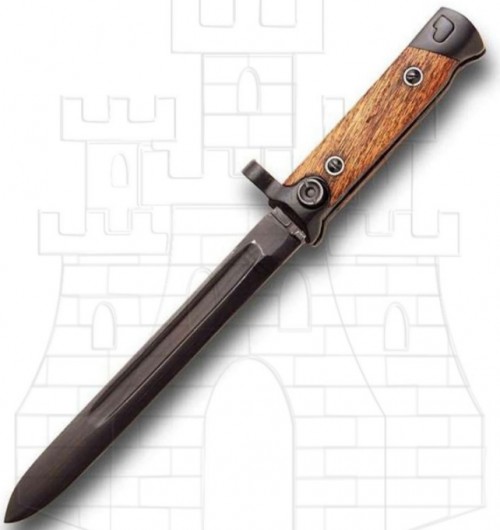
In addition to its obvious function as a weapon in close-quarters combat, the bayonet served multiple surprisingly practical purposes in the daily life of the First World War soldier. Its robust and sharp design made it an indispensable utilitarian tool in the difficult conditions of the front. Soldiers used it to open food tins, dig, cut wires, or even as an improvised hammer to drive stakes into trenches. The bayonet also had a deep symbolic value.
It represented the soldier’s resilience and determination, the idea that problems were faced head-on. In times of resource scarcity or when firearms failed, the bayonet was the reliable companion that never jammed or ran out of ammunition. It was an object of pride, a tangible link to generations of soldiers who had fought with similar weapons.
Common Secondary Uses of the Bayonet:
- Multi-tool: For opening ration boxes, felling small branches, or even as a lever.
- Trench construction and repair: Used for clearing debris, as a lever to anchor timbers, or as an improvised hammer.
- Equipment support: Given its shape, it was sometimes used to hang objects or as a support for the first-aid kit.
- Status symbol: For some, a personalised or well-maintained weapon was a sign of experience and veteran status.
It was a constant element in the uniform and in the soldier’s life, an object they lived with and to which almost mystical value was attributed. Soldiers cleaned and sharpened their bayonets regularly, not only out of necessity but as a ritual that cemented their connection to the war. It was a constant reminder of the proximity of death and the need to always be prepared for the most brutal combat imaginable.
| Period | Event |
|---|---|
| Initial Phase (1914) | |
| August-September 1914 | Battles on the Western Front: The doctrine of the “bayonet charge” was common in mass assaults, with high casualties due to artillery and machine guns. |
| Late 1914 | Beginning of trench warfare: Mobility decreased, and the bayonet’s role adapted to assaults in confined spaces and “clearing” trenches. |
| Trench Warfare and Adaptation (1915-1917) | |
From Charge to Assault: Evolution of Bayonet Use Through the First World War
The use of the bayonet underwent a complex evolution during the First World War, adapting to changing tactics and the increasing sophistication of weaponry. Although its role in frontal assaults was fundamental at the beginning, the experience of trench warfare forced a reappraisal of when and how to employ this centuries-old weapon.