The Blücher Sabre, the weapon that changed Waterloo
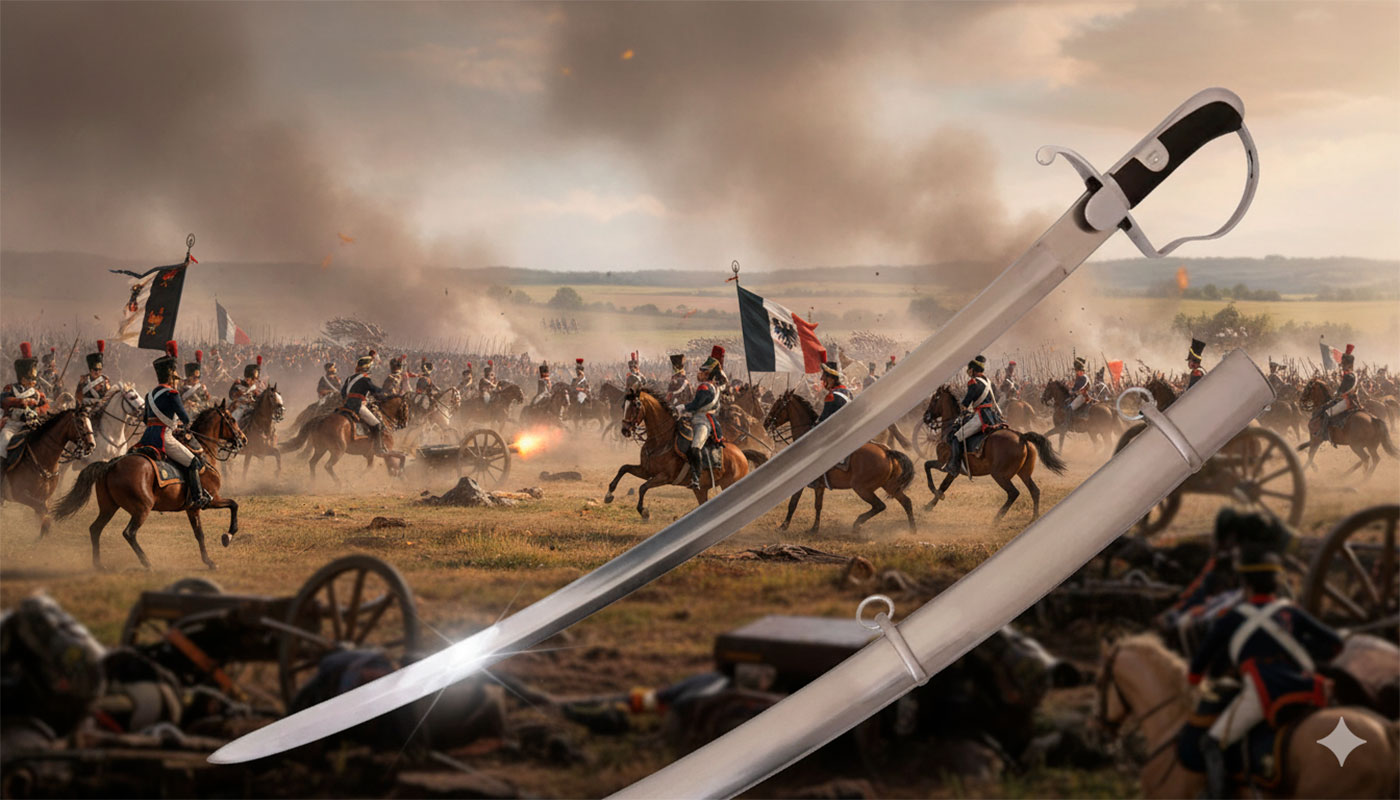
The thunder of the cannons at Waterloo marked the end of an era, but amidst the mud and gunpowder, an instrument of Prussian steel rose as the ultimate symbol of the Allied victory. The Blücher sabre was not merely another combat tool; it represented the determination of a nation to regain its sovereignty against Napoleonic hegemony. This robust blade, directly inspired by British design, became the extension of the arm for the hussars and dragoons of Gebhard Leberecht von Blücher, the bold marshal who changed the course of European history.
The appearance of the 1811 Prussian sabre on the flank of the weakened French troops had a devastating psychological and physical impact. The Prussian riders, armed with this heavy model featuring forceful cutting capacity, executed decisive charges that sealed the Emperor’s fate. Its design prioritized brutal functionality over ornamental elegance, reflecting the character of Marshal Blücher himself, known for his tactical aggressiveness and unwavering iron will.
For military enthusiasts, understanding the legacy of this piece means delving into a war engineering designed for close combat. The Blücher sabre embodies the transition toward more standardized and effective weapons on the modern battlefield. Below, we will explore the epic origin of this icon, analyzing how its structure and history transformed it into a cult object for collectors and 19th-century scholars. Its edge narrated the epilogue of the Napoleonic Wars.
Origins of the Prussian 1811 model ‘a la Blücher’ sabre
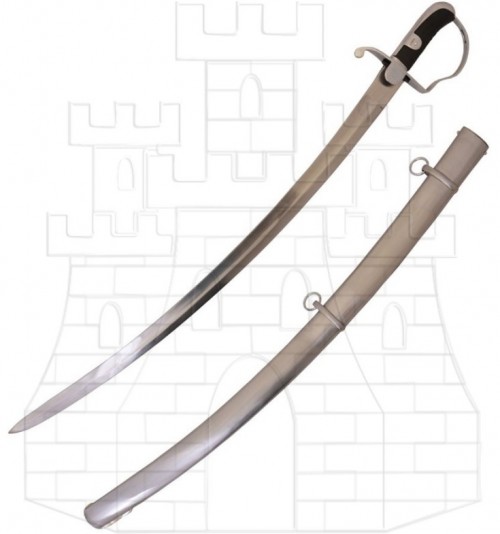 The genesis of the 1811 Prussian sabre is intrinsically linked to Prussia’s need to modernize its weaponry following humiliating defeats at the hands of Napoleon’s forces. The technical inspiration for this weapon was not local, but came from a strategic ally: Great Britain. Prussian designers focused their attention on the British 1796 light cavalry sabre, a piece famous for its effectiveness in slashing. By adopting this wide-blade geometry and pronounced curve, Prussia standardized what we today universally know as the Blücher sabre.
Following the decisive Battle of Leipzig, production of this 1811 model intensified to rearm light cavalry units, including hussars and uhlans. It received its popular nickname in honor of Field Marshal Gebhard Leberecht von Blücher, whose tireless leadership and indomitable character personified the spirit of Prussian resistance. The Blücher sabre was conceived for mass production, utilizing processes that guaranteed durability and lethal force in the hands of the riders pursuing the retreating French troops.
The 1811 Blücher model stood out for its robustness compared to its French counterparts. It possessed a simple yet extremely resistant stirrup guard, designed to protect the fighter’s hand without adding unnecessary weight. This direct functionality allowed the Blücher cavalry sabre to establish itself as the standard of military excellence in Northern Europe, marking the beginning of a new era in Prussian military metallurgy that would last for decades on the battlefield.
Design and characteristics of the Blücher M1811 sabre
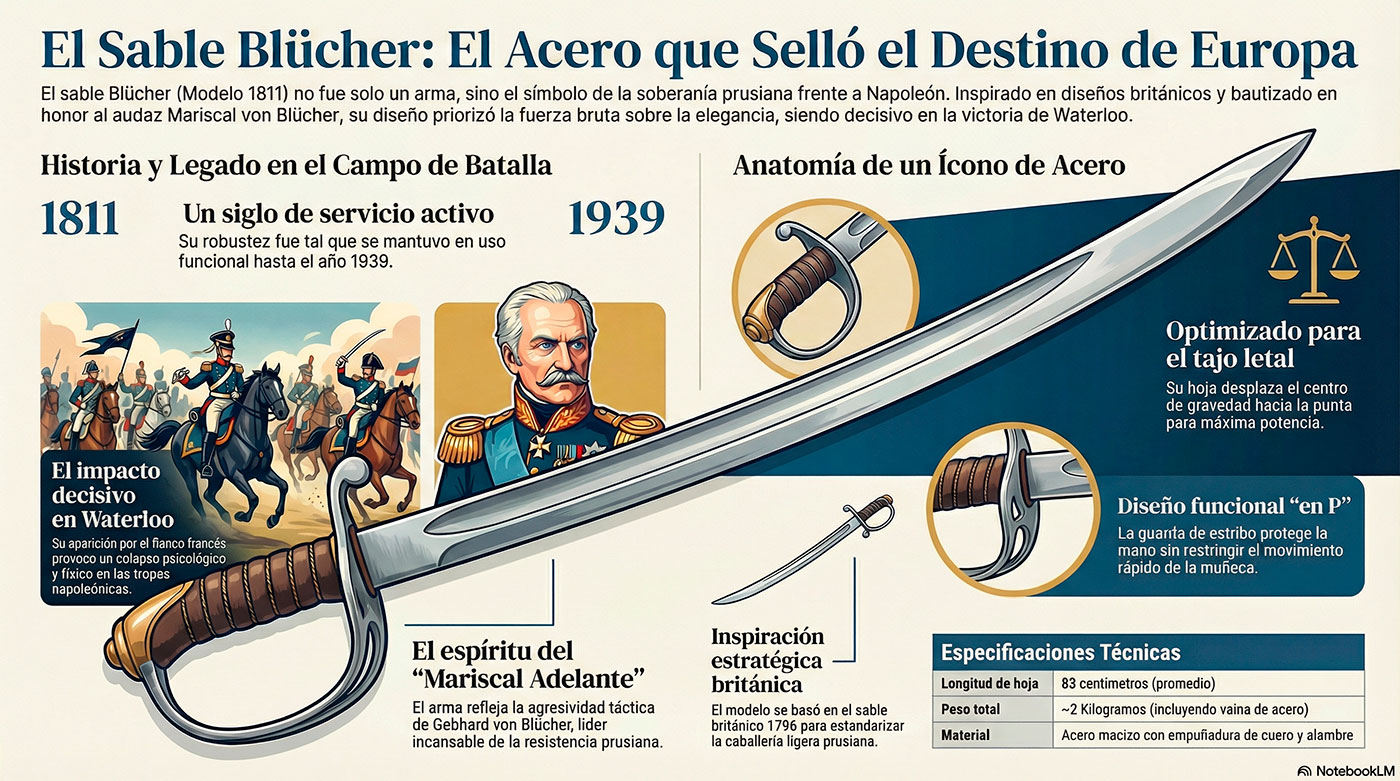
The design of the Blücher sabre stands out primarily for its imposing cutting capacity, an essential quality for the Prussian hussars and dragoons operating in the heat of the melee. Its blade has an average length of 83 centimeters, characterized by a pronounced curvature and a considerable width that shifts the center of gravity toward the tip. This configuration allowed for devastating slashes with less effort, surpassing the power of the straighter sabres of the time. As a solid steel piece, the 1811 Blücher model offered superior structural integrity to withstand the violent shock against other blades or light armor.
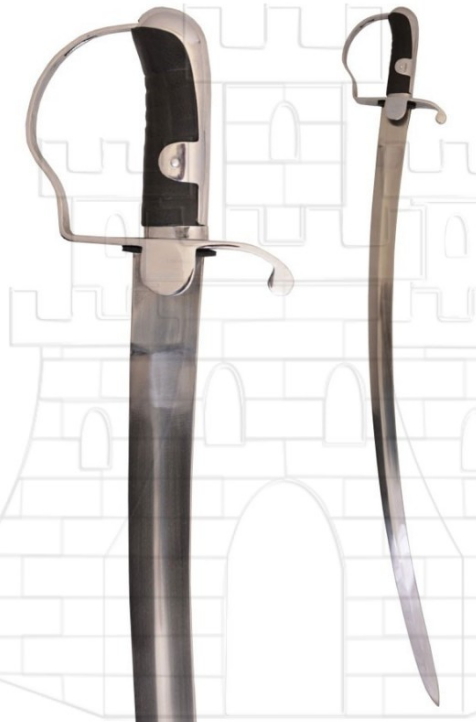
The hilt of the Blücher sabre followed the stirrup guard scheme, a metal structure in a “P” shape that protected the knuckles without restricting wrist movement. This ergonomics was crucial for performing rapid maneuvers during cavalry charges. Its handle was usually covered in leather held by wire, ensuring a firm grip even in wet or fatigued conditions. Furthermore, the reinforced steel scabbage was extremely heavy, designed not only to protect the edge but to withstand the rough treatment of prolonged campaigns.
On the battlefield, the 1811 Prussian sabre earned a reputation as an indestructible tool. Its total weight, close to two kilograms with the scabbard, made it a forceful weapon that instilled terror. While other nations sought elegance, Prussia prioritized this functional and aggressive design, consolidating the Blücher cavalry sabre as the standard of brute force at Waterloo.
Gebhard von Blücher: The marshal who inspired the ultimate weapon
Gebhard Leberecht von Blücher was much more than a military strategist; he was the soul of Prussian resistance against French dominance. Affectionately known as “Marschall Vorwärts” or Marshal Forward for his impetuous aggressiveness, his life was a succession of epic challenges. During the campaigns from 1813 to 1815, Blücher demonstrated unwavering tenacity, even when facing defeat. This ferocity in combat and his absolute refusal to surrender are the elements that forever link his name to the Blücher sabre, a piece designed to reflect his own rough and direct nature.
The crowning moment of his legend occurred between the battles of Ligny and Waterloo. After being crushed by his horse and left for dead at Ligny, Blücher miraculously recovered to lead his troops toward the field of Waterloo. His timely arrival on the French flank was the final blow that Napoleon failed to foresee. The soldiers wielding the 1811 Prussian sabre were inspired by a seventy-two-year-old man riding at the front, waving his own weapon toward final victory.
The Blücher sabre thus became a symbol of regained national identity. It was not just a standard 1811 Blücher model, but the physical representation of a leadership that preferred forceful action over rhetoric. The history of the Blücher cavalry sabre is the story of a man who never knew when to stop, ensuring that his legacy remained forged in the steel of future generations.
The Blücher sabre in the Battle of Waterloo: The crowning moment
 The evening of June 18, 1815, witnessed the most dramatic intervention of the Prussian cavalry, where the Blücher sabre became the absolute protagonist of the Napoleonic collapse. While Wellington’s troops held out with tenacity on the ridge of Mont-Saint-Jean, Blücher’s forces broke through from the east, concentrating their fury on the strategic enclave of Plancenoit. In the narrow streets and surrounding fields, the Prussian riders unsheathed their heavy steel blades to exert unbearable physical pressure on the French Imperial Guard, which was forced to fight on two simultaneous fronts.
The impact of the Blücher Waterloo sabre was decisive during the pursuit phase. When the French lines finally broke, the Prussian light cavalry gave no quarter, using the superior slashing capacity of their weapons to dismantle any attempt at organized withdrawal. The 1811 Blücher model proved relentless in open fields; its design allowed it to reach fleeing soldiers with lethal efficiency, transforming the enemy retreat into a chaotic rout that reached the gates of France.
This intervention not only guaranteed the Allied victory but elevated the status of the Blücher cavalry sabre to the ranks of legend. Contemporary testimonies emphasize how the sight of Prussian steel shining under the smoke of artillery broke the morale of Napoleon’s veterans. At the end of the day, the 1811 Prussian sabre had not only won a battle but had forged the destiny of Europe.
Legacy of the Blücher sabre: From Waterloo to eternity
The impact of the Blücher sabre transcended the blood-soaked fields of Waterloo, consolidating itself as a standard of excellence that the Prussian military refused to abandon for more than a century. Although the nineteenth century saw the arrival of increasingly sophisticated firearms, the 1811 Blücher model remained in active service, adapting to the needs of various artillery units and supply trains. Its legendary robustness allowed this Blücher cavalry sabre to continue as a regulation piece well into the twentieth century, with its functional use recorded even up to the year 1939.
The technical influence of this weapon extended to later designs throughout Europe, where the stirrup guard and impact curvature became benchmarks for light cavalry. Nevertheless, beyond its engineering specifications, the Blücher sabre transformed into a cultural icon representing independence and the resurgence of Prussia as a continental power. Its silhouette is today synonymous with an era where individual courage and steel decided the fate of colonial empires.
For the history of the Blücher sabre, its permanence over time is a testament to a design that reached functional perfection. Collectors and museums around the world today preserve the 1811 Prussian sabre not just as a military antique, but as a relic that holds the soul of Marshal Forward. This legacy of steel ensures that, as long as Waterloo is spoken of, the name of Blücher and his sabre will continue to resonate.
Do you want to know more about European sabres?
More than a simple cavalry weapon, the European sabre is a testament to engineering and martial elegance. From Napoleonic charges to duels of honor in 19th-century courts, its curved blade did not just change the way of fighting, it defined the status of those who carried it. If you have ever wondered what differentiates a shashka from a French officer’s model or how the curvature of the steel influences the slash, join us on this journey through the most emblematic pieces of continental armory.


The history of Europe can be read through the shine of its blades. Whether for its value as a collector’s item, for historical interest, or for the beauty of its craftsmanship, the world of ancient fencing always has a new secret to reveal. The sabre is not just an object of the past; it is the echo of an era where steel had the last word.
SEE PRUSSIAN CAVALRY BLÜCHER SABRE | SEE PRUSSIAN OFFICER SABRE | SEE MORE TYPES OF SABRES