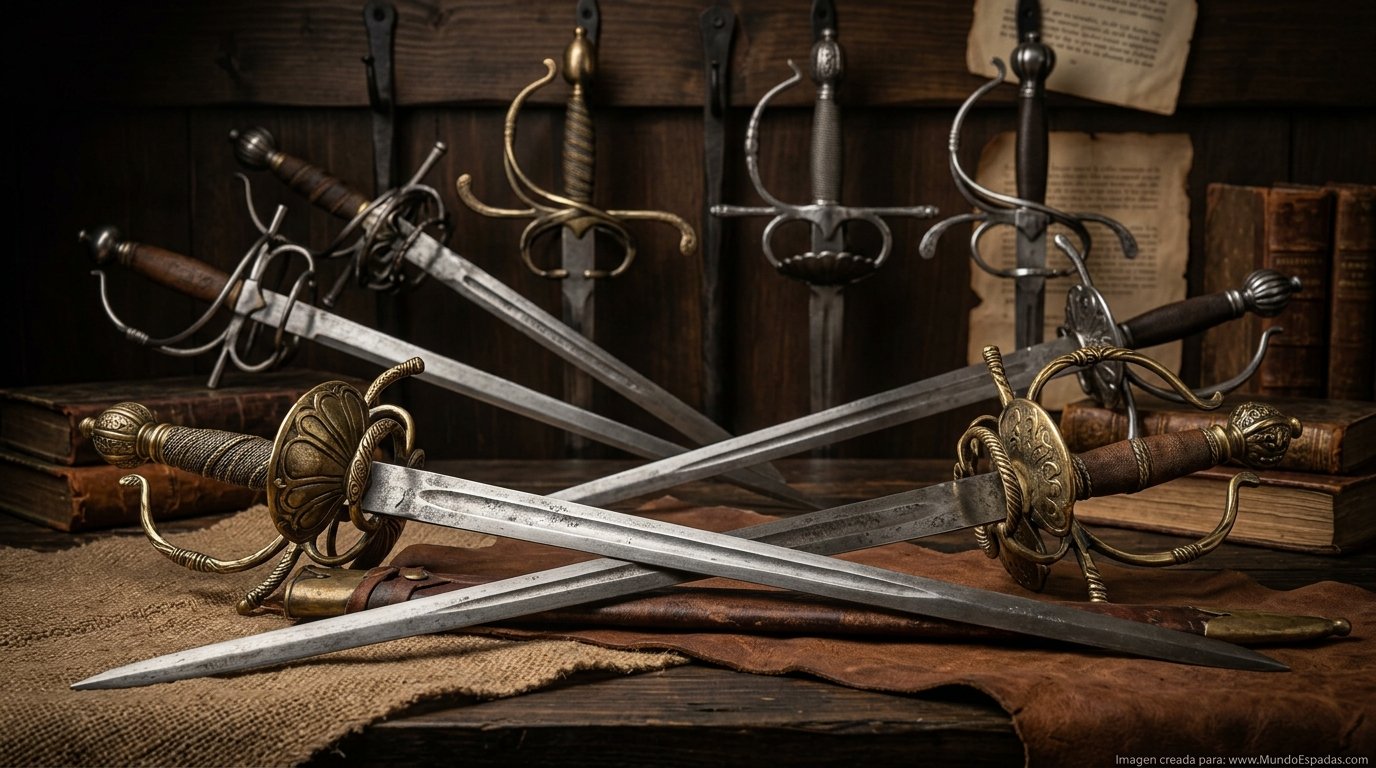
The best colonial rapier replicas offer a fascinating glimpse into the past, allowing collectors and history enthusiasts to wield pieces that reflect the elegance and skill of a bygone era. Exploring these duelling and self-defence instruments means delving into a period where the rapier was not only a weapon but also a symbol of status, honour, and sophistication. For those seeking authenticity and exceptional craftsmanship, this detailed guide will reveal everything you need to know to choose the perfect replica that will enrich any collection, combining historical accuracy with unparalleled quality.
The Historical Allure: Why collect colonial rapier replicas?
The fascination with colonial rapier replicas stems from their deep connection to one of the most influential and dramatic periods in world history. These elegant instruments, often known by variants of the rapier or smallsword, were essential tools for personal defence and duels of honour between the 17th and early 19th centuries, serving gentlemen, officers, and nobles in the American, Asian, and African colonies.
Collecting these pieces is much more than acquiring objects; it is preserving a tangible fragment of history, allowing us to understand and appreciate the aesthetics, engineering, and social codes of an age of exploration, conflict, and refinement. Each well-crafted replica tells a story of intrigue, bravery, and the evolution of the art of fencing. The colonial rapier is distinguished by its lightweight design and its ability for thrusting, characteristics that made it ideal for single combat in a world that valued agility and precision over brute force. These weapons are a testament to an era where fashion, architecture, and even warfare adopted an intricate and ornate character. Integrating one of these replicas into a collection adds an element of distinction and an inexhaustible source of stories, a bridge between the present and the gentlemen and adventurers who carried them.
Emblematic Types and Styles: Exploring the diversity of colonial rapiers
The diversity of colonial rapiers is as rich as the history that saw them emerge, reflecting the cultural influences and technical innovations of various regions and eras. During the colonial period, the rapier evolved from the formidable German or Spanish rapier to the lighter and more agile smallsword, incorporating a myriad of styles in its hilt and blade. The most sought-after replicas often emulate European designs that were imported or inspired local forging in the colonies.

Colonial Rapier
The colonial rapier, a direct descendant of the 17th-century European rapier, features a long, slender blade, ideal for thrusting. Its hilt could vary from the complex “cup-hilt” or “basket” to intricate loop designs that offered substantial hand protection. These rapiers were common among high society and high-ranking military personnel in the colonies, symbolising both their status and their readiness for honour and defence. The intricate guard, often decorated with filigree or engravings, is a hallmark of its refinement. The overall length of a colonial rapier typically ranged between 100 and 120 centimetres, with blades exceeding 80 cm, allowing for a great reach.
The Colonial Smallsword
The colonial smallsword, also known simply as a “smallsword,” represents the evolution towards a lighter and more manageable weapon, popularised in the 18th and early 19th centuries. With a shorter blade (between 70 and 85 cm) and a more triangular or lenticular profile, the smallsword became the duelling weapon par excellence and an indispensable accessory for gentlemen. Its guards are usually more compact, dominated by “plate” or “shell” designs, which could be ornamented with exquisite engravings, precious metal inlays, or even gemstones. Notable examples include the French smallsword and English and Spanish designs adapted to colonial specificities.
Naval and Officer’s Rapiers
There are also replicas distinguished by their specific use, such as naval and officer’s rapiers. These rapiers often feature robust characteristics to withstand the conditions at sea, with non-slip handles and, at times, a more closed guard protection to prevent snags in confined spaces or on a ship’s deck. Their aesthetic was usually more sober and functional than that of court rapiers, but they still exhibited details that denoted the rank of their bearer. The presence of dragons or marine motifs engraved on the guard is a distinctive addition.

Rapier Type Dominant Period Blade Length (approx.) Key Features Typical User Class Colonial Rapier 17th – Early 18th Century 85 – 100 cm Long blade, complex guard (cup, loop), considerable weight. Focus on thrusting, but with secondary cutting capability. Nobles, high-ranking officers, wealthy bourgeoisie. Colonial Smallsword 18th – Early 19th Century 70 – 85 cm Light and slender blade (triangular/lenticular), plate or shell guard, highly ornamented. Ideal for duelling and a fashion accessory. Gentlemen, junior officers, aristocrats. Naval/Officer’s Rapier 18th – 19th Centuries 75 – 90 cm Robust design, closed or semi-closed guard, functional hilt. Adapted to combat environments or service use. Naval officers, military personnel, coastguards.
Elite Materials and Craftsmanship: Keys to an authentic and durable replica
The excellence of the best colonial rapier replicas lies in the meticulous selection of materials and in the craftsmanship that emulates the skill of ancient master armourers. For the discerning collector, visual and tactile authenticity is paramount, meaning that every component must faithfully reflect the historical originals.
Carbon Steel Blade
The heart of a replica, its blade, must be forged from high-quality carbon steel. This material not only provides the necessary durability and flexibility but also allows for a polish and finish that mimics the shine and texture of historical blades. Steels such as 1045, 1060, or 1095 are commonly used, with higher grades offering better edge retention and resistance. Furthermore, the balance of the blade is crucial: it must be light and well-distributed to replicate the feeling of agility that characterised colonial rapiers, designed for quick and precise thrusts. A good manufacturer will pay attention to the tip, which should be fine and sharp, even if unsharpened, to simulate the penetrating capability of the original weapon.
Ornate Guards and Hilts
The guards, whether cup-hilted, loop-hilted, or plate-hilted, are usually made of polished steel, brass, or bronze, and are often subject to intricate engravings, cut-outs, or filigree. These ornamental details not only protected the duellist’s hand but also served as a visible indicator of status and wealth. The pommel, which balances the blade and finishes the hilt, can be made of the same metals, sometimes with sculpted designs that complement the guard. Traditional hilts are built on a wooden core covered with leather, twisted wire (bronze, silver, or copper), or even ivory (in high-end replicas), providing a secure grip and a luxurious aesthetic. The quality of these coverings and the precision in their application are crucial for authenticity.
Precision Assembly and Finishes
The assembly of all these components is an art in itself. An authentic colonial rapier replica must feature a perfect fit between the blade, guard, and pommel, without looseness or movement. Rivets and welds must be discreet and robust, ensuring the structural integrity of the piece. Finishes such as bluing, mirror polishing, or patination to simulate ageing also contribute significantly to the authenticity and visual appeal of the replica. A professionally applied lacquer or anti-corrosion treatment ensures that the piece remains in excellent condition for years, facilitating care and maintenance without sacrificing its historical appearance. These combined elements define the difference between a decorative piece and a high-fidelity collector’s replica.
Reputable Manufacturers: Where to find the best replicas on the market
When looking to acquire the best colonial rapier replicas, the choice of manufacturer is as crucial as the selection of the piece’s style. There are companies that have consolidated their reputation for historical accuracy, material quality, and excellence in craftsmanship. These companies not only produce aesthetically impressive pieces but also ensure that each replica is a faithful reflection of its historical counterpart. One of the most respected names in historical weapon replicas is Windlass Steelcrafts. With decades of experience, Windlass is known for its detailed reproductions of weapons, including rapiers and smallswords.
They use high-quality carbon steels and employ artisans who master traditional forging and assembly techniques. Their colonial rapiers often stand out for their richly engraved guards and leather or wire-wrapped hilts, offering an ideal combination of beauty and durability for the collector. Another renowned manufacturer is Del Tin Armi Antiche, an Italian firm with a long tradition in recreating historical weapons.
Del Tin’s creations are particularly appreciated for their balance and authenticity. Their manufacturing process combines modern technology with artisanal techniques, paying special attention to historical details to ensure maximum fidelity. Although they often specialise in earlier periods, their catalogue includes some rapier models that fit the colonial period, especially those that retain the lightness and agility of smallswords.
For those seeking rapier replicas with an emphasis on Historical European Martials Arts (HEMA) revival, Darkwood Armory is a popular choice, although their primary focus is on training weapons. Their pieces are built for durability in training but also maintain a high degree of aesthetic fidelity. While not exclusively focused on the colonial period, some of their rapier and smallsword models can be adapted or serve as a basis for high-quality colonial replicas, especially in the robustness of the blade and guard.
Finally, many specialised artisan forges and small armouries in Europe and North America also offer custom colonial rapier replicas. These artisans, often with profound historical knowledge, can produce unique pieces based on period documents and exact specifications, offering an unparalleled level of detail and exclusivity. Research and patience are key to finding these smiths, but the result is usually an incomparable collector’s piece that meets the highest expectations.
Care and Maintenance: Preserving the beauty of your colonial rapier
Acquiring the best colonial rapier replicas is an investment in history and craftsmanship, so proper care and maintenance are essential to preserve their beauty and value over time. Regular maintenance not only ensures that the rapier retains its original appearance but also prevents deterioration that could diminish its appeal as a collector’s item. The main enemy of carbon steel blades is corrosion. To prevent rust, it is fundamental to keep the blade clean and dry.
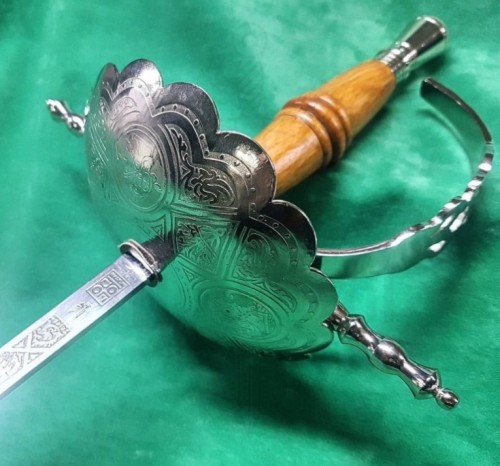
After handling the rapier, even with gloves, it is advisable to clean the blade with a soft cloth to remove any fingerprints or moisture residue. Subsequently, a thin layer of protective oil, such as mineral oil or specific weapon oils, should be applied to the entire steel surface.
This process should be performed at least once every few months, or more frequently if the rapier is in a humid environment. For brass or bronze guards and pommels, occasional polishing with a soft cloth and a specific product for non-ferrous metals will help maintain their original shine.
Hilts, especially those wrapped in leather or wire, require particular attention. Leather should be cleaned and conditioned periodically with a specific leather product to prevent it from drying out or cracking. Wire hilts can be gently cleaned with a soft-bristled brush to remove dust accumulated in the grooves.
Avoid using abrasive products or strong chemicals on any part of the rapier, as they could damage delicate finishes or materials. For storage, a cool, dry place, away from direct sunlight and sources of humidity, is ideal.
Some collectors opt for airtight display cases with internal dehumidifiers to further protect their pieces. It is important that the rapier rests in a position that does not exert undue tension on the blade or guard. An appropriate display stand or a wall hanger designed for bladed weapons will be ideal, ensuring that the piece is securely held and displayed with the dignity it deserves, maximising its longevity and splendour.
Beyond the Exhibition: Uses and representations of colonial rapiers
The best colonial rapier replicas, while primarily collector’s items, transcend mere decorative function to offer multiple uses and representations. Their presence in various activities or events underscores their cultural and historical importance, connecting the past with the present in meaningful ways.
Historical Fencing and Reenactments
One of the most dynamic uses of colonial rapier replicas is in the field of Historical European Martial Arts (HEMA) and historical reenactments. For HEMA practitioners, these replicas, often adapted with blunt tips or training blades, allow them to explore the fencing techniques of the colonial era, reviving authentic treatises by master armourers such as Capo Ferro or Thibault. This use is not only a physical and mental exercise but also a way to understand the biomechanics and philosophy behind the duelling of the era.
In historical reenactments, rapiers, although not always used in real combat, are essential for the visual authenticity of characters, whether they are gentlemen, military officers, or educated citizens, adding a layer of verisimilitude to costumes and roles.
Education and Historical Studies
In addition to active recreation, replicas are invaluable tools for education and historical studies. Museums, universities, and research centres use these replicas to illustrate the evolution of weaponry, duelling customs, and the social role of weapons in the colonial era. A well-constructed replica allows students and the general public to safely interact with an object that would otherwise be inaccessible, offering a tactile experience that complements theoretical knowledge. By studying its proportions, weight, and forging details, insights can be gained into the metallurgical mastery and functional design of the period.
Performing Arts and Thematic Collecting
In the performing arts, colonial rapier replicas are indispensable props for theatrical, cinematic, and television productions set in the period. They provide a high level of visual detail that is fundamental to building a credible fictional world and transporting the audience to the colonial era.
Beyond performance, many collectors specialise in specific themes, such as the American War of Independence, the Spanish Empire in America, or European duels of honour, and colonial rapier replicas become central pieces that encapsulate the essence of those periods. Their intrinsic beauty and the historical narrative they embody make them highly valued elements that transcend their original design, demonstrating their cultural impact and versatility.
Buyer’s Guide: Selecting the perfect replica according to your budget and preferences
Acquiring the perfect colonial rapier replica requires careful consideration of your budget and personal preferences. With a wide range of options available, from functional to decorative pieces, it is crucial to know what to look for to ensure a satisfying investment that meets your collecting expectations.
Defining Your Budget
Colonial rapier replicas vary significantly in price, which is generally linked to the quality of materials, craftsmanship, and historical accuracy. For a limited budget, it is possible to find decorative replicas that capture the general aesthetic of the period at a more accessible cost. These pieces may be suitable for occasional display or as props but are usually not suitable for intensive handling or fencing.
A mid-range budget will allow you to access functional replicas that use good quality steels and feature detailed metal guards, suitable for collectors looking for a robust and visually accurate piece. These may be appropriate for light handling or low-impact fencing with the right modifications.
With a higher budget, you can invest in the highest quality replicas, forged with premium steels such as 1095, and with genuine leather, twisted wire, or even exotic wood hilts. These pieces, often made by specialised artisans, offer exceptional historical accuracy, perfect balance, and a level of detail that makes them true works of art, ideal for demanding collectors and historical fencing practitioners.
Considering Your Preferences
Beyond price, your preferences will determine the type of colonial rapier. If historical authenticity is your top priority, you will look for replicas that are directly based on museum artefacts or documented fencing treatises. Pay attention to the guard design, blade shape, and overall proportion of the weapon. If you value functionality for fencing practice or dynamic displays, you will need a robust replica that can withstand use, with a properly tempered blade and solid construction.
Make sure the weight and balance are faithful to the originals for an authentic handling experience. If aesthetic appearance and display are your main objective, focus on the level of ornamental detail of the guard, the quality of the metal finish, and the presence of engravings or inlays that enhance the beauty of the piece.
In this case, functionality may be a secondary consideration. Choose a style that resonates with you, whether it is the complexity of the rapier or the elegant simplicity of the smallsword, and consider where the piece will be displayed to complement its surroundings.
Curiosities in the Collector’s Treasury?
What is the fundamental difference between a colonial rapier and a broadsword?
The main difference lies in the period of use and their evolutionary design. The broadsword, prominent between the 16th and 17th centuries, was a heavier and longer weapon, designed for both thrusting and effective cutting, with complex guards that protected the entire hand. The colonial rapier, a later derivation, especially the smallsword of the 18th and early 19th centuries, was significantly lighter and shorter. Its design prioritised quick and precise thrusts, being a duelling weapon and a fashion accessory, rather than an instrument of war. Its guards were typically more compact, such as plate or shell guards.
Is it legal to own colonial rapier replicas in every country?
The legality of owning replicas of historical weapons, including colonial rapiers, varies significantly depending on the country and local legislation. In many places, unsharpened replicas that are not considered functional weapons are not restricted. However, if the replica has a sharp edge or can be considered a functional weapon, it could be subject to the same regulations as real bladed weapons. It is always advisable to research the specific laws of your region or consult with local authorities before acquiring a replica, especially if you plan to transport it or display it publicly.
Can colonial rapier replicas be used for historical fencing?
Yes, many colonial rapier replicas, especially those designed for functionality, can and are used in Historical European Martial Arts (HEMA). However, it is crucial that these replicas are adapted for safety: they must have a blunt tip and, often, the blade modified to prevent cuts. Some specialised manufacturers produce historical rapiers specifically for HEMA practice, using robust materials and designs that prioritise durability and the fencer’s protection. A purely decorative replica is not suitable for this purpose due to its materials and construction.
What role did colonial rapiers play in duels of honour?
Colonial rapiers, particularly smallswords, were the weapons of choice for duels of honour during the 18th and 19th centuries. Their lightness and ability for fine thrusting made them ideal for quick engagements that aimed to uphold honour rather than necessarily cause death. Duels followed strict codes of conduct, often with seconds and specific rules. The rapier was not only a combat weapon but a cultural symbol of nobility, chivalry, and the defence of one’s honour. Its handling required skill and discipline, reflecting the social status and education of the duellist.
How can I ensure the historical authenticity of a replica?
To ensure the historical authenticity of a replica, thorough research is fundamental. Look for manufacturers with an established reputation for historical accuracy, often those who collaborate with museums or weapon experts. Examine detailed photographs of the product and compare the designs with images of original artefacts from the colonial era. Pay attention to the materials used, the type of steel, the design of the guard, the shape of the pommel, and the hilt wrapping. A reputable manufacturer will provide information about the historical sources that inspired the replica’s design, thus offering a greater guarantee of its authenticity for the collector.
Discover our selection of the Best Colonial Rapier Replicas for Collecting


Forging a Legacy: The timeless value of your collection
Investing in the best colonial rapier replicas for collecting is much more than acquiring an object; it is embracing a piece of history, art, and artisanal mastery that transcends time. Each rapier is a silent testament to an era of duels of honour, courtly refinement, and the bravery that characterised explorers and officers in new worlds. These pieces will not only enrich any space with their intrinsic elegance but will also serve as perpetual conversation starters, inviting reflection on the past and its complex social codes.
Your collection becomes a time capsule, offering a tangible connection to the men and women who shaped the colonial world. By caring for and displaying these replicas, you not only preserve their beauty but also contribute to keeping historical narratives alive. Don’t wait any longer to start or expand your legacy; explore our catalogue and find the piece that will resonate with your spirit, adding invaluable and timeless value to your passion for history and the art of fencing.