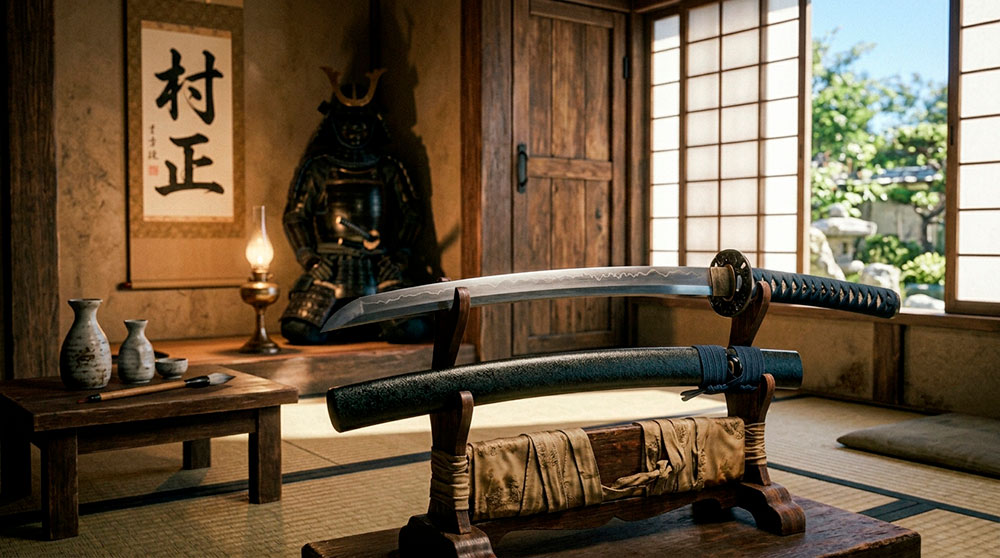
From the depths of Japanese history emerge the legendary Muramasa swords, masterpieces of forging that have captivated imaginations for centuries. Beyond their undeniable technical mastery, these weapons have become shrouded in an aura of mystery, linked to a supposed curse associated with bloodshed and tragedy. In our specialised shop for historical swords and high-quality replicas, we delve today into the enigma of Muramasa to unravel the truth behind these myths. We will explore who their creator was, the excellence of their forging, and the cultural impact that endures to this day.
We will analyse the distinctive characteristics that made each Muramasa katana a lethal work of art and weigh the stories that have made them, for some, objects of fear and respect. Join us on this fascinating journey through Japanese forging, where artisanal skill and folklore are inextricably intertwined, revealing why these swords continue to be so sought after by collectors and samurai culture enthusiasts.
Who was Muramasa Senju and the Origin of His Samurai Sword Legacy?
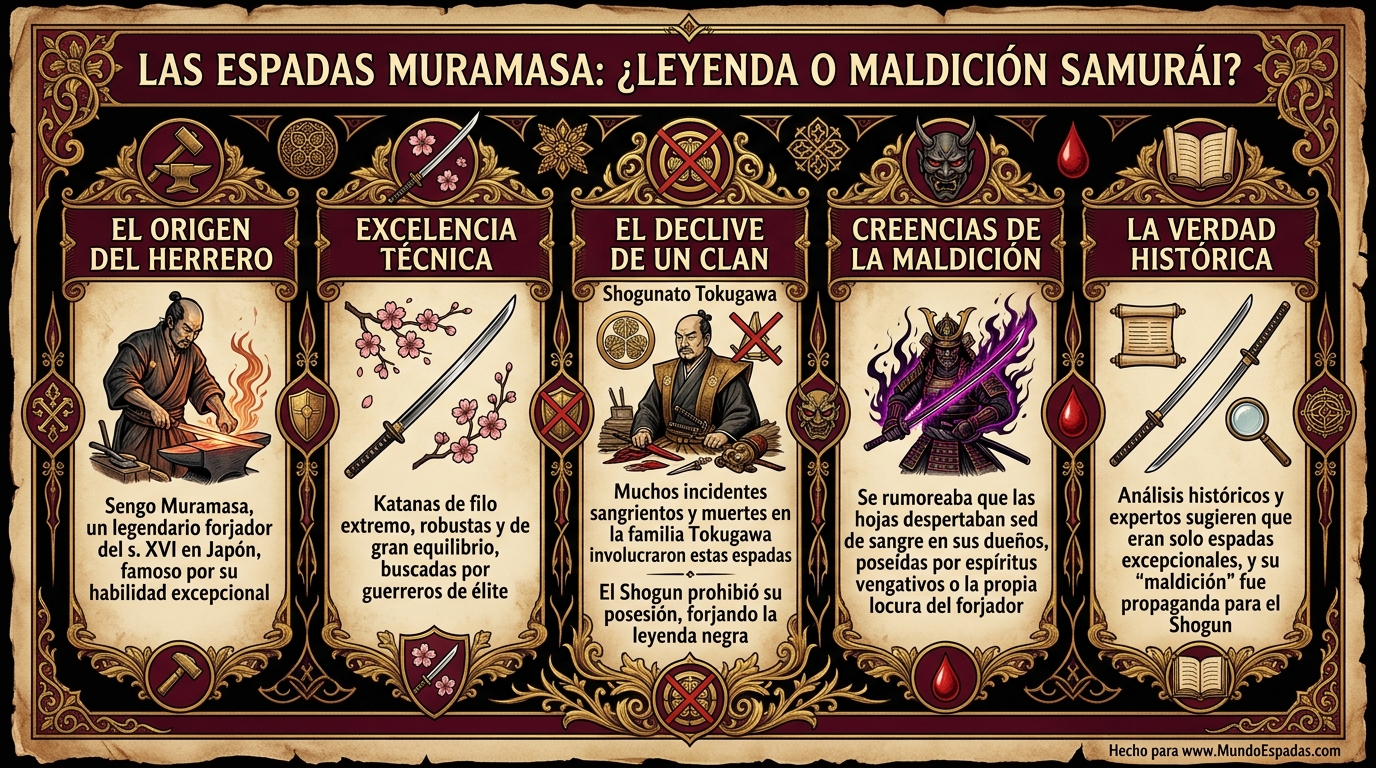
Muramasa Senju was a renowned Japanese swordsmith who lived during the Muromachi period, specifically around the 16th century. He belonged to the Sengo school, originating from Ise Province, and quickly established his reputation for the exceptional quality and lethality of his creations. His swords, known for their extreme sharpness and deep finish, became highly coveted weapons by the samurai warriors of the time.
It is believed that Muramasa was a student of Masamune or other great masters, although the exact relationship remains a subject of debate among experts. His style, however, evolved into something distinct and readily recognisable, distinguished by impeccable craftsmanship and exceptional tempering. The demand for his katanas grew exponentially, as samurai sought a decisive advantage on the battlefield, a quality that Muramasa guaranteed with every forged blade.
The Distinctive Muramasa-ba: The Mark of Identity and the Art of Tempering
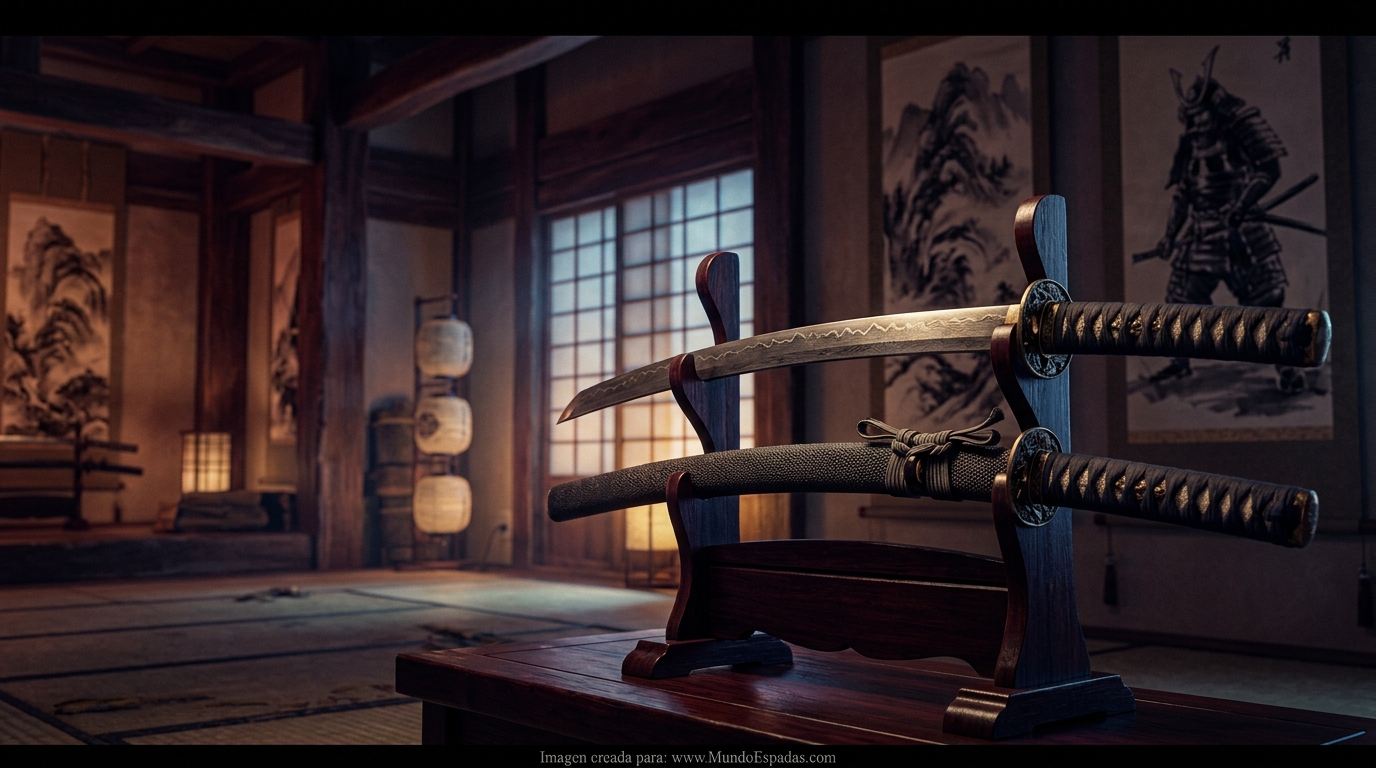
The uniqueness of Muramasa swords begins with the Muramasa-ba, the hamon (temper line) pattern that adorns their blades, very characteristic in katanas. These distinctive lines, which can resemble dancing flames or moving waves, are not merely decorative but the direct result of an exceptionally executed differential tempering process. This process imparts different levels of hardness along the blade to optimise its properties.
The edge, or ha, is tempered to be extremely hard, allowing for superior cutting ability and prolonged edge retention. On the other hand, the spine of the blade, or mune, remains softer and more flexible. This duality is crucial; the hardness of the edge facilitates penetration and clean cuts, while the flexibility of the spine prevents breakage under impact, absorbing energy. The Muramasa-ba, therefore, has become a recognisable symbol of Muramasa’s mastery, transcending aesthetics to become a tangible indicator of his technical excellence.
The Supposed ‘Curse’ of Muramasa Swords: Myths, Legends, and the Tokugawa History
The infamous ‘curse’ surrounding Muramasa swords has its roots in the history of the Tokugawa clan, one of the most powerful and decisive families in the unification of Japan. The shōgun Tokugawa Ieyasu, founder of the Tokugawa shogunate, witnessed and was a victim of several tragedies involving swords forged by Muramasa, which contributed to the legend of their inherent malevolence. It was said that these swords were “bloodthirsty” and incited their wielders to violence.
- Tokugawa Tragedies: Several members of the Tokugawa family suffered injuries or deaths related to Muramasa swords. Ieyasu’s grandfather, Matsudaira Kiyoyasu, was assassinated by one of his own vassals with a Muramasa. His father, Matsudaira Hirotada, was also wounded by a Muramasa during an attack. More significantly, shōgun Tokugawa Ieyasu himself accidentally cut himself with a Muramasa while examining one, and his eldest son, Matsudaira Nobuyasu, was forced to commit seppuku with one of these swords.
- The Proscription: Following these incidents and the perception that Muramasa swords were imbued with an evil spirit, Ieyasu supposedly ordered the proscription of all Muramasa swords. Many were said to have been destroyed or modified to conceal their signature, although the most valuable ones were kept. This proscription, real or exaggerated, further fuelled the legend, elevating Muramasa’s swords from mere exceptional weapons to objects of dark power and mystery.
- Political Propaganda: Some historians suggest that the “curse” may have been a form of political propaganda. In the period after the unification of Japan by Tokugawa Ieyasu, his opponents, especially the samurai of the Toyotomi clan or those who had resisted his leadership, often carried Muramasa swords. Associating these swords with bad luck or betrayal could have been a subtle way to delegitimise his enemies and consolidate the shogunate’s power. The narrative of the cursed sword served to demonise not only the weapon but also those who wielded it against the newly established authoritarian regime.
This complex interaction of historical events, popular beliefs, and political strategy shaped the reputation of Muramasa swords. Although the idea of a “cursed” sword is, in essence, a superstition, its persistence demonstrates the profound cultural and psychological impact these artefacts could exert on Japanese society. Their history remains a reminder of how legend can intertwine with reality, creating tales that endure far beyond concrete facts, keeping alive the fascination with these mythical steels.
Beyond the Legend: The Technical Excellence of Swords Forged by Muramasa
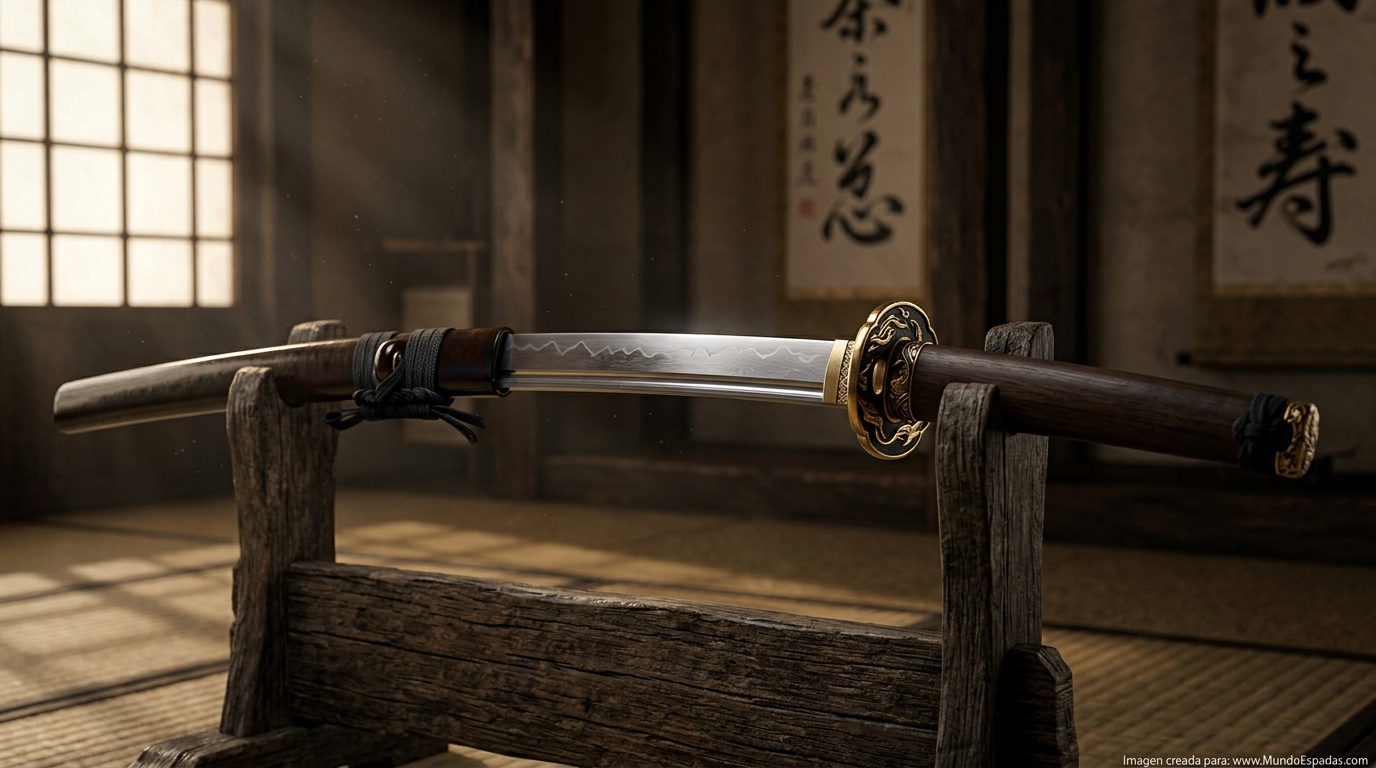
Putting aside the dark legends, the undeniable truth is that Muramasa swords are a testament to the pinnacle of Japanese swordsmithing art. Muramasa was an exceptional artisan whose forging and tempering techniques were of unparalleled sophistication for his time. The quality of his blades was not a product of magic, but of a deep metallurgical understanding and an obsessive dedication to perfection. The hardness of the edge and the toughness of the spine created weapons that were virtually unbreakable and lethal in the hands of a trained warrior.
The process of creating a Muramasa involved meticulous steel folding, which removed impurities and uniformly distributed carbon. This process, combined with precise differential tempering, by which clay was strategically applied to the blade before cooling, allowed for control over the formation of the hamon. The result was a blade with an extremely hard edge, capable of cutting with terrifying ease, and a more flexible body to absorb impacts, making the “Muramasa-ba” one of its most prestigious hallmarks.
Identifying an Authentic Muramasa: Characteristics and Challenges for Collectors
For sword collectors, identifying an authentic Muramasa is both an exciting and arduous challenge. The distinctive characteristics of these swords go beyond their notorious hamon in the shape of flames or deep waves. Details on the nakago (the tang of the blade inserted into the hilt), including the shape of the tip or nakago-jiri and the pattern of the file marks or yasurime, are crucial. Muramasa was known for a nakago-jiri that was often of the kiri (straight cut) or kurijiri (chestnut shape) type, and yasurime with a pattern called gyaku-tagane or katate-tagane, which appear almost vertical when seen on the tang.
Furthermore, Muramasa’s signature, his mei, although sometimes faked, possesses a particular calligraphic style that experts can recognise. However, the Tokugawa proscription led to the intentional removal of many original signatures, which greatly complicates authentication. The quality of the steel, the shape of the blade (sugata), and the perfection of the polish are also key factors. The challenges for collectors lie in the scarcity of well-documented examples, the existence of historical forgeries, and the need for evaluation by expert nii kaji (sword judges) to definitively determine the authenticity of these forged masterpieces. It is a process that requires deep knowledge, experience, and a trained eye for historically accurate detail.
The Cultural Impact of Muramasa: From Film and Video Games to Modern Fascination with Swords
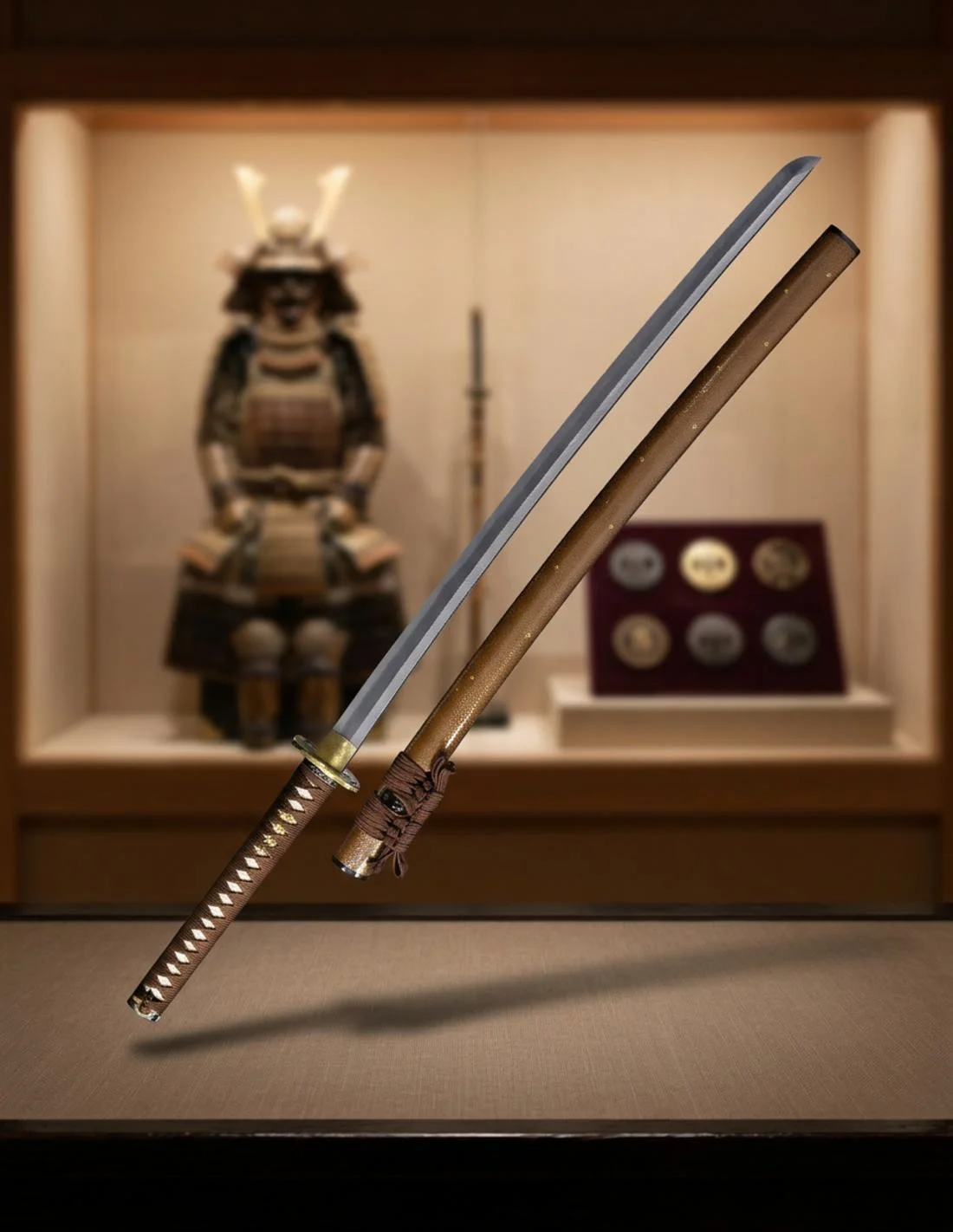
The legend of Muramasa swords has transcended the borders of feudal Japan to permeate global popular culture, demonstrating a fascination that extends from film and video games to literature. In the world of cinema, these swords often appear as powerful plot elements, granting characters who wield them a fearsome advantage or, at times, a curse they must overcome. Their reputation for being “bloodthirsty” makes them the perfect weapon for complex villains or tormented heroes.
In the realm of video games, Muramasa swords are recurrently depicted as objects of supreme power, granting players special abilities or exceptional damage. Titles such as Ninja Gaiden, Final Fantasy, Castlevania, and Terraria have immortalised the name of Muramasa, presenting them as legendary swords whose acquisition represents a milestone. This transposition to modern media reinforces the mystique of Muramasa, keeping them in the collective imagination as symbols of power that is both extraordinary and dangerous. This constant reappearance in new formats is a testament to the enduring fascination exerted by the combination of their impeccable forging and enigmatic legend, attracting both collectors and enthusiasts of samurai swords.
Muramasa and Masamune: A Duel of Legends in the Art of Sword Forging
The name Muramasa is almost inseparable from that of Masamune, the other great master swordsmith in Japanese history, not only because of their legendary rivalry but also because of the distinction of their forging philosophies. It is said that both masters represented two opposite poles in the creation of a sword. While Muramasa swords are famous for their incisive edge and supposed “thirst for blood”, implying intrinsic aggressiveness, Masamune’s swords are revered for their balance, the beauty of their lines, and their “compassionate” forging, which supposedly would not cut innocents.
Although the story of their forging duel, where one blade cut through everything in its path and the other purified water, is likely apocryphal, it illustrates the popular perception of their creations. Masamune’s swords are valued for their cleanliness and the splendour of their steel grain (hada), while Muramasa’s are distinguished by their exuberant hamon and brutal cutting ability. This contrast not only defines their respective reputations but also offers collectors and enthusiasts a rich narrative about the diversity and depth of Japanese swordsmithing art. Both schools represented the pinnacle of Japanese metallurgy, leaving a legacy that continues to inspire admiration and study today.
Queries and Revelations About the Enigmatic Muramasa Swords
Did the swordsmith Muramasa really exist or is he a mythical figure?
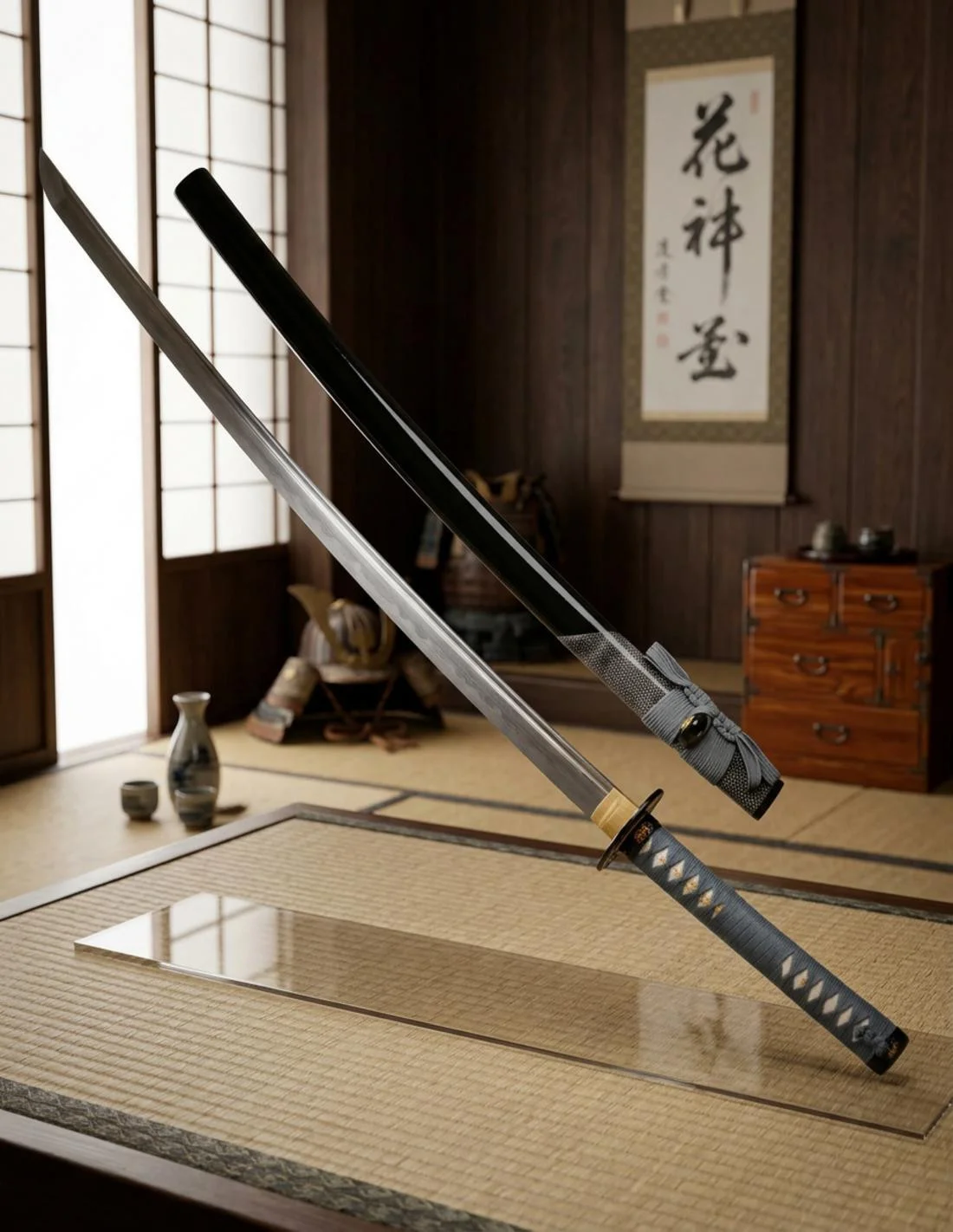
Yes, Muramasa Senju was a historical swordsmith, active during the Muromachi period in Japan, approximately in the 16th century. He is not a mythical figure. His existence is well-documented through the inscriptions (mei) he left on his swords. He belonged to the Sengo school of swordsmiths and is recognised for the exceptional quality and distinctive characteristics of his blades. Although the legends surrounding him are many, his work as a master artisan is an undeniable historical fact and one of the most important in the katana tradition.
Why are Muramasa swords considered “cursed”?
The “cursed” reputation of Muramasa swords originated mainly from their association with the Tokugawa clan, especially with Tokugawa Ieyasu. It was said that many members of his family suffered injuries or deaths caused by these swords, which led Ieyasu to proscribe them. This series of tragic coincidences, combined with the exceptional sharpness and supposed “thirst for blood” of the blades, fuelled the belief that Muramasa swords had an intrinsic evil spirit. Although this is folklore, the legend persists to this day.
What is the technical difference between a Muramasa and other katanas of its era?
The main technical difference of a Muramasa lies in its distinctive hamon pattern, known as Muramasa-ba, which often features variations of chu-suguha (straight line) with ko-gunome (small waves) or togari-ha (sharp peaks), giving it a flame-like or wave-like appearance. They are also characterised by exceptional sharpness and a highly effective differential tempering that offered an extremely hard edge and a flexible spine. The quality of the steel and the precision of the blade’s shape (sugata) also distinguish them, being considered among the most functional and lethal of their time.
How can I identify an authentic Muramasa sword?
Identifying an authentic Muramasa sword is an extremely difficult process that requires the knowledge of experts in Japanese swords, known as nī kaji. Specific characteristics are sought in the hamon (Muramasa-ba), the nakago (tang) with its yasurime (file marks) pattern, and the shape of the nakago-jiri (tang tip). Muramasa’s signature (mei), although valuable, must also be carefully analysed for possible historical forgeries. The scarcity and value of these pieces mean that authentication can only be carried out by specialised auction houses or experts with vast experience in this type of katana.
Are Muramasa swords still used in Japan or are they only collector’s items?
Today, Muramasa swords are almost exclusively highly valuable historical and artistic collector’s items. Their use in active combat is non-existent, and many of the authentic pieces are protected in museums or private collections. In Japan, some may be considered National Treasures or Important Cultural Properties, which restricts their handling and movement. Martial arts practitioners use replicas or modern swords, but an original Muramasa is too valuable and fragile for regular use, with its main function being the preservation and study of its legacy.
A Journey Through Time: The Evolution of the Fame of Muramasa Swords
The history of Muramasa swords is a tapestry woven with threads of masterful craftsmanship, folklore, and the weight of politics. Their reputation has evolved dramatically over the centuries, from revered weapons to proscribed ones, and finally, to objects of profound admiration and study for their technical and cultural legacy.
| Epoch | Event |
|---|---|
| Muromachi Period (c. 1336-1573) | |
| Late 15th – Early 16th Century | Muramasa Senju forges his first swords, gaining a reputation for exceptional sharpness and distinctive design (Muramasa-ba). |
| Mid-16th Century | Muramasa swords are highly prized by samurai seeking deadly weapons; demand among elite warriors increases. |
| Late 16th Century | As the Tokugawa clan rises to power, tragic incidents involving Muramasa swords begin to accumulate. |
| Azuchi-Momoyama Period (1568-1603) and Edo Period (1603-1868) | |
| Early 17th Century | Tokugawa Ieyasu, after experiencing personal and family tragedies with these swords, supposedly proscribes them, stigmatising them as ‘cursed’. |
| 17th – 19th Century | Many Muramasa swords are destroyed or their signatures removed to avoid shogunate persecution, increasing their rarity. |
| Late Edo Period | Despite the proscription, Muramasa swords become symbols of resistance or loyalty to the old Toyotomi house for some clans. |
| Meiji Period (1868-1912) to Present Day | |
| Late 19th Century | With the end of the shogunate and the advent of a new era, the Muramasa legend begins to be viewed in a more cultural and less political light. |
| 20th Century | Historians and experts re-evaluate Muramasa swords, recognising their technical mastery beyond superstitions. |
| Mid-20th Century – Today | Muramasa swords become high-value collector’s items, appearing in popular culture (film, video games, manga), reaffirming their legendary status. |
| Present Day | Modern scholars and smiths continue to research and admire the innovation and quality of Muramasa’s techniques, differentiating history from myth. |
Discover Our Selection of Muramasa Swords: Legend or Samurai Curse?
[prestashop_products categoria_id=”258,194″ cantidad=”10″ orden=”random”]
Reality or Fable? The Enduring Legacy of Muramasa Swords
Muramasa swords, with their relentless edge and the weight of a legend, continue to fascinate collectors and enthusiasts. Are they truly cursed weapons or simply misunderstood masterpieces of forging? The answer is a complex blend of history, technique, and myth. Undoubtedly, Muramasa was a master swordsmith whose command of tempering and forging resulted in some of the most efficient blades ever created. Their reputation for being “bloodthirsty” is a testament to the power that cultural narrative can exert over the perception of an object, especially when intertwined with the fate of historical figures.
In our shop, we celebrate the history and craftsmanship behind each sword, honouring the legacy of smiths like Muramasa. We invite you to explore our meticulous selection of historical swords and high-quality replicas, where the samurai tradition comes to life. If you share our passion for history, Japanese culture, and artisanal mastery, we encourage you to discover how these legendary blades continue to inspire and transform the fascination with ancient bladed weapons. Explore our catalogue and find that unique piece that speaks of greatness and prowess.
Top-tier Katanas, do you know them? | Practical Katanas that don’t disappoint