
Replica king crowns offer a fascinating window into the splendour and majesty of bygone eras. These meticulously crafted pieces are more than just decorative objects; they are tangible fragments of history, symbols of power and authority that capture the imagination of any historical collecting enthusiast. At our specialist shop, we understand the passion that drives collectors to seek authenticity and detail in every replica. We are dedicated to offering pieces that not only beautify your space but also narrate ancient stories, transforming your home into an authentic gallery of royal treasures and a tribute to the monarchs who wore them.
The Historical Significance of Royal Crowns and Their Allure in Replicas

Throughout history, crowns have been far more than mere ornaments. They have symbolised divine power, earthly sovereignty, and dynastic legitimacy. From the diadems of Egyptian pharaohs to the imperial crowns of Europe, each piece encapsulates a crucial chapter of humanity. Their mere presence evokes images of grand ceremonies, momentous state decisions, and the immense weight of responsibility that fell upon monarchs.
The fascination with these royal insignia now extends to replicas. Owning a replica crown means delving into that historical narrative, understanding the aspirations and legacies of those who controlled empires. It is an object that connects the collector with a distant past, allowing them to hold a tangible representation of the artefacts that defined civilisations. This profound connection is what gives each replica a value that transcends the material, offering an immersive experience in history. Well-made replicas capture the spirit of the original, paying attention to iconographic details, simulated materials, and goldsmithing.
They allow enthusiasts to immerse themselves in ancient numismatics and vexillology, where royal emblems were essential for recognition and authority. The intricate symbolism of a crown, be it the Bourbon fleur-de-lis or the Maltese cross, provides unparalleled educational depth.
Types and Styles of Crown Replicas: From Antiquity to the Modern Era
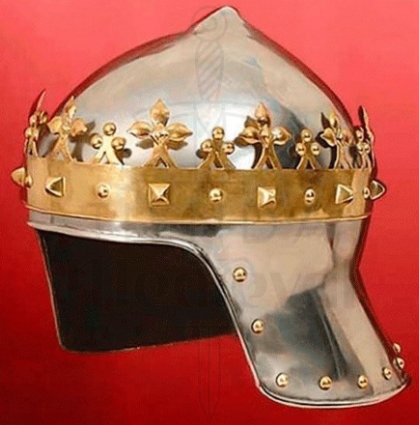
Replica crowns exhibit astonishing diversity, reflecting the evolution of monarchies and cultures over millennia. We can find everything from the simple yet imposing diadems of antiquity to the elaborate crowns of modern Europe, each with its own style and meaning.
This richness allows collectors to specialise in an era or explore the breadth of royal art. Among the most sought-after types are replicas of:
* Egyptian Crowns: Often represented by the Pschent (double crown of Upper and Lower Egypt), the Hedjet (white crown of Upper Egypt), or the Deshret (red crown of Lower Egypt). These are symbols of unification and pharaonic power, usually with simulated lapis lazuli and turquoise inlays.
* Roman and Byzantine Crowns: Inspired by the laurel wreaths (civic crown) of Roman emperors or the jewelled ornaments of Byzantine emperors, such as the Monomachus Crown with its cloisonné enamels.
* European Medieval Crowns: Iconic examples include the Iron Crown of Lombardy, the Crown of Saint Stephen of Hungary, or the Imperial Crown of the Holy Roman Empire. These are robust pieces, often featuring crosses, fleurs-de-lis, and simulations of large gemstones. Furthermore, replica king crowns from the Renaissance and modern eras, such as the Crown of St Edward of Great Britain or the crowns of Russian Tsars, show an exponential increase in luxury and complexity. Each of these periods offers a distinct canvas for the art of replication, capturing the essence of its time through iconography and royal splendour.
Materials and Craftsmanship in Crown Replicas: Durability and Authenticity
The quality of a replica crown lies in the selection of its materials and the mastery of its craftsmanship. To achieve a piece that evokes the opulence of the originals without incurring prohibitive costs, manufacturers employ a clever combination of metals, alloys, and simulated gems. The goal is to provide durability and an authentic appearance that satisfies the most discerning collector. Common materials include:
* Base metals: Brass, pewter, or zinc alloys are fundamental for their malleability and strength. These metals are then electroplated or bathed in more precious ones.
* Metallic finishes: Gold or silver plating is standard to replicate the shimmer of royal crowns. 24-carat gold plating is common for a luxurious finish, while polished silver mimics the whiteness of this metal.
* Simulated stones: High-quality faceted crystals, cubic zirconia, and coloured acrylics replace rubies, emeralds, diamonds, and sapphires. They are selected for their brilliance, colour, and hardness to faithfully reproduce the effect of authentic gems. Craftsmanship is equally crucial. Each high-quality replica crown is the result of a detailed process that can include casting, soldering, polishing, stone setting, and enamelling. Artisans strive to recreate intricate patterns, heraldic engravings, and original textures. Attention to detail in hammering, filigree work, or granulation makes the difference between a generic piece and an authentic work of art for collectors. This dedication ensures that every curve, every embellishment, and every “gem” contributes to the faithful reproduction of its historical counterpart.
Why Collect Royal Crown Replicas? Uses and Aesthetic Value
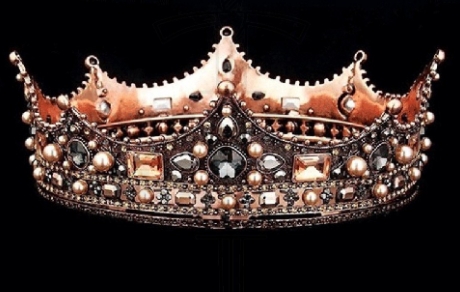
Collecting replica king crowns is a hobby that combines a passion for history, an admiration for goldsmithing, and the enjoyment of aesthetics. These pieces possess an intrinsic value that goes beyond their materiality, becoming focal points of any collection or decoration. Their presence evokes an atmosphere of nobility and power, transforming an ordinary space into a majestic corner. The uses of these replicas are varied:
* Interior decoration: A replica crown can be the centrepiece in a library, study, or living room, adding a touch of sophistication and a conversation starter. They can be placed on pedestals, inside illuminated display cases, or as part of a diorama.
* Themed exhibitions: For private museums, historical events, or theatrical productions, replicas offer indispensable visual accuracy without resorting to irreplaceable originals. They are essential in historical reconstitutions or “reenactments.”
* Serious collecting: For enthusiasts of monarchy, heraldry, or art history, each replica is a valuable addition, complementing collections of medieval weapons, armour, or historical textiles.
* Meaningful gifts: They make an exceptional gift for history lovers, collectors, or those with an appreciation for unique art objects. The aesthetic value of these historical jewels is undeniable. The combination of polished metals, gleaming “precious stones,” and their intricate design makes them objects of great beauty. Furthermore, each replica tells a story, offering a tangible connection to the past that enriches the experience of owning it. This value is complemented by the opportunity to learn about the kings, queens, and emperors who once wore these insignia, imbuing collecting with a profound cultural and educational sense.
How to Choose and Display Your Crown Replica: Tips to Maintain Its Splendour
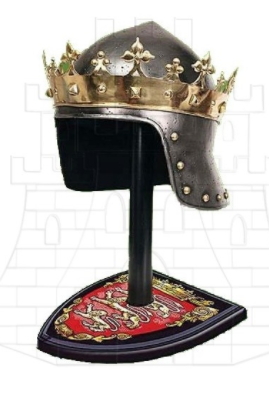
Choosing the perfect replica crown requires considering several factors, from historical authenticity and material quality to the space available for display. A seasoned collector will seek a balance between faithful detail and durability, ensuring that the piece they choose resonates with their particular interest in history. Informed choice is key to long-term satisfaction. Tips for choosing:
1. Research historical accuracy: Before purchasing, research the original crown. Understand its iconography, approximate dimensions, and the materials used. This will allow you to assess the fidelity of the replica.
2. Examine craftsmanship: Look for fine details in the joins, stone settings, and metallic finish. A good replica will not show signs of carelessness or mass production. Inspect the symmetry and quality of the enamels.
3. Verify materials: Ensure that the product description specifies the metals and simulated gems used. Ask about the plating or coating processes to guarantee the longevity of the shine.
4. Size and weight: Consider the dimensions. Some crowns are very large and heavy, which could affect their display. Think about where you will place it before making the purchase. Once acquired, displaying your replica crown appropriately is fundamental to protecting it and enhancing its beauty.
* Protected display case: An enclosed glass display case is ideal to protect it from dust, humidity, and direct contact, which can tarnish finishes. Internal lighting can highlight its details.
* Appropriate stand: Use a velvet stand or some soft material that will not scratch the surface. An elevated pedestal will give it the majesty it deserves.
* Gentle cleaning: Clean regularly with a soft, dry cloth to remove dust. Avoid abrasive chemical products that could damage metallic finishes or stones.
* Environmental control: Avoid direct exposure to intense sunlight or extreme changes in temperature and humidity, as these can deteriorate materials over time. A stable environment will help preserve the shine and integrity of the piece for years.
Evolution of Royal Crown Replicas: A Journey Through History and Collecting
Replica royal crowns have their own history, paralleling the evolution of collecting and craftsmanship. From the first attempts to duplicate crown jewels for rituals or replacements, to today’s collecting, their development is fascinating. Below is a simplified chronology of relevant milestones in the creation and appreciation of these emblematic insignia.
| Era | Event |
|---|---|
| Antiquity and Early Middle Ages | |
| 1st-5th Centuries AD | First copies of Roman imperial insignia for governors and legates. |
| 6th-9th Centuries AD | Reproductions of Byzantine crowns as symbols of vassalage or for ritual use in the Empire. |
| High and Late Middle Ages | |
| 10th-13th Centuries AD | Creation of replicas or alternative versions of royal crowns for local ceremonies or as offerings. |
| 14th Century AD | Appearance of engravings and detailed descriptions of crowns, facilitating future reproductions. |
| Renaissance and Modern Age | |
| 15th-17th Centuries AD | Duplicates of crowns for use in royal portraits or as models for new creations. |
| 18th Century AD | Growing academic interest in heraldry and royal “regalia,” promoting the study of historical crowns. |
| Mid-19th Century | First reproductions for the general public, coinciding with burgeoning museums and interest in history. |
| 20th and 21st Centuries: Rise of Collecting | |
| Early 20th Century | Industrial production of more accessible replicas for theatre, film, and collecting. |
| Late 20th Century | Significant improvement in the quality of replica materials and techniques, seeking greater fidelity. |
| 21st Century | Global expansion of the market for crown replicas, driven by the internet and specialist shops. |
Transform Your Space into a Royal Sanctuary: The Enduring Legacy of Crowns
Replica king crowns are more than mere decorative objects; they are tangible fragments of history that imbue any space with unparalleled authority and mystery. By collecting these historical jewels, you not only acquire a piece of undeniable beauty, but you also become a custodian of royal memory, keeping alive the history and art of great monarchs. At our shop, we offer you the opportunity to own a piece of that legacy. Explore our exclusive collection and discover the replica crown that will transform your home into an authentic throne room, a sanctuary of majesty.
Want to discover more medieval accessories? | Would you like to have your own medieval costume?