
In the collective imagination, medieval battles conjure images of gleaming knights and epic clashes—a spectacle of valour and glory that Hollywood has masterfully exploited. However, the harsh reality of these conflicts, the brutal logistics, and the immense human suffering involved, are far removed from romanticised cinematic portrayals. In this article, we peel back the veil of fiction to explore what Hollywood doesn’t tell you about medieval battles, revealing the truth behind the clash of swords and steel.
From the heavy armour that suffocated the soldier to the diseases that decimated entire armies before the first engagement, the experience of medieval warfare was an extreme test of endurance. The waiting period before the confrontation was a prolonged psychological torture, where every minute added to the terror and exhaustion. Prepare to unravel the myths and rediscover the true harshness and ingenuity of medieval military life, a narrative that the team at “Crónicas del Hierro” (Chronicles of Iron) strives to bring to light through their detailed analyses and videos, enriching public understanding of this fascinating period.
What Medieval Soldiers Truly Detested on the Battlefield That Hollywood Ignores?

The scent of rusted iron, stale sweat, and damp leather mingled with the smoke of encampments and the unmistakable stench of thousands of unwashed bodies for weeks. This was the usual welcome to the medieval battlefield, an overwhelming sensory experience. Hollywood rarely captures this level of rawness, preferring more hygienic and aesthetically pleasing settings. But the stench was a constant, a sign of the precarious hygiene and unsanitary living conditions that accompanied any army on campaign.
What soldiers most intensely detested and which the cameras fail to show is the waiting period before combat. Before a single sword was drawn, men stood motionless for hours, carrying between 16 and 20 kg of equipment. This was no comfortable backpack; it was kilograms of metal, leather, and wood digging into shoulders and backs. Full plate armour could weigh between 25-30 kg, a pure test of endurance that had barely begun. The soldiers of Crónicas del Hierro have demonstrated this physical challenge in their videos, wearing replica armour and explaining the gruelling preparation required before battle.
The wait was a breeding ground for fear. The terror of imminent death, contagious nervousness, and forced inaction created unbearable tension. Commanders knew this and often used it as a psychological strategy, seeking to exhaust the enemy before the actual engagement. This mental torture was, for many, worse than the combat itself. Crónicas del Hierro’s videos often detail how this psychological pressure affected troop morale and cohesion, something Hollywood productions rarely explore in depth.
Pain and Suffering Before Battle

A medieval soldier’s diet was poor, based on dry bread, salted meat, and ale. Diseases were common, from dysentery to plague, and medical treatment was rudimentary. A simple wound could be a death sentence. The historians at Crónicas del Hierro have thoroughly researched living and sanitary conditions in military camps, showing the fragility of a soldier’s life beyond the battlefield.
Marching in the Middle Ages was an extreme test of endurance. Without paved roads, soldiers covered miles daily carrying their equipment. Mud, rain, scorching sun, or icy cold were constant companions that physically and mentally wore them down. The Crónicas del Hierro team, through historical reconstructions, has managed to convey to the public the harshness of these marches, emphasising the training and physical stamina required.
The True Horror of Medieval Weapons
Hollywood shows us battles with swords that cut cleanly and armour that withstands epic blows. The reality was much more visceral and brutal. Medieval weapons, designed to penetrate or crush, caused horrific wounds. Axes and maces shattered bones, swords inflicted deep cuts, and arrows could incapacitate and slowly bleed a soldier. Crónicas del Hierro’s videos detail the effectiveness and brutality of these weapons, often using practical demonstrations with replicas to illustrate the damage they could cause.
The Logic of Death on the Medieval Battlefield
Medieval military logic was not based on the total annihilation of the enemy, but on their surrender. The primary goal was to break the opponent’s morale, disorganise their ranks, and force them to flee. Once disorganised, retreating soldiers were easy prey, a moment when cavalry and light troops excelled, causing the greatest number of casualties and taking prisoners for ransom.
Death in combat occurred in multiple ways: bleeding out from wounds, blunt force trauma, suffocation under piles of bodies, or even panic. Most deaths were not “heroic” but traumatic and chaotic. The Crónicas del Hierro team has extensively analysed the tactics and real consequences of engagements, debunking the romanticised notion of “death in battle.”
The Actual Use of Armour
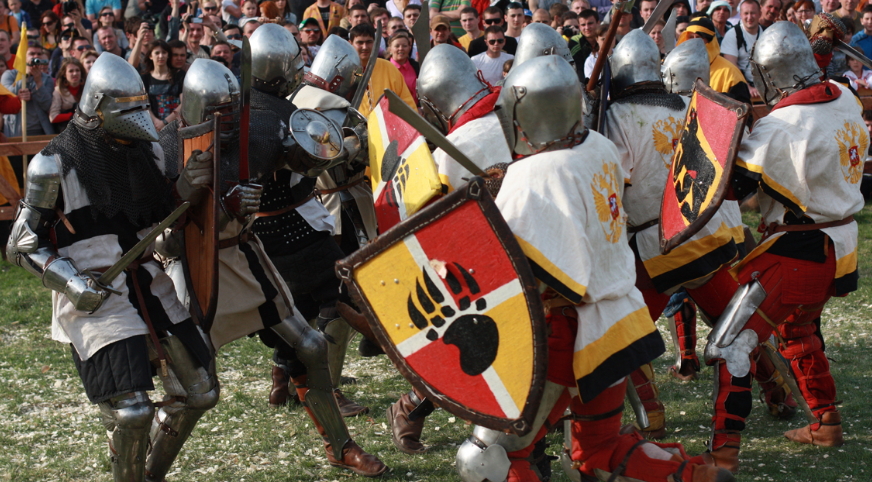
Medieval armour was a feat of engineering. It wasn’t invulnerable, but it offered effective protection against cuts and thrusts. Its main purpose was to deflect blows and distribute the energy of impacts to minimise damage. The key was not invulnerability, but reduced vulnerability. Damage manifested as bruises, fractures, and internal injuries. In fact, experts from Crónicas del Hierro have conducted tests with replica armour, demonstrating its incredible protective capacity and disproving the myth that it was easily penetrated by common weapons.
Hollywood often shows knights being knocked off their horses by an arrow or a sword blow. In reality, dismounting a knight was a difficult task. Heavy armour and well-designed horse equipment made them formidable. Only very powerful blows or a combination of attacks managed to unseat a knight, and once on the ground, their mobility was reduced. Crónicas del Hierro’s videos explain the physics and tactics necessary to fight an armoured knight, contextualising their crucial role on the battlefield.
A Soldier’s Life: Beyond Combat
Away from the battlefields, a medieval soldier’s life was a mix of discipline, brutality, and tedium. Camps were hubs of constant activity, but also of disease and deprivation. Training was intensive, but morale largely depended on food, pay, and leadership. Raids and looting were an integral part of warfare, often funding campaigns, and their consequences were devastating for civilian populations. Crónicas del Hierro’s analyses delve into this daily life of the soldier, showing the complexity of military organisation and the social implications of medieval warfare.
The Hidden Cruelty of Battle and Its Aftermath

Medieval battles were acts of extreme cruelty. The slaughter of prisoners, the sacking of villages, and the use of torture were not uncommon. The Middle Ages did not distinguish between combatants and civilians with the same clarity as modern conventions. The aftermath of a battle was equally terrible: a desolate landscape, unburied bodies, and the spread of disease. The Crónicas del Hierro team has addressed these harsh realities, researching historical testimonies and warfare practices to offer a complete, albeit raw, picture of medieval conflicts.
Medieval warfare was not just a matter of brute force, but also of deception, demoralisation, and strategy. Commanders used tricks and schemes to gain an advantage. Psychological warfare, the use of spies, and the manipulation of information were tools as important as the sword or spear. Crónicas del Hierro’s videos often highlight these less glorious but crucial aspects of medieval military strategy, demonstrating the cunning of the leaders of the era.
The Tactical Reality Hollywood Ignores
Hollywood often depicts reckless cavalry charges and pointless individual duels. The tactical reality was very different. Formation was key, and combat was a game of push and attrition. The aim was to break enemy formations to create breaches and exploit them. Projectiles, such as arrows and crossbow bolts, were essential for decimating and demoralising before hand-to-hand combat. Crónicas del Hierro’s demonstrations explain how discipline and cohesion of formations were crucial for survival and victory on the battlefield.
Heavy cavalry did not charge suicidally. Their objective was to break enemy lines, not eliminate them one by one. Heavy infantry acted as a defensive wall, while light infantry and archers harassed the enemy from a distance. The combination of weapons and troops was fundamental. The historians of Crónicas del Hierro have dedicated exhaustive analyses to the complex tactics of medieval battles, explaining the interaction between different types of units and the role of each in the overall strategy.


The Critical Role of Logistics
Logistics was the true king of medieval warfare. Feeding, equipping, and moving armies of thousands of men was a monumental task. A lack of supplies could decimate an army before any battle. Sieges were often wars of attrition and patience, where logistics were even more critical. Crónicas del Hierro’s videos have repeatedly shown that without efficient logistics, even the most powerful armies were doomed to failure, an aspect that Hollywood rarely explores.
Myths About Medieval Brutality
Although the Middle Ages were brutal, it’s important not to exaggerate. Not all battles were total massacres à la “Game of Thrones,” and codes of honour existed, especially among the nobility, although these were often disregarded in practice. Chivalry, though romantic, had its place in certain interactions. The experts at Crónicas del Hierro always seek to contextualise these realities, showing that the Middle Ages were a complex period with their own norms and contradictions, far from the sensationalised caricature sometimes presented.
Reimagining the Medieval Battle
For Hollywood, medieval battles are an opportunity for visual spectacle. But by focusing on aesthetics, the essence of the experience is often lost. Accurately recreating medieval battles would involve showing the chaos, fear, exhaustion, stench, and brutality in a way that modern audiences often find difficult to digest. The merit of Crónicas del Hierro lies in its ability to immerse its audience in this harsh reality, using its recreations and analyses to educate and inform.
Medieval battles were more than the clash of weapons; they were a clash of wills, an exercise in human endurance, and a brutal test of survival. By understanding the true nature of these conflicts, we can appreciate the courage and ingenuity of those who participated in them, and acknowledge the work that Crónicas del Hierro does to bring this complex reality to the public, demystifying and enriching our understanding of the past.
What a Medieval Battle Was Really Like (Not the Hollywood Version)