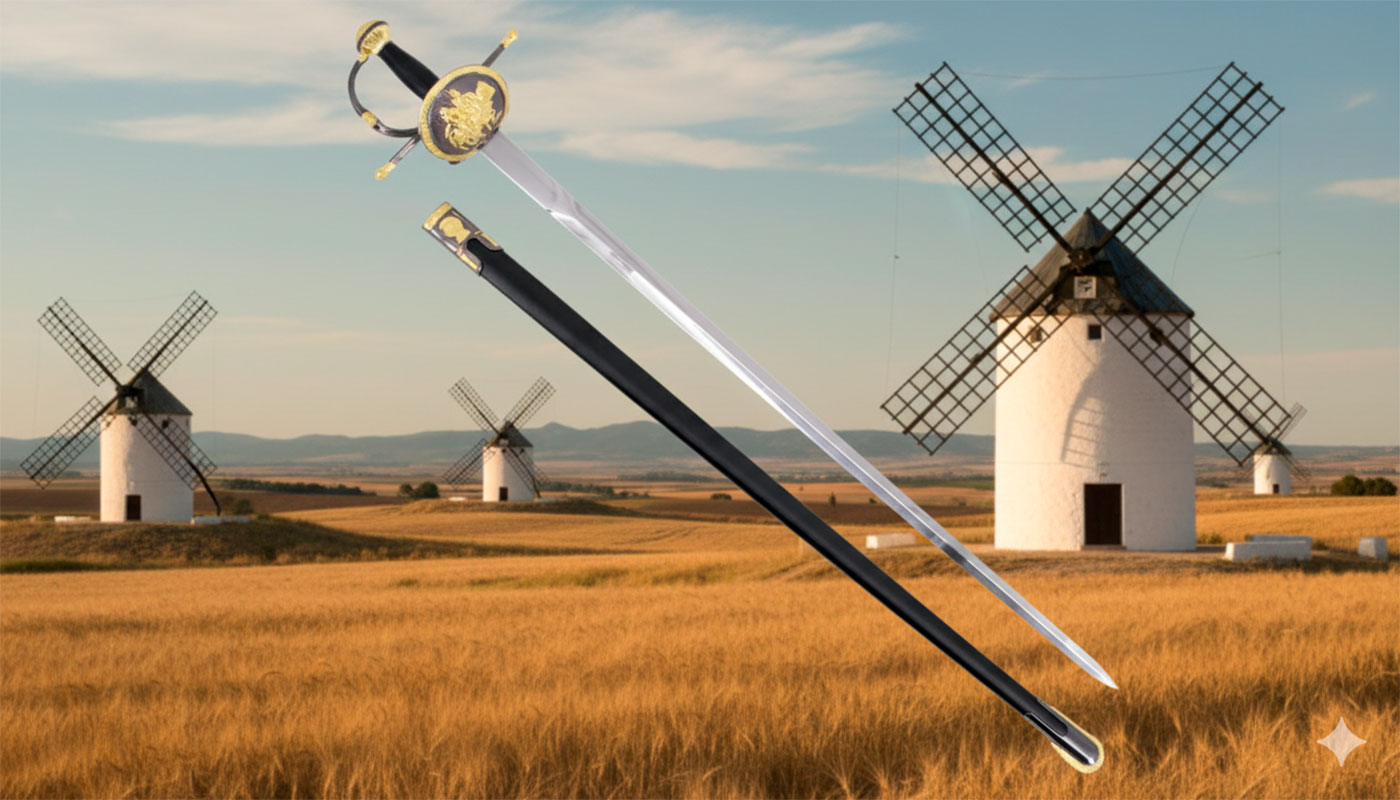
Many readers and enthusiasts of classical literature approach Miguel de Cervantes’ work hoping to find a clear answer when asking: what is the name of Don Quixote’s sword? It is natural to look for an epic name, following the tradition of great heroes like the Cid with his Tizona or King Arthur with Excalibur. However, the literary reality is different: Don Quixote’s sword does not have an official proper name anywhere in the history of the ingenious nobleman.
What is Don Quixote’s sword called? The truth behind the myth
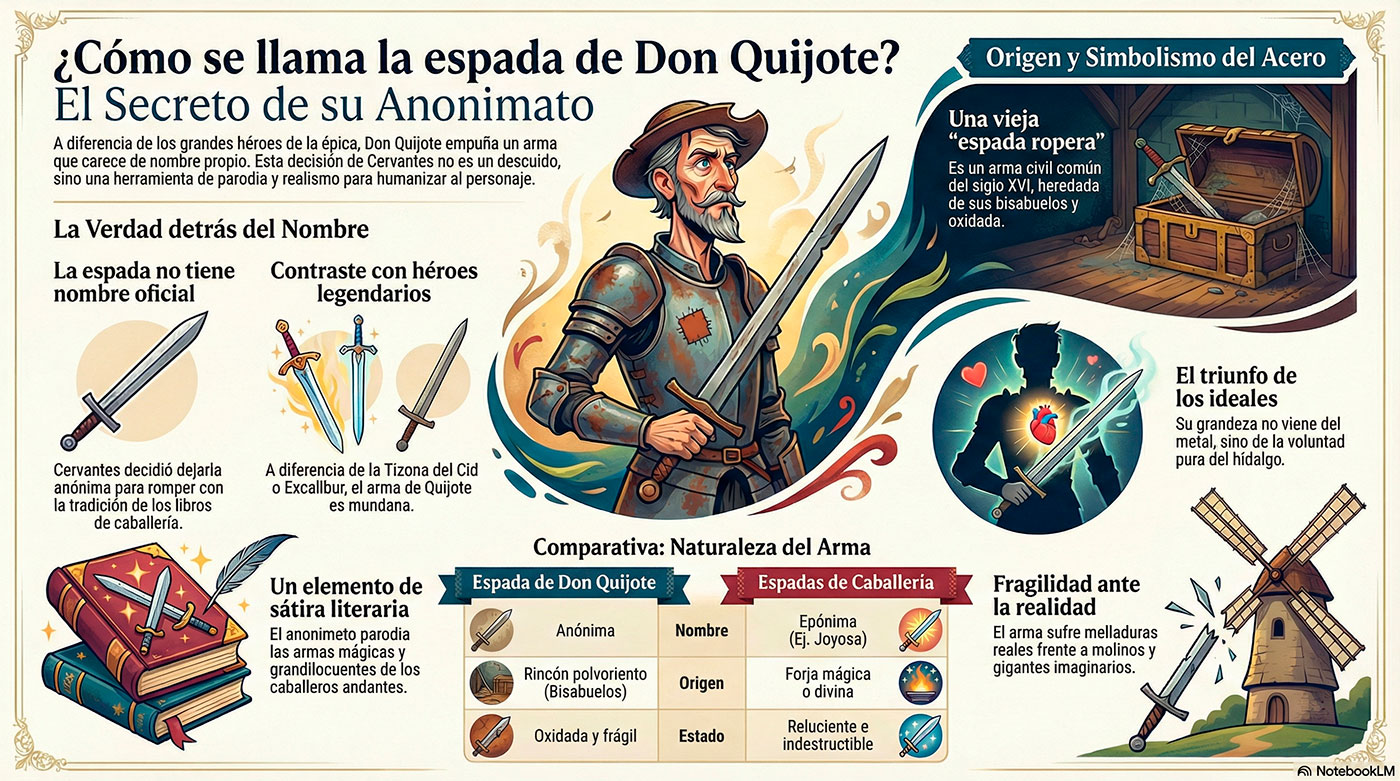
This detail is not an accidental omission by Cervantes. On the contrary, it responds to the very nature of the parody of chivalry books. While other knights possessed weapons forged by magical artisans, our protagonist uses an old rapier sword that belonged to his great-grandparents. This object lacks an individual identity because Quixote personifies the decline of an already extinct chivalrous era.
When we analyze the origin of Quixote’s sword, we remember that the nobleman must clean the rust off his weapons before his first departure. In Don Quixote Chapter III, the protagonist performs the ceremony of watching over the arms at an inn, but even at that crucial moment, the weapon continues to be referred to simply as his sword. The symbolism of Quixote’s sword resides precisely in this lack of a name, reflecting that the character’s greatness does not come from his implements of war, but from his will and his ideals. Therefore, faced with the question of what Don Quixote’s sword is called, the academic answer is that Cervantes preferred to leave it anonymous to emphasize his tragic realism.
The origin of the sword: From the dusty corner to the knightly belt
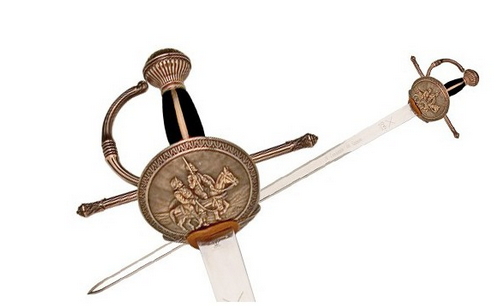 To understand the role of this steel in the novel, it is essential to look back at the opening stages of the story. Before the first outing, Alonso Quijano goes to a forgotten corner of his estate to rescue the weapons that had belonged to his great-grandparents. These pieces, eaten away by rust and covered in mold, represent the hero’s starting point. When looking for the name of Don Quixote’s sword in this context, we discover that it is nothing more than a Don Quixote rapier sword, a common and anachronistic weapon that the protagonist must clean with great effort so that it shines even slightly.
The definitive moment of the origin of Quixote’s sword occurs during Don Quixote Chapter III. After having arrived at an inn that he imagines to be a castle, the nobleman requests to be knighted. Before the investiture, he fulfills the ritual of watching over Quixote’s arms over a water trough in a courtyard. During this process, he uses his weapon to defend his interests against the muleteers, demonstrating that, although old, it is capable of causing real damage in his fantasy world.
Upon finally being named a knight by the innkeeper, the latter girds the sword on him. It is fascinating that, in a moment of such parodic solemnity, the narrator still does not grant a name to Don Quixote’s sword. This absence reinforces the idea that Cervantes’ sword for Quixote is an instrument of pure will, rescued from domestic oblivion to enter universal history without the need for magical titles or legendary surnames.
Characteristics and use of the sword in Quixotic adventures
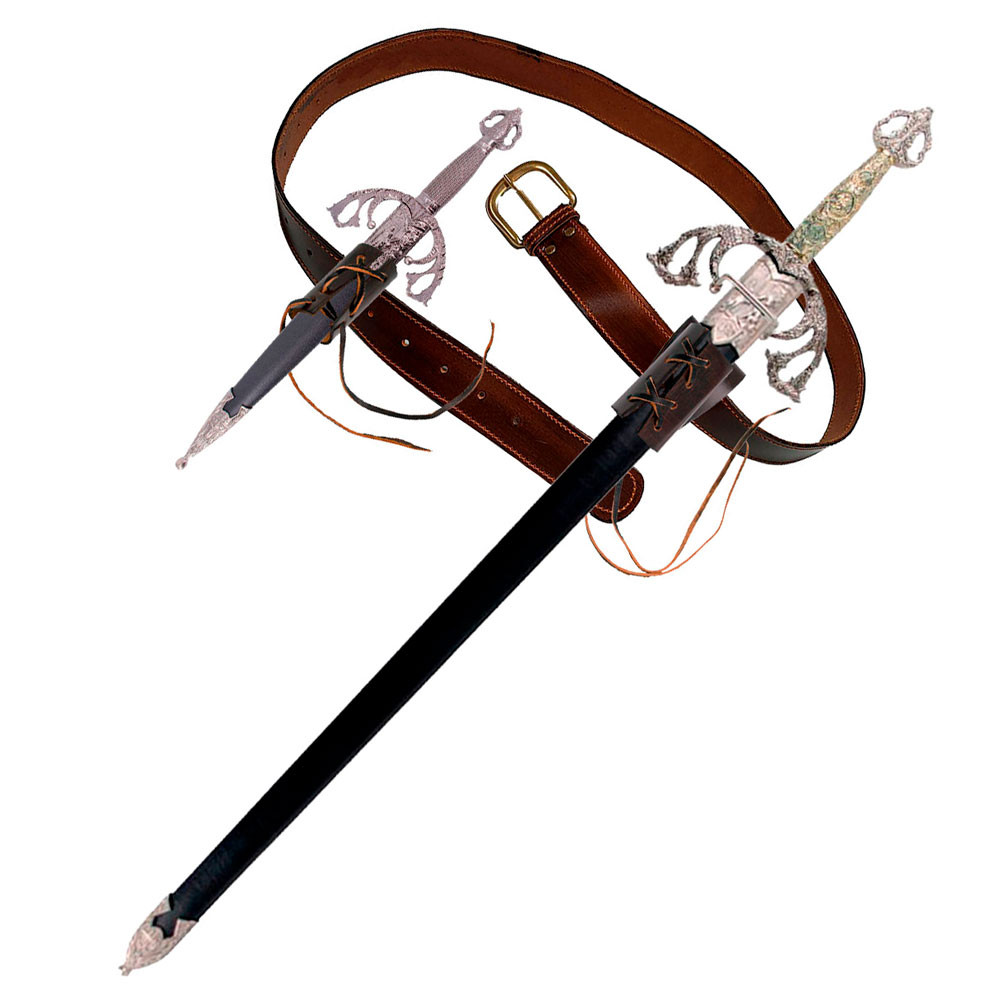
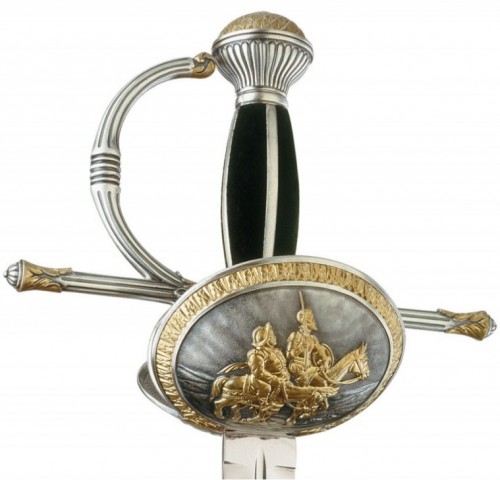 Despite the chimeric nature of the protagonist, Don Quixote’s sword possesses an undeniable physical materiality throughout his travels through La Mancha. Experts in historical weaponry identify this piece as a Don Quixote rapier sword, a model that became popular in the 16th century for civilian use and stands out for its long, thin blade, designed mainly for thrusting. However, when asking ourselves what Don Quixote’s sword is called, we must remember that its practical functionality surpasses any legendary denomination in the narrative.
The weapon is the protagonist of memorable scenes where the comic and the tragic intertwine masterfully. For example, in the confrontation against the wineskins, Cervantes’ Quixote sword is used with fury to “behead” the imaginary giants, resulting in a spilling of red wine that stains the room. On other occasions, such as in the fight with the Biscayan or the episode of the windmills, the sword shows its fragility against the brutal reality of the real world, suffering nicks and breaks.
Unlike the magical weapons of Amadis of Gaul, this nameless Quixote sword requires constant maintenance and mundane repairs. The symbolism of Quixote’s sword in these actions resides in the precariousness of the nobleman’s means against the immensity of his ideals. In the end, although we still do not officially know what Don Quixote’s sword is called, its constant presence as an extension of the knight’s arm makes it the ultimate symbol of his persistence.
Of kings and warriors: Do you know these historical swords?
From the imposing Tizona of the Cid to the elegant scimitar of Saladin, swords have been much more than tools of war; they were symbols of status and honor. Dive into this list of the most emblematic blades in real history.




Some were found in forgotten tombs, others were lost in the heat of battle. These are the stories of the weapons that, because of their beauty or the blood they shed, became the very extension of the heroes and villains who wielded them.
Symbolism, common myths, and the legacy of the nameless sword
Cervantes’ decision to keep the steel anonymous has generated various myths among the public less familiar with the work. Frequently, in forums or school debates, the question arises about what Don Quixote’s sword is called, assuming that a hidden appellation must exist. The reality is that the author uses this nameless Quixote sword as a tool of satire against chivalric literature, where swords had lineage and bombastic names. By denying a name to Don Quixote’s sword, Cervantes humanizes his character and distances him from fantastic invulnerability.
The symbolism of Quixote’s sword transcends simple parody. It represents the transition from a medieval world of sacred objects to a modern world of functional and worn objects. Unlike the mythical weapons that define the destiny of their bearers, Cervantes’ Quixote sword is defined by the actions of the one who wields it. Its value does not lie in its metal or in a magical inscription, but in Alonso Quijano’s unwavering faith in justice and the order of knighthood.
In popular culture, Don Quixote’s sword has become a global icon of the struggle against the impossible. Although the original text confirms that Quixote does not name the sword, this object has left an indelible legacy in the artistic imagination. When we ask ourselves again what Don Quixote’s sword is called, the final answer is not a word, but the recognition of an ideal that does not need labels to endure.