
The dichotomy between the Tizona and Colada myth or reality constitutes one of the most fascinating dilemmas of Spanish medieval historiography. For centuries, the figure of Rodrigo Díaz de Vivar has remained indissolubly linked to these two blades, whose fame transcends literature to become part of the national heritage. However, when specialists attempt to draw a dividing line between the Cantar de Mio Cid and the documentary records of the 11th century, a series of questions arise that challenge popular tradition.
Did Tizona and Colada Really Exist? The Initial Debate on the Cid’s Swords
The central problem lies in the absence of contemporary mentions of these weapons outside the literary realm. While the epic poem describes in detail how the Campeador obtained these pieces after defeating formidable enemies, the strictly historical chronicles of his time maintain a sepulchral silence regarding specific names for his weaponry. This documentary vacuum has fueled an academic debate that wavers between the veneration of the relic and scientific skepticism.
Currently, the pieces kept in Burgos and the Royal Palace of Madrid are subject to constant scrutiny. The question of whether Tizona and Colada are myth or reality persists because the typologies of the hilts and the inscriptions on the blades do not fully coincide with the styles typical of 11th-century Castile. Previous research suggests late medieval additions that complicate the exact dating of the original steel cores.
In this rigorous analysis, we will explore the evidence that supports or refutes the authenticity of these objects. It is not just about determining if the Cid wielded these specific blades, but about understanding how the construction of a national myth transformed material objects into symbols of sovereignty and military valor fundamental to the identity of an entire nation.

The Historical Cid: Silence in 11th-Century Sources
When analyzing the figure of Rodrigo Díaz de Vivar from a purely scientific perspective, we face an austere documentary reality. Sources contemporary to the Castilian knight, such as the Historia Roderici or various notarial diplomas of the time, offer a detailed account of his military campaigns and diplomatic relations. However, in none of these texts is there any mention of his personal weapons with proper names. The debate over whether the Tizona and Colada swords are myth or reality is complicated by the fact that the custom of naming swords was not a documented practice in 11th-century Castile.
Chronicles from the end of that century describe the Campeador as a strategic leader and a formidable warrior, but they do so without the legendary ornaments that would arrive decades later. For historians, this silence is significant. In the early medieval context, swords were functional tools of great value, but they rarely received an individualized identity in primary administrative or biographical records. This suggests that, for the Cid’s contemporaries, his swords were exceptional pieces of equipment, but anonymous in terms of specific nomenclature.
In investigating whether the Tizona and Colada myth or reality has a factual basis, we must recognize that later epics projected qualities and objects onto the dead hero that did not appear in his verifiable daily life. Later royal inventories and late noble genealogies attempted to fill this gap, but the disconnection between the historical reality of the 11th century and literary invention is evident. The study of the historical Cid reveals a man of flesh and blood whose tools of war, though lethal, did not yet possess the mystical charge or the magic names that later tradition would bestow upon them with such fervor.
Tizona and Colada in the Cantar de Mio Cid: Literary Birth
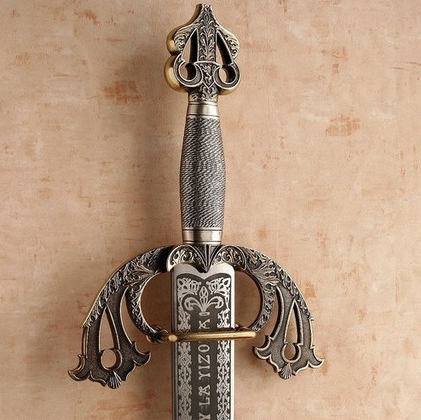 The first time these weapons appear formally in the history of Spanish literature is in the Cantar de Mio Cid, dated around the year 1200. In this epic poem, the steel blades cease to be simple instruments of combat and become characters with their own identity. Literary analysis suggests that the dilemma of whether Tizona and Colada are myth or reality arises precisely from this epic narrative, where the names and origins of the weapons reinforce the heroic status of the protagonist.
According to the poem, the Cid won the sword Colada after defeating the Count of Barcelona, Ramón Berenguer II. For its part, the Tizona or Tizón was obtained after defeating King Búcar of Morocco near Valencia. In the context of medieval literature, these trophies symbolize the triumph of Christianity over its enemies and the restoration of the Campeador’s honor. The weapons not only possess superior metallurgical quality but also project a miraculous light that terrifies violators of the chivalric code, as seen in the famous episode of the Courts of Toledo.
The anonymous author uses these swords as vehicles to express Rodrigo’s moral superiority. By giving them to his sons-in-law, the Infantes of Carrión, and later recovering them, the story underscores that the legitimacy of command does not reside in the formal possession of the steel, but in personal merit. It is at this point that the question of Tizona and Colada myth or reality leans towards the construction of a national mythology. The poem forever transformed the perception of the Cid, granting him a divine aura through these blades that, according to the text, shone with a supernatural glow on the battlefield.
The Tizona Sword: Metallurgical Analysis and Documentary Genealogy
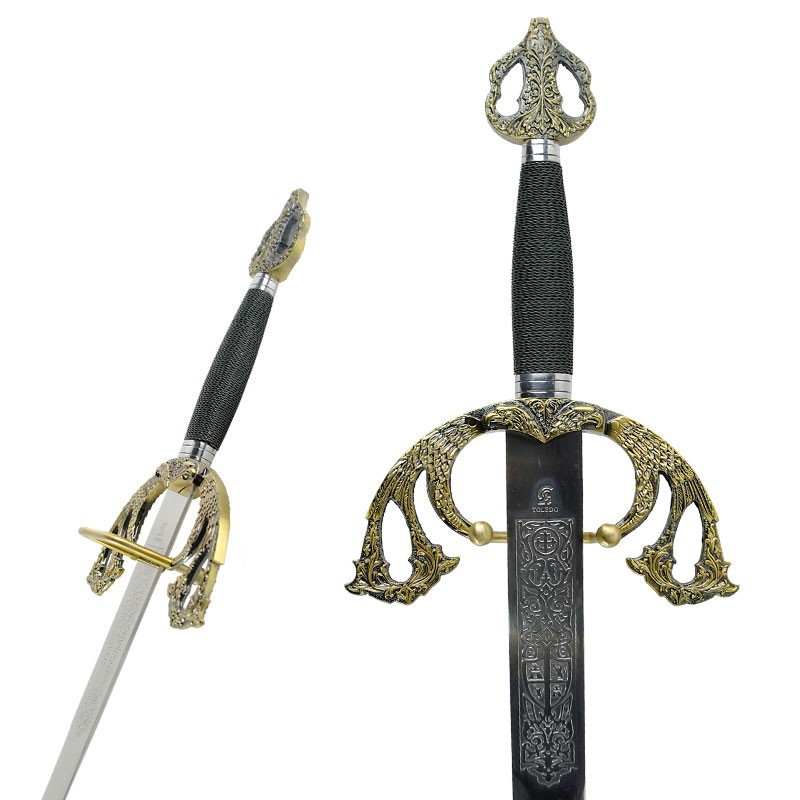 Scientific scrutiny of the Tizona has shed light on the complex enigma of the Tizona and Colada myth or reality. In recent years, investigations led by the Complutense University of Madrid and metallurgical experts have examined the blade kept in the Museum of Burgos. The results reveal a high-quality Damascus steel composition, whose original casting could genuinely date back to the 11th century in the Cordovan environment. This finding suggests that, while the blade is contemporary to Rodrigo Díaz de Vivar, its direct link to the hero remains difficult to verify through definitive laboratory tests.
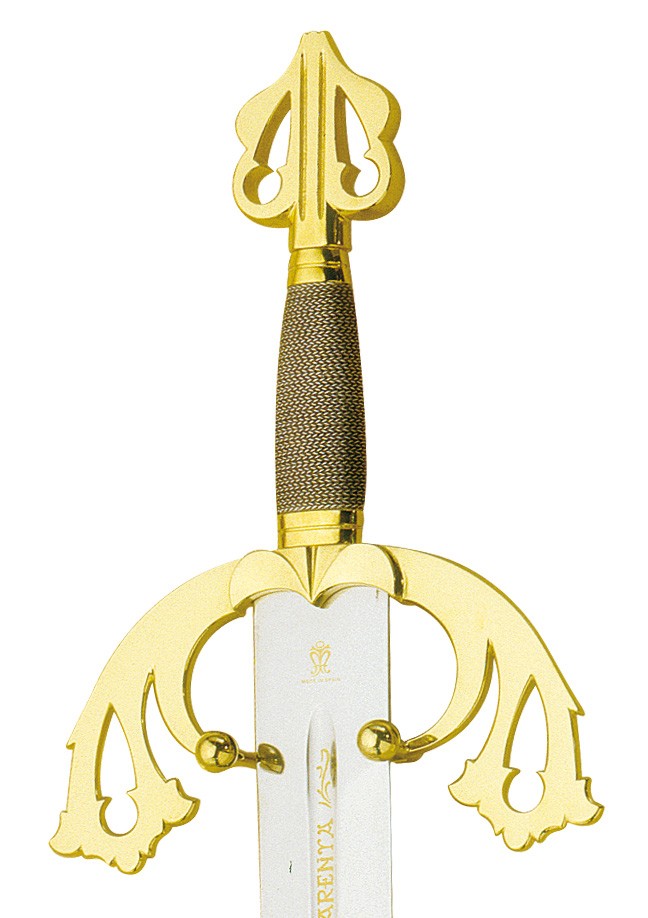
The documentary genealogy of the sword is equally intricate. Historical records place the piece in the possession of the Catholic Monarchs, who gave it to the Marquis of Falces in the 15th century as a reward for his services. It is in this late medieval period that the sword received its current hilt and the inscriptions we see today, which do not match the calligraphy or artistic style of the Cid’s period. Historians argue that these modifications were part of a family legitimation process to link the relic with the mythical Castilian figure.
In assessing whether the Tizona and Colada myth or reality is sustainable, experts point out that the current Tizona is an archaeological hybrid. It possesses an authentically medieval steel core, but is clad in Renaissance decorative elements that sought to align with the literary epic. This amalgam of eras suggests that, although the sword existed as a functional weapon a thousand years ago, its identity as the sword of the Cid was constructed and consolidated centuries after his death, transforming into an object of state worship whose exact historical origin remains veiled by the mists of noble tradition.





Colada in the Royal Armory: 13th Century Relic or Invention?
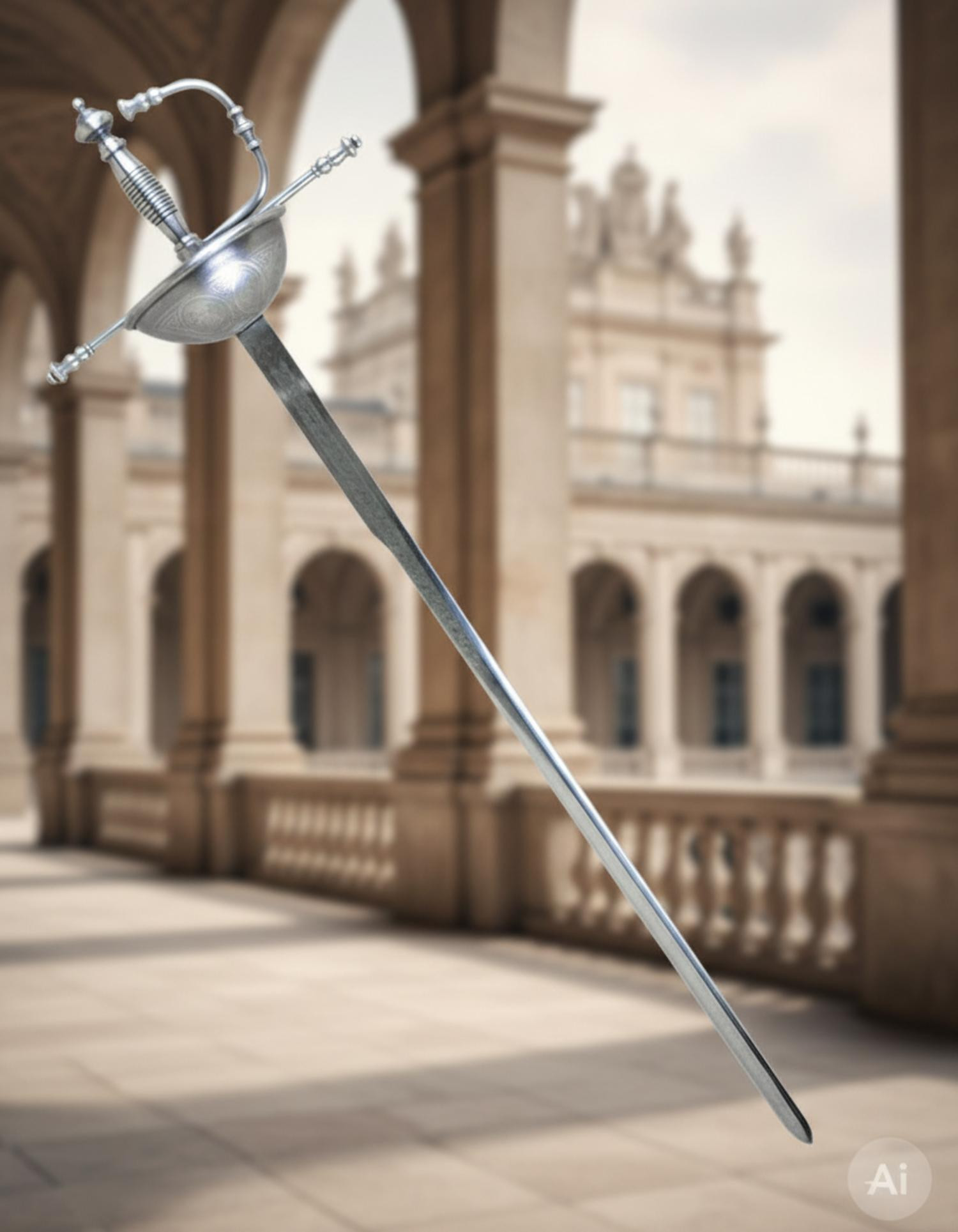
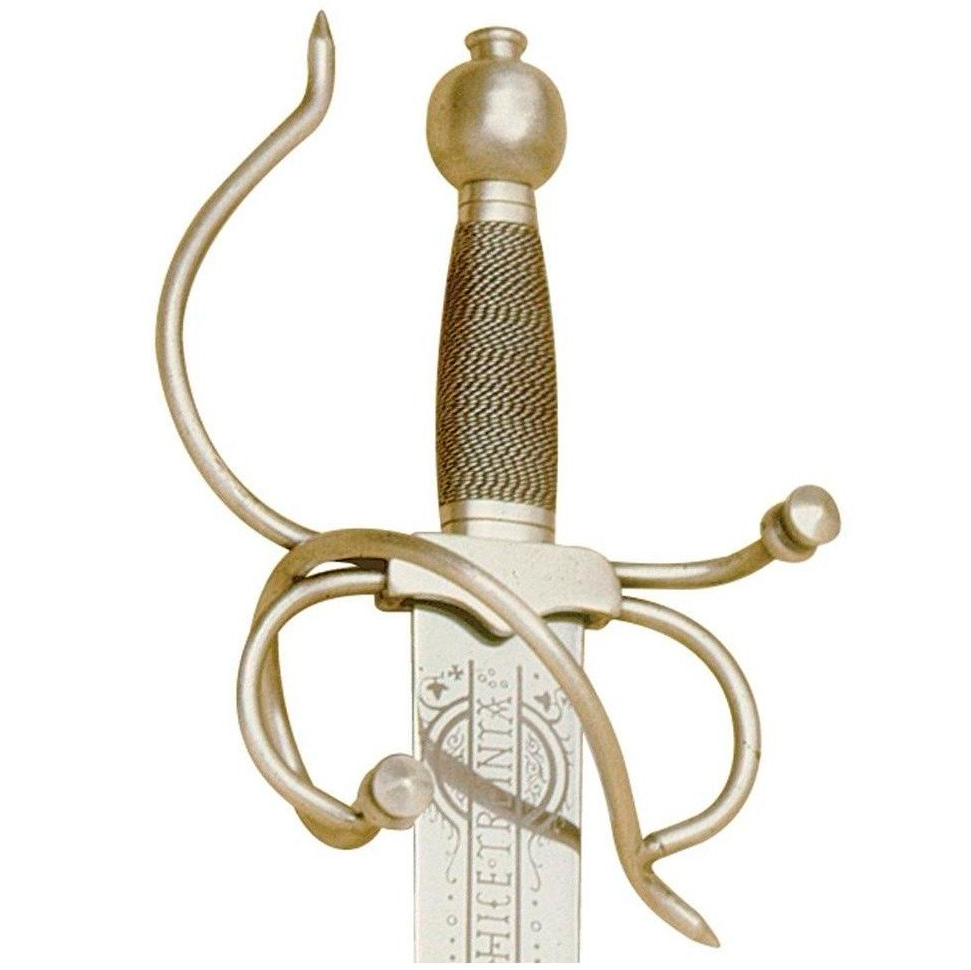 The sword kept in the Royal Armory of Madrid, traditionally identified as the Colada, poses significant challenges in resolving whether the Tizona and Colada myth or reality stems from a tangible historical basis. Examining this piece with modern technical criteria, experts have determined that its morphology does not fit the cavalry swords of the 11th century. Typological studies suggest that the blade was likely forged during the 13th century, placing its creation at least one hundred and fifty years after the death of the Cid Campeador.
This chronological gap turns the Colada into a fascinating object of study regarding the creation of national relics. The hilt of the sword, with its cruciform design and specific artistic details, corresponds to a comprehensive renovation carried out in the 16th century. Just as happened with its counterpart in Burgos, the need to provide a regal and heroic appearance to the weapons of the past drove modifications that erased the functional simplicity of the original medieval steel. Therefore, the link between this physical object and the historical Rodrigo Díaz lacks direct and verifiable documentary support.
The existence of this piece in the royal collections is due more to the strength of literary tradition than to archaeological evidence. The debate on Tizona and Colada myth or reality leans here towards the invention of a symbol. Although the blade possesses a respectable age of nearly eight centuries, its attribution to the Cid appears to be the result of a collective desire to personify the epic of the Cantar. Ultimately, the Colada of Madrid serves as a magnificent example of how a society transforms tools of war into cultural icons, regardless of the scientific precision of their chronological origin.


Myth, Symbolism, and Academic Legacy: Conclusions of the Debate
After tracing the trajectory of these blades, it is clear that the question of the Tizona and Colada myth or reality does not have a single answer, but depends on the perspective used. From a strictly archaeological approach, metallurgical tests and typological analyses suggest that the pieces preserved today have a hybrid nature. They possess ancient components living alongside later renovations. While the Tizona of Burgos boasts a blade consistent with the 11th century, the Colada of Madrid seems to be a somewhat later creation, consolidated under the imaginary of the Reconquista.
The value of these swords transcends their chemical composition. The debate over whether Tizona and Colada are myth or reality is fundamental to understanding Spanish historiography. They represent the transition from a historical warrior to a national myth. Modern historians do not see these objects as mere forgeries, but as cultural artifacts that encapsulate the honor, justice, and identity of an era. The absence of direct 11th-century records is compensated by a constant presence in the collective imaginary for eight hundred years.
For academia, the path forward involves new non-invasive dating technologies and the study of as-yet unexplored noble archives. It is possible that we may never be able to certify with absolute certainty that Rodrigo Díaz de Vivar wielded these specific blades in the heat of battle. However, their presence in museums and royal armories ensures their place in history. In the end, the Tizona and Colada myth or reality will continue to feed the fascination with the Cid, reminding us that symbols are often much more resilient and powerful than the very steel from which a people’s dreams of greatness are originally forged.