In the shadows of the tumultuous Sengoku Era, while samurai clashed in epic open-field battles, a stealthy figure operated from the depths of secrecy: the ninja. But what weapons and tools allowed them to carry out espionage, sabotage and assassination missions with lethal efficiency? Far from gleaming katanas and imposing armor, the shinobi’s arsenal was the epitome of adaptability, discretion and deception. Get ready to unveil the secrets of the weapons that turned ninjas into masters of silence and strategy.
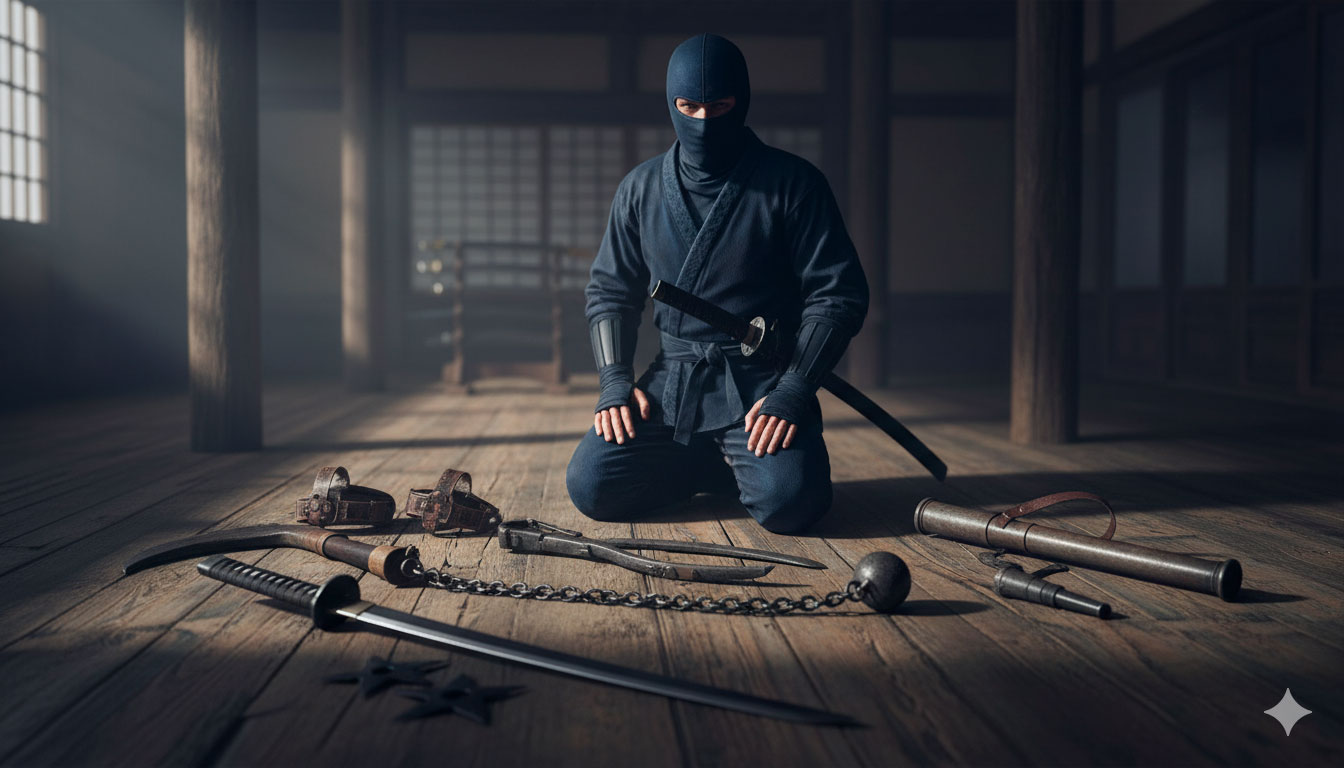
The Shinobi’s Clandestinity: A Historical Overview
The word “Ninja” in Japanese does not denote a martial art but a “war tactic,” a philosophy in which stealth was supreme. Its origins trace back to adaptations of Chinese precepts on espionage, evolving in Japan up to the 6th century. But it was in the 15th century that ninjas formalized into organizations specialized in intelligence and covert operations. Unlike the samurai, whose honor rested on direct combat, ninjas embraced cunning and surprise as their greatest allies.
Time Forged the Hidden Warrior: A Timeline of the Ninja Arsenal
The shinobi’s tools, known as ningu, were often adaptations of farming implements and everyday utensils. This timeline will guide you through the evolution and documentation of their enigmatic armament.
| Era | Event |
|---|---|
| I. Ancient origins and influences (before the Sengoku Period) | |
| Early Heian Period (794–1185) | Use of the Chokutō (straight sword). Its shape influenced later popular culture and the idea of a straight sword associated with the ninja (the modern ninjatō myth). |
| Muromachi Period (1336–1573) | Origin of the katana (curved sword). Early references to the kanamuchi (iron whip) also appear. |
| Late 15th century (c. 1487) | First documented mentions of ninjas (shinobi) in historical sources. |
| II. Warring States Period — Sengoku Jidai (c. 1467 – c. 1600) | |
| c. 1467–c. 1600 (Sengoku) | War and espionage multiplied the need for clandestine agents: the role of the shinobi as a specialist in intelligence, sabotage and reconnaissance emerged and organized. |
| 1560 | The Ninpiden is composed, one of the three classical texts on ninjutsu. |
| Throughout the period | Adaptation of agricultural tools and everyday implements into weapons: the kama (sickle) and its evolution into the kusarigama (sickle with chain); the kunai as a digging tool turned multipurpose weapon; shuriken used mainly for distraction; and utilitarian straight swords forged by ashigaru (lower-class soldiers) treated as tools and therefore scarce in records as noble weapons. |
| III. Edo Period (1603 – 1867) and documentation | |
| 1603 (start of the Edo Period) | The Tokugawa Shogunate imposes peace. Surveillance and intelligence roles become institutionalized; discreet weapons like the bō (long staff) become popular because they can be carried without arousing suspicion. The jitte is widely used by the police. |
| 1676 | Compilation of the Bansenshūkai is completed, a treatise documenting techniques and tools of the Iga and Kōga clans, including the use of metsubishi (blinding powder) and kaginawa (grappling hook with rope). |
| 1681 | The Shōninki is written, another important text on espionage and survival practices associated with ninjutsu. |
| Late 19th century | Straight swords labeled today as ninjatō are largely considered modern replicas forged after the collapse of the Tokugawa shogunate; evidence for a standard ninjatō in the feudal era is very weak. |
| IV. Modern era and fictional iconography (20th century onward) | |
| World War II (1939–1945) | Last recorded data on operational use of ninjutsu: traditional techniques are transmitted to some members of Japanese military intelligence. |
| 1960s | The popular image of the ninjatō (straight sword with square guard) is consolidated in film and fiction; the representation is largely a modern cultural construct. |
| 1973 | Photographs exist of ninjutsu students under the guidance of master Masaaki Hatsumi using straight swords with square guards, contributing to the contemporary iconography of the ninjatō. |
| Present day | Weapons like the shuriken and the image of the ninjatō are globally recognized symbols thanks to films, anime (e.g., Naruto) and video games. Historically, many of these items had secondary functions (distraction, tools) and the ninjatō is widely considered more a modern myth than a standard weapon of the feudal period. |
- I. Ancient origins and influences (before the Sengoku Period)
-
- Early Heian Period (794–1185): Use of the Chokutō (straight sword). Its form influenced, in later popular culture, the idea of a straight sword associated with the ninja (the modern ninjatō myth).
- Muromachi Period (1336–1573): Origin of the katana (curved sword). Early references to the kanamuchi (iron whip) also appear.
- Late 15th century (c. 1487): First documented mentions of ninjas (shinobi) in historical sources.
- II. Warring States Period — Sengoku Jidai (c. 1467 – c. 1600)
-
- c. 1467–c. 1600 (Sengoku): War and espionage multiplied the need for clandestine agents: the role of the shinobi as a specialist in intelligence, sabotage and reconnaissance emerged and organized.
- 1560: The Ninpiden is composed, one of the three classical texts on ninjutsu.
- Throughout the period: Adaptation of agricultural tools and everyday implements into weapons: the kama (sickle) and its evolution into the kusarigama (sickle with chain); the kunai as a digging tool turned multipurpose weapon; the shuriken used mainly for distraction; and utilitarian straight swords forged by ashigaru (lower-class soldiers) treated as tools and therefore scarce in records as noble weapons.
- III. Edo Period (1603 – 1867) and documentation
-
- 1603 (start of the Edo Period): The Tokugawa Shogunate imposes peace. Surveillance and intelligence roles become institutionalized; discreet weapons like the bō (long staff) become popular because they can be carried without arousing suspicion. The jitte is widely used by the police.
- 1676: Compilation of the Bansenshūkai is completed, a treatise documenting techniques and tools of the Iga and Kōga clans, including the use of metsubishi (blinding powder) and kaginawa (grappling hook with rope).
- 1681: The Shōninki is written, another important text on espionage and survival practices associated with ninjutsu.
- Late 19th century: Straight swords labeled today as ninjatō are for the most part considered modern replicas forged after the collapse of the Tokugawa shogunate; evidence for a standard ninjatō in the feudal era is very weak.
- IV. Modern era and fictional iconography (20th century onward)
-
- World War II (1939–1945): Last records on operational use of ninjutsu: traditional techniques are passed to some members of Japanese military intelligence.
- 1960s: The popular image of the ninjatō (straight sword with square guard) consolidates in film and fiction; the depiction is largely a modern cultural construction.
- 1973: Photographs exist of ninjutsu students under the guidance of master Masaaki Hatsumi using straight swords with square guards, contributing to the contemporary iconography of the ninjatō.
- Present day: Weapons such as the shuriken and the image of the ninjatō are globally recognized symbols thanks to films, anime (e.g., Naruto) and video games. Historically, many of these items had secondary functions (distraction, tools) and the ninjatō is widely regarded as a modern myth rather than a standard weapon of the feudal period.
Hidden Arsenal: The Ninja’s Favorite Weapons
Contrary to popular imagery, ninjas did not rely on flashy swords or heavy armor. Their arsenal focused on versatility, discretion and the ability to adapt to any situation. Here we reveal the most common and effective weapons a shinobi might have carried.
Kunai: The Versatile Tool That Became a Lethal Weapon
The kunai, originally an agricultural tool, was one of the weapons most valued by ninjas due to its incredible versatility. With a sharp blade for stabbing and a ring on the handle that allowed a rope to be tied to it and used as an improvised spear or dart, the kunai was the shinobi’s Swiss Army knife. It was discreet, easy to carry and, most importantly, did not arouse suspicion—crucial for covert missions. It could be used for climbing, digging, prying and, of course, close-quarters combat.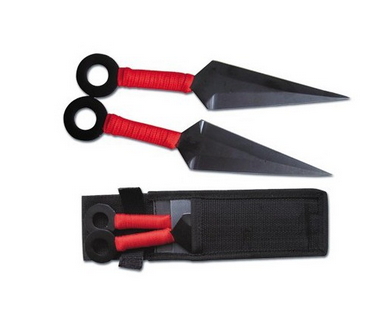
Shuriken: Distraction Stars That Sawed Away the Enemy’s Will
The famous “ninja stars” or shuriken were throwing blades whose primary purpose was not to kill but to distract, lightly wound or incapacitate the opponent. Small, black and hard to see, they were effective up to about 15 meters, allowing the ninja to gain time to flee or launch a surprise attack. They were carried in special pouches for quick access and thrown with astonishing precision, an art known as Shurikenjutsu. There were two main types: the Hira Shuriken (the better-known flat star) and the Bō Shuriken (needle- or rod-shaped, more discreet to conceal).
Ninjatō: The Shadow Sword and the Myth
The ninjatō, or Shinobigatana, was a short, straight sword, often lighter than the samurai katana. Its design prioritized speed, stealth and functionality. The scabbard (saya) of a ninjatō could be a multifunctional tool: used as a breathing tube underwater, as a step to climb walls, or to hide objects like metsubushi. Although its historical existence as a standardized weapon is debated, the image of the ninjatō has become an iconic symbol of the ninja.
Kama and Kusarigama: From Farming Tools to Symbols of Destruction
The kama, an agricultural sickle, was ingeniously adapted for combat when possession of formal weapons was prohibited. The kusarigama took this adaptation further by adding a chain (kusari) with an iron or stone weight (omori) at the end. This weapon became a versatile tool for striking, disarming or entangling an opponent at range before finishing with the sickle in close combat.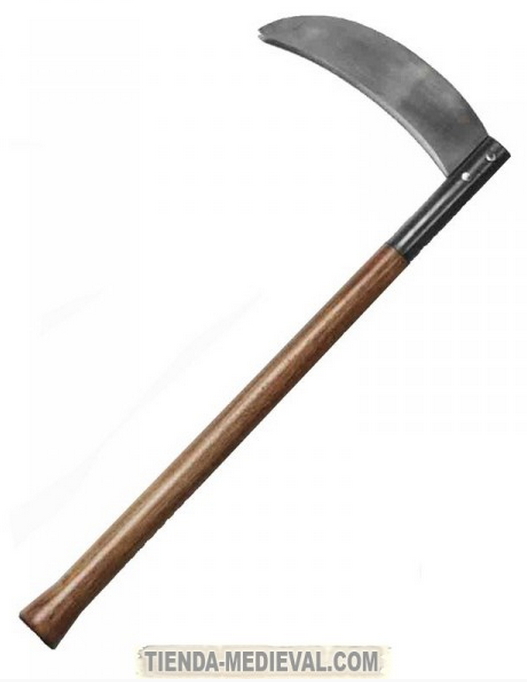
Tetsubishi and Metsubishi: Ingenious Traps for the Perfect Escape
The tetsubishi, the Japanese version of caltrops, were metal or bamboo pieces with spikes scattered on the ground. Their main function was to damage the footwear of pursuers and slow them down, ensuring the ninja’s escape. The metsubishi, or “eye-closer,” was even more direct: a mixture of irritating powders, sand, iron filings or pepper thrown into an enemy’s face to blind them instantly. These traps were crucial to ensure survival and the success of the most dangerous missions.
Blowpipes (Fukiya) and Poison: The Silence of a Slow Death
The fukiya was a simple bamboo blowpipe that fired darts (fukari), often tipped with poison. This stealthy weapon was small, silent and lethal, capable of immobilizing or killing a target without detection. Additionally, it could serve as a tube for breathing underwater, demonstrating the ninja arsenal’s constant adaptability.
Claws (Shuko/Ashiko) and Kakute: Weapons for Close Combat and Climbing
The shuko (hand claws) and ashiko (foot claws) were essential for scaling walls and improving traction. In combat they were used offensively to scratch, stab or block attacks. The kakute, a battle ring with spikes, was a subtle and lethal weapon often coated with poison, highly prized by Kunoichi (female ninja) for striking pressure points. The Neko-te, or “cat claws,” were exclusive to Kunoichi: long metal fingernails also poisoned for stealthy attacks.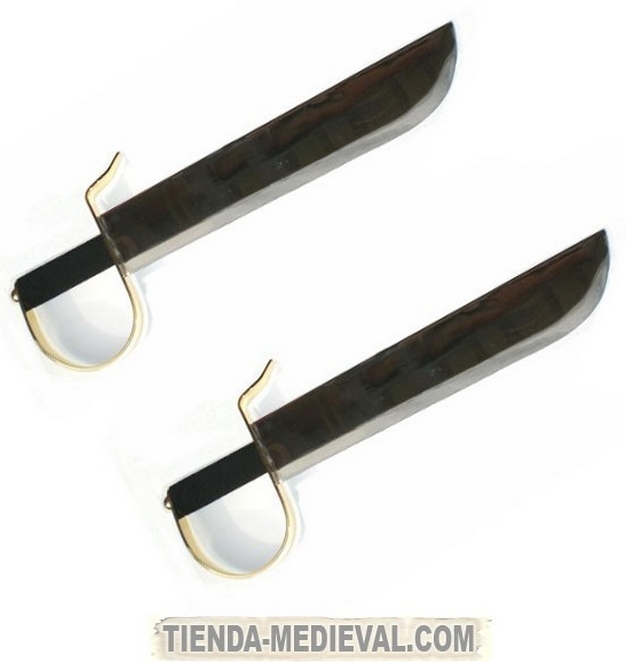
Essential Survival Tools: The Shinobi Rokugu
Beyond weapons, the ninja carried a set of vital tools for survival and infiltration: the Shinobi Rokugu, the Six Mandatory Tools. This kit included the Kaginawa (grappling hook with rope for climbing), the Utidake (bamboo container for embers, useful to discreetly start fires), the Sekihitsu (stone pencil for marks and messages), the Kusuri (kit of medicines, poisons and potions to reduce hunger and thirst), the Sandzyaku Tenugui (a multifunctional towel for bandages, water filters or an improvised weapon) and the Amigas (wide-brimmed hat for camouflage and observation).
Clearing Up Questions About Ninja Tactics and Weapons
What was the main function of the shuriken in ninja missions?
The primary function of the shuriken in ninja missions was to create a distraction to confuse the enemy and buy time to attack with other weapons or to escape. It was also used as a secondary weapon to inflict small wounds, often coated with poison to incapacitate or kill the adversary more effectively during the mission. Additionally, it could be used to intimidate or even send messages to other enemy groups. Its use was primarily aimed at facilitating survival and the mission’s success by avoiding prolonged direct combat.
The shuriken was a tactical tool for distraction and quick attack, helping ninjas in infiltration and safe escape.
What differences existed between the use of the katana and the ninjatō?
The main differences between the katana and the ninjatō are that the katana is a curved, longer and more ornate sword, used mainly by samurai in open combat and wars, while the ninjatō is a shorter, straight and simpler sword associated with ninjas for covert operations, close-quarters combat and quick strikes.
In detail, the katana has a curved blade and a guard (tsuba) that is usually oval or circular and decorated, with a long handle for two-handed use. The ninjatō, on the other hand, has a straight blade of approximately 50–60 cm, a simpler square or round tsuba, and its handle can be proportionally longer than the blade, sometimes with additional functions like hiding objects. By design, the ninjatō could be drawn more quickly and was more useful in confined spaces and for surprise, although it had less reach and cutting potential than the katana. Also, while the katana was a high-quality forged weapon with symbolic value for the samurai, the ninjatō was more artisan-made and considered a functional, disposable weapon for the ninja.
| Aspect | Katana | Ninjatō |
|---|---|---|
| Blade | Curved, long (approx. 60 cm or more) | Straight, short (under 50–60 cm) |
| Tsuba (guard) | Oval or circular, decorated | Square or round, simple |
| Handle | Long for two hands | Longer in proportion to the blade |
| Use | Open combat, war (samurai) | Covert operations, quick strikes (ninja) |
| Manufacture | High-quality artisanal | Simple local manufacture |
| Functionality | Powerful, long reach | Quick draw, useful in confined spaces |
This clearly defines the roles and characteristics of both swords.


How were kunai used in close-quarters combat?
Kunai were used in close-quarters combat primarily as weapons to strike, stab and control the opponent. Beyond being a throwing knife, in close combat the kunai was employed to strike vulnerable areas like the neck or elbow, to make cuts or thrusts and to use the handle for control and defensive maneuvers. It was also concealed for quick deployment in an immediate attack or defense. Overall, kunai handling in close combat combines precise strikes, grips and thrusts, making it a versatile and effective weapon for close encounters.
What specific tactics did ninjas employ with the bokken?
Ninjas used the bokken with specific tactics based on ninjutsu that included fluid, stealthy and defensive movements to neutralize the opponent with minimal effort. They used the bokken to practice and master cuts, blocks and coordinated footwork, often accompanied by an energy shout called kiai to enhance their attack. Precision, speed and the ability to adapt immediately to the situation were key to its handling. They also used the bokken for training and combat simulations with real swords, always caring for the wood’s condition to keep a safe and effective weapon.
What advantages did using tetsubishi offer during a ninja’s escape?
The tetsubishi, also known as caltrops, offered several significant tactical advantages for a ninja on the run:
Slowing the pursuer
The main advantage of the tetsubishi was forcing whoever pursued the ninja to stop or slow down. By scattering these pointed weapons along the path, any pursuer who stepped on one would suffer a foot injury, preventing them from continuing the chase effectively. This provided the ninja with the crucial time needed to escape.
Distraction and confusion
The tetsubishi functioned as a distraction tool. The act of scattering the weapons and the threat they represented diverted the attacker’s attention, giving the ninja the opportunity to flee unimpeded.
Planned strategic advantage
Ninjas used the tetsubishi intelligently: they already knew where they would escape and where not to step. They scattered the weapons in places where the pursuer would inevitably have to pass, ensuring they would step on them while the ninja could avoid the area safely.
Portability and availability
These tools were easy to carry in pouches attached to the belt, along with other tools like shuriken and ropes. This allowed the ninja immediate access to them during a flight.
Low skill requirement
The tetsubishi required very little skill to be used effectively. They simply needed to be scattered or thrown, making this tactic accessible even in emergency situations during a hasty escape.
The Essence of the Ninja: Masters of Adaptation and Stealth
The true power of the ninja did not lie solely in their weapons, but in their cunning, relentless training and mastery of tactics that made them almost invisible. Trained in the use of explosives and poisons, and with extreme physical conditioning enabling them to scale castles and master Jūjutsu, ninjas were far more than warriors: they were strategists, spies and masters of survival. From an early age, young ninjas absorbed the concept of death and lost the fear of dying, a mindset essential for their dangerous missions. Some even mastered specialized martial arts like Yubijutsu, focused on striking vital points, or Koppo, centered on breaking bones. Thus, the Sengoku-era ninja was not only a warrior but a symbol of resistance, intelligence and adaptation in a turbulent Japan. Their legacy endures in popular culture, reminding us of the fascinating and lethal combination of skill and tools that made them legends.
SEE CHINESE SWORDS | SEE MORE THROWING KNIVES | SEE ALSO JAPANESE SWORDS